Fine Dining, Wine

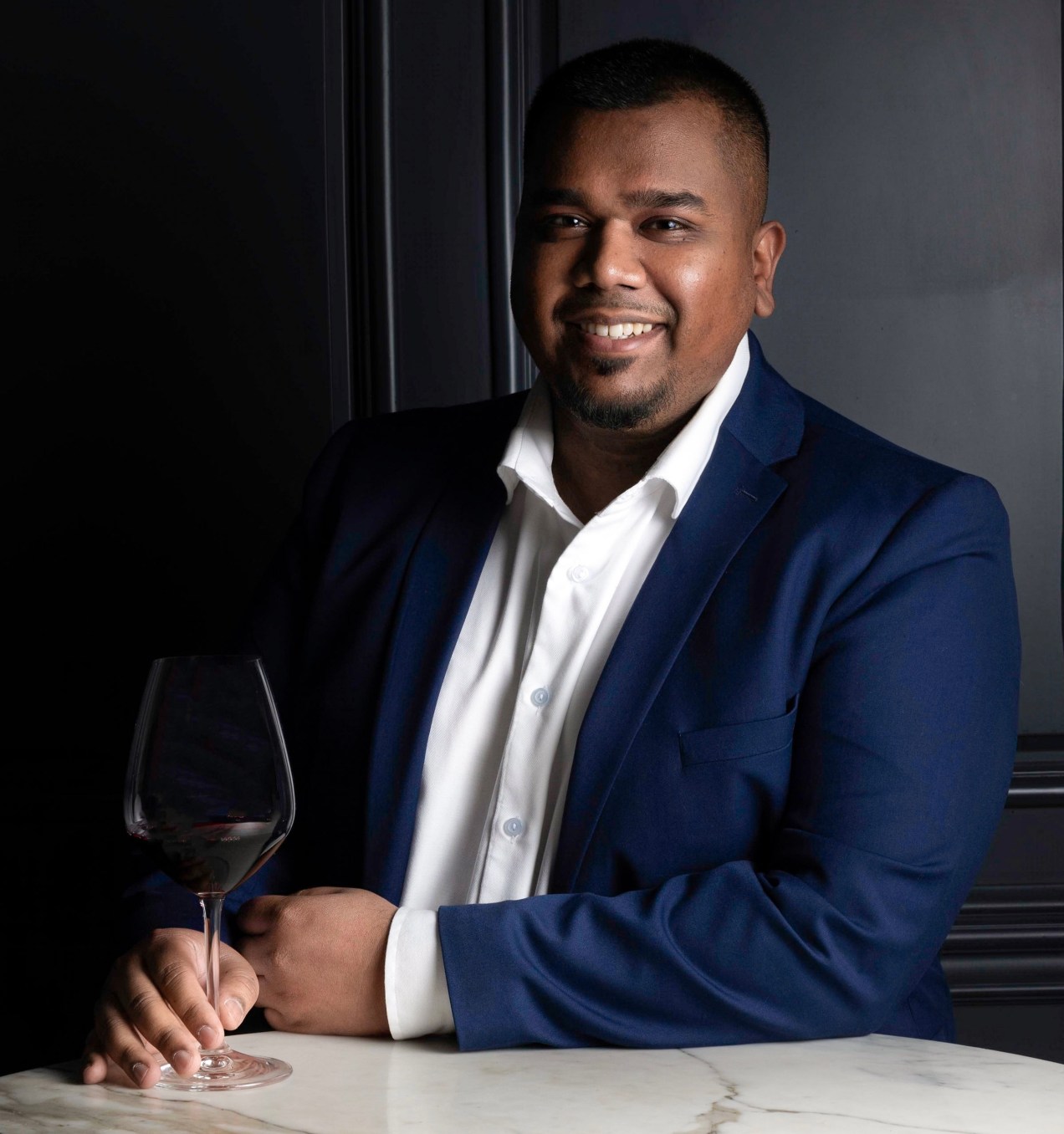
InterJew #15: Ashwan Luckheenarain (sommelier, Boulevard Kitchen & Oyster Bar)

Visit our Instagram page

By Michael White

Shortly after the COVID-19 pandemic’s indoor-dining restrictions were lifted in Vancouver, Kley and I became somewhat obsessed with Como Taperia, the Mount Pleasant neighbourhood’s soon-to-be award-winning tapas bar.

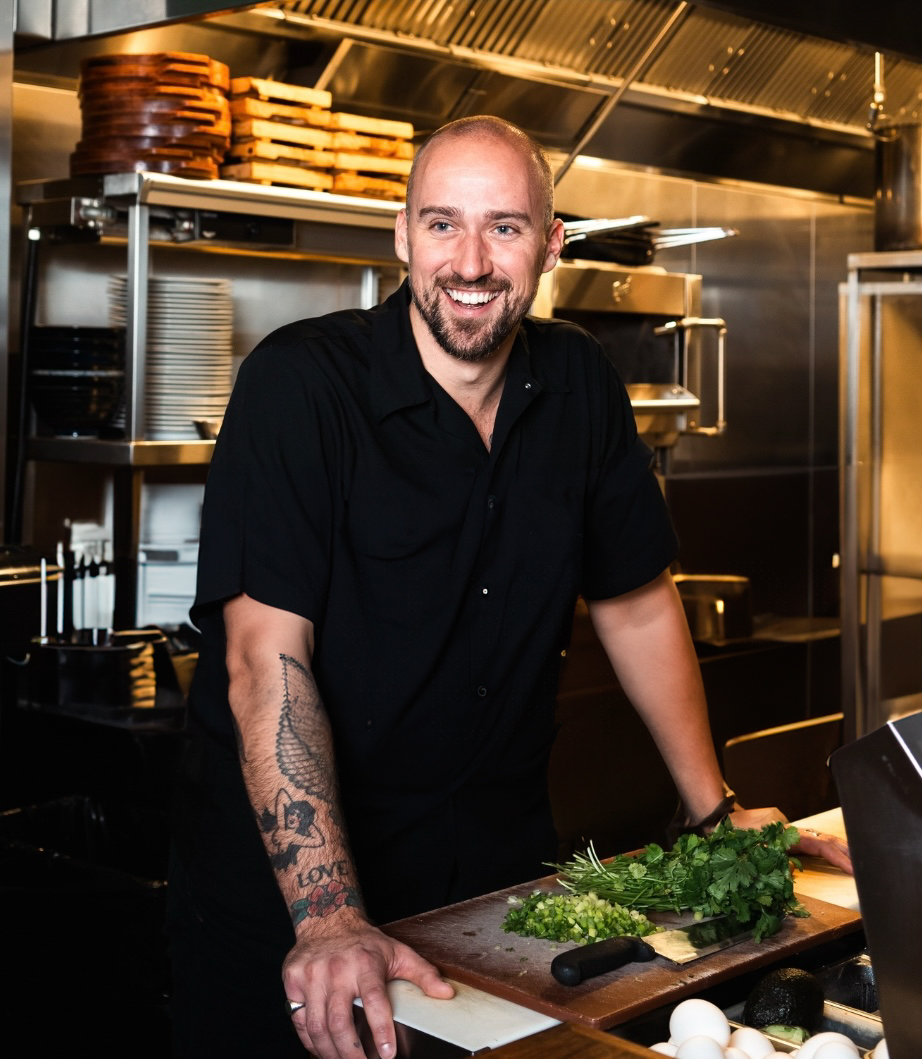
It was there that we met Ashwan Luckheenarain, who had recently come aboard as manager and wine buyer. We were immediately struck by his charm and seemingly innate flare for hospitality. To our surprise, we eventually learned that Ashwan had never intended to pursue a career in restaurant management or wine, until a single meal compelled him to change course. Earlier this year, Ashwan moved from the raucous, freewheeling party that is Como to the lively yet civilized environs of one of Vancouver’s most acclaimed fine-dining establishments, Boulevard Kitchen & Oyster Bar.

Read on to discover how a former aspiring engineer from Mauritius became a wine and hospitality virtuoso with an unquenchable thirst for knowledge.

This interview has been edited for brevity and clarity.

What’s your earliest memory of being taken to a restaurant?
Oh, that would be back home in Mauritius; a place called King Dragon. Mauritius’s demographic is pretty diverse: you have African descendants, Asian descendants, east, west, everywhere. After slavery was abolished, people started coming from all over, and everybody brought something [culinarily] from where they came from. One of the things the country is very proud of and really loves is Chinese food, because it’s comfort food; wherever you go, there’s a little snack bar serving chow mein noodles, or something almost like dandan noodles. King Dragon was one of those restaurants. It was casual and family friendly.

One of the things that’s pretty famous is you find these little stalls that sell Dhalpuri and rotis. If you’re really hungry, you eat three of them and then you’re set for the day.

When you were growing up, were restaurants strictly a special-occasion situation?
Yeah. I come from a working family, so it wasn’t a priority to go to a restaurant to eat. It was always special, like if there was a birthday, someone got a promotion at work, or someone graduated from school — something to celebrate.

Did you work in hospitality when you were in Mauritius?
So, this is how my story goes. I was probably 14 years old, and I had friends who started a catering company, and there would often be weddings — we’re talking about 400 to 1,000 people. So, I was working to go out and have fun, you know? You’re 14 years old; you just want to be outside. You don’t want to be home. It was very fun, because at the same time it was wedding season, there were also corporate events happening.

Were you cooking or serving?
I was serving and then, eventually, bartending, but just doing, like, highballs. I was doing it just for fun, but my goal was to become an engineer. I was a big fan of design and technology. I was into science. I was pretty good at math, but I was pretty bad at physics. So, eventually, I was like, “I really want to follow that path.” But it’s really hard for people in Mauritius to go elsewhere to study or even just move, so you always have to find these little loopholes. It’s not really a loophole, but there was a journey, in a sense. The journey was that I could do a course for two years [in another country] and then get a work permit. The options I had were that I could go to Ireland, I could go to Australia; I really wanted to go to London, just because I was a big fan of the Premier League. But then, in 2014, my sister moved [to Vancouver]. And then a year later, it was time for me to move, and my parents were like, “You know what? Why don’t you move there as well, where you already have someone to guide you?”

The course I could do was either hospitality management or business administration. My sister did business administration, and I didn’t like the job that she was doing; I found it very boring, and I never saw myself doing a 9-to-5 office job.

So, eventually, I chose to do hospitality management. I joined Douglas College in Vancouver, and for me the goal was to get my work permit and try to get my [permanent residency]. And then from there, I needed to find a job. I said to myself, “I’m going to find a job in a kitchen, something back-of-house. I’ll give [that and front-of-house] two years, and then I’m going to see which I love most. The kitchen thing was pretty fun, but pretty hard as well. The kitchen I started at was Dubh Linn Gate [a now closed Irish-themed pub]. I started there washing dishes, peeling potatoes…

What were your first impressions of Vancouver?
Me being in Canada was my first time being outside of Mauritius, so, obviously, it was culture shock, but I was trying to be open-minded as much as possible. I was living in Surrey, in a master bedroom, for $300. Me and my sister and one other friend, we were sharing the whole house for $1,100. It was beautiful. I worked at Cactus Club in Coal Harbour for almost two years, and this is where I started working on the line. The kitchen team was really great.

And then, one day, I went to dinner at L’Abattoir to celebrate my sister’s graduation, and this is where I fell in love with the things they were doing. It was a stellar dinner from start to finish. I told myself, “When I leave the kitchen, I’m going to work at this place.” And then I started as a food runner [at L’Abattoir]. That was the one thing I could do, and it opened a whole world of things.

How much time passed between that first meal and you starting to working there?
Probably six months, because I was still in school, so I was part-time. But also, this is how the wine thing started. I was given homework by Kristi [Linneboe, L’Abattoir’s wine director at the time] to grab a bottle at the liquor store and learn about it, tell her about it. And one of the things about wine is it’s like a rabbit hole: If I go to learn about this region, I’m going to learn something else that I was not intending to learn. But this information always sticks with you.

Did you already have an interest in wine before you started working there?
No, it was after, because I was studying at school. One of the courses was Food and Beverage, and with beverages you’re learning about wine pairings, and we’re talking very mainstream wine: Pinot Noir, Gamay, Cab Sav, Merlot, Chardonnay… Kristi and Lisa [Haley, sommelier] were really into education, so there was always someone coming in to talk about wines. It encouraged me to go through my WSET [Wine & Spirit Education Trust]. And from there, one day it kind of hit me where I was like, “[My future is in] hospitality” — because I was still thinking of becoming an engineer, to follow that route. I was like, “What if I accept hospitality [as a career], and what would it bring it to me?” And the day I did that, it just took me to the next level.

Then I got the opportunity to start running the private dining room for L’Abattoir, so there was the management side of things that I was learning. And then COVID happened and it wasn’t sustainable for me to stay at L’Abattoir anymore. But it had been close to four years by then. It was time to move on. This is when Kristi had started working at Como, and they were hiring people, and she was like, “Hey, you should come work here. It’s a pretty fun place.” I hadn’t been there yet, so I was curious. I wasn’t really keen on going into a casual restaurant, because I really love the fine-dining side of things. But, eventually, that Como journey started and I got to meet so many people; I was exposed to a different type of cuisine, a different country, including in terms of wine — we’re just talking about Spanish wine. I was just a server, but eventually there was some turnover in the staff, and that opened the way for me to become a manager. I was already in management, but I wanted to learn more. It changed my way of thinking. At L’Abattoir, it was so straightforward and so linear; it was black and white, like, “This is how we do things,” whereas at Como, there was this grey area of operating. It was a little more free, you know? You’re here to do a job, and these are the responsibilities and the duties, but everybody is able to show their personality. Everyone’s dressed so differently. And also it’s Main Street, so everybody is a character. It was very fun to be at Como.

Did it surprise you that you became as interested in wine as you did?
No. Something I realized too was, if you were to move along in this industry, going back to the Cactus days, working in the kitchen — you don’t get paid for shit. I knew that the money was in front-of-house. And when I was on the path to learning about management, I knew that wine knowledge was going to get me even further. Learning in management is non-stop; same with wine.

But then, eventually, me and Como parted ways in April [2025] and I was at Casa Molina. I really love those people, the Paella Guys. I went there for their friends-and-family [preview dinner], and I found they didn’t have a GM, and so I applied for it and eventually got the job. I was there for about six months or so. But it kind of hit me that I was way too comfortable, because I was dealing with the same things [as at Como] and I really needed to grow.

And then Lisa, who’s the GM at Boulevard now and who I’d worked with at L’Abattoir, called me up for a chat. It was to take over the management position at Boulevard and also be the somm — they usually go side by side. I really love it. I love how the management team operates: They’re pros and they work really hard, and it’s a fine-dining setting. It was going to be a make-or-break, where either I was going to like it or hate it. We used to have Adrian [Lindner] as wine director; he was doing all the heavy lifting and I was there to support him in terms of the sales, but I wasn’t taking on any more responsibility yet. But then, as I was about to take on a little bit more responsibility, Adrian moved on, and I was given the opportunity to take over the wine program, which is huge. We’re talking about working with 800-plus labels of wine. L’Abattoir probably had 200 back then; at Como there were 40; Casa was only 20.

(Photo: Leila Kwok)
Standard
Mexican

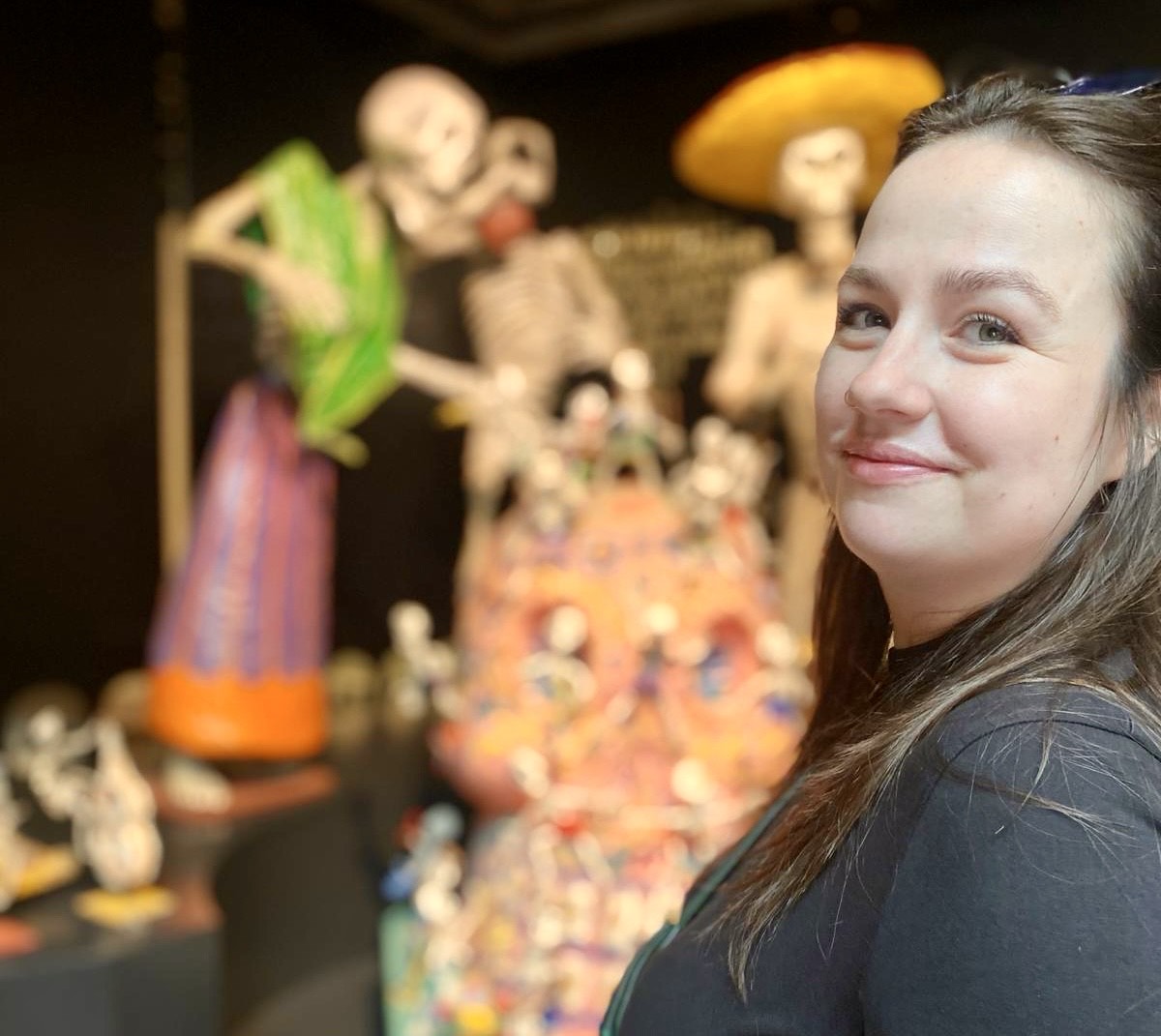
InterJew #14: Tara Davies (operarting partner, Chupito)

Visit our Instagram page

By Michael White

Among the dozens of outdoor restaurants and patio extensions that hastily opened during the COVID-19 pandemic’s indoor-dining ban, arguably the most interesting (and delicious) of them all was Chupito.

Situated in a narrow lot behind the original location of La Taqueria, near Gastown, and accessible only by way of one of the neighbourhood’s many grim alleyways, both its food and environment sought to replicate similar ultra-informal eateries Tara Davies experienced during many years she spent in Mexico. In this simple but perfectly conceived space, expertly prepared seafood and street-food staples (tacos, tostados) — as well as excellent mezcal- and tequila-based cocktails — were delivered to crowded tables from a cramped kitchen inside a repurposed shipping container. Vancouver had never seen anything like it, and its joyous atmosphere achieved the rare feat of temporarily thawing the city’s legendary social frigidity. People tended to be their best selves when they were at Chupito.

It deservedly achieved great success (including two Michelin ‘Bib Gourmand’ designations). But when the building that housed La Taqueria became slated for demolition in 2024, Chupito had no choice but to find a new home. It now occupies half of La Taqueria’s Yukon Street location, and while it would have been impossible to replicate the singular charm of the outdoor site, the food and drink remain as sublime and transporting as ever.

Oh… and Tara was named Bartender of the Year at the 2025 Vancouver Magazine Restaurant Awards.

This interview has been edited for brevity and clarity.

What’s your earliest memory of being taken to a restaurant?
I think it was when I was with my mom and dad. We were driving to Disneyland and we passed through Seattle. I was young — I still had a security blanket — and we went to this restaurant in Seattle that was like, I would say, mid- to upscale, and I was wearing a white dress because I wanted to get dressed up, because I thought going to a restaurant was an event. And I spilled my red Jell-O all over my white dress. In retrospect, it’s just really funny because it’s not a big deal, but I remember being like, “My red dress, in this restaurant! This is going to ruin [everyone’s] night!”

And then I also used to go to Fresgo’s on Davie Street [in Vancouver’s West End]. It’s now the Junction. They served huge plates of spaghetti, and that’s the only restaurant my parents would take me to, because they felt like, I guess, everyone belonged there, so they could bring their child. We were served by drag queens. My parents loved going there.

So, obvious question: What drew you into the restaurant world?
I’ve been in the restaurant industry since I was 16 — initially, I guess, because it was an accessible job. I was a host at Wings on Granville. And then one day, a server didn’t show up, so I ended up serving her whole section, which was like 24 two-tops or something. And ever since then, I’ve been serving. That’s, like, 20 years. I think my desire for hospitality probably came from these large group dinners that my parents had. My mom was very detail oriented; if my dad tried to put out mustard in the container, my mom would be like, “Excuse me, there’s a plate for that and a spoon for that!” And she had to make sure everybody always had a full glass of wine. She really enjoyed hosting people. I think hospitality was really driven into me from those experiences. I don’t know if I found that desire at Wings.

And then I moved to Mexico, and I started learning a lot about tequila and mezcal, because I was teaching English in Tequila, a city outside of Guadalajara, where I was living. I was teaching English at tequila factories there, so they could sell their product abroad.

How old were you then?
Twenty. I was only planning to go to Guadalajara for a little while, and I ended up staying for almost eight years. That’s where my desire and inspiration for cuisine came from. I ended up spending a lot of time in Culiacán, which is where my partner at the time was from. We went to the beaches and made a lot of seafood. The style of eating there, I think, even furthered my desire to be in the hospitality industry: You would go with your family or friends and you’d sit at the same table for four hours, and small plates of food would keep coming, and people would come and go. That style of dining was so contrary to the North American style of dining — the quick in-and-out — and I just found so much pleasure in that, getting to know a culture through their food, but also getting to know people.

When you decided to move to Mexico, it was initially just for a job? You didn’t have any preexisting knowledge of the culture there?
No. All of my friends in high school were from Mexico; my first partner was from Guadalajara. That was when there was a big influx of people from Mexico coming to Vancouver, so I ended up having a lot of friends from there, and I was like, “I’m going to go visit them” [after school ended and they returned to Mexico]. And I just kind of never came back, because I loved it. What I found is that the culture is so, so warm, but also that food really brings people together. If you’re getting to know someone, the highest honour is being invited to their home.

Why did you come back?
My dad fell sick; he was diagnosed with cancer. I came back to Vancouver and he survived, and then I moved to Toronto to study photography. I was big into food photography after my experience in Mexico. I wanted to study and photograph how food is culture. I went there and I applied for a job at Bar Raval, and then I was like, “Oh, this is how you make a drink!” I decided that’s what I wanted to learn.

Did you start as a barback?
No. Well, in between this, I had also worked at La Mezcaleria, which is where I met [co-owners Marcelo Romero and Ignacio Arrieta], which is an important part of my story here, obviously. And when I was at La Mezcaleria, that’s where I really [honed] my skills for front-of-house management. So, I applied as an Assistant General Manager at Bar Reval, and was hired as such. And then I decided that I wanted to learn how to bartend. So, Robin Goodfellow, who opened Bar Reval, is a beautiful human — an intimidating human and a beautiful human — and I finally got the courage to ask him if he would teach me, and he said yes. And then I went to his home and he talked to me about ice for two weeks straight. (laughs) And that’s where I met my mentor, Ana [Wolkowski]; she was the bar manager of Bar Reval at the time, and she taught me all the things that I know.

And so, ultimately, you did leave Toronto. You were there for how long?
Two and a half years.

When you decided to come back to Vancouver, did you already have a plan in place?
My dad fell sick again, and it was during the pandemic. [The City of Vancouver] had started giving out temporary patio permits, and Marcelo, who had become my best friend, was like, “Hey, do you want to open that restaurant we’ve always been talking about?” And I was like, “Sure!” The City had offered him a temporary patio permit for the rooftop space at the original La Taqueria location. I knew after my time in Mexico that I wanted to showcase the style of eating and the style of seafood that I had experienced there, that had played such an important part in my life. Marcelo was a very successful restaurateur in Vancouver by that time. [The City] offered him a permit for a temporary space on the roof, and we said, “Okay, let’s do it.” People like me, who do not come from money, could open a restaurant. It was just this sweet spot in history that was, unfortunately, caused by a pandemic.

The idea of Chupito as most people know it, which is a space off of an alleyway near the Downtown Eastside — how did that idea come to you? Did it initially seem too audacious to be realistic?
The idea came to Marcelo and myself, because we were travelling through Europe, and we went to Berlin and there are many restaurants there that occupy an entire building as well as the parking lot while being different spaces. A lot of things operate out of shipping containers. And we had been to Mexico City many times, and they tend to utilize the empty lots because there are so many humans in that city. I knew that my desire in anything that I did moving forward was to be low-waste, and so we decided to reuse materials like a shipping container. That sparked a lot of ideas, like reused wood and metal for our tables.

People often talked about, or wrote about, Chupito when it was in an outdoor space, and they meant this in a complimentary way, but so much of the charm of it was that it looked so slapdash. But from a logistical standpoint, it looked like a very difficult thing to put together. What was the reality? Was it hard?
It was incredibly hard. We had to crane in a shipping container. We had to get plumbing up from downstairs [in La Taqueria] to make a fully functioning bar and kitchen in that shipping container. We needed a glass washer; we needed to build a roof. In terms of space, it was incredibly challenging. And getting electricity up there, Wi-Fi up there, getting a ramp so that it was wheelchair accessible… It was very intentionally minimalist, because the only thing that I wanted to matter was the feeling of sitting down and getting good service and eating a good meal and having a good drink, as if you were in someone’s backyard or on the beach.

What was the timespan from conception to opening?
Six months. But here’s the thing: I moved back from Toronto to Vancouver, and I broke my ankle and I shattered it in two places, and I was bedridden for three months. So, Marcelo came over every day, and we wrote the menu and we decided on the floorplan from my bed. Obviously, the financial strain that La Taqueria was going through because of the pandemic was a motivating factor to open it. Every restaurant was just bleeding money.

Was Chupito slammed from the get-go?
No, it was not. As you can imagine, there’s not a lot of foot traffic in an alley. The first two weeks, there was not a single soul.

You must have panicked!
At this point, my beautiful sister had given me money, but I also put all my savings into it, which was not much, but it’s what I had. I sold my car, that I drove back from Toronto in, to put that money into Chupito, and I was like, “This is it. I put all my eggs in one basket.” And then this young woman — I don’t know why she was walking down the alley, but she was — she came in, and I saw her walking out of the gate backwards, filming on her phone, and I was like, “This is my first guest? What’s happening here?” She didn’t even order anything. She put a TikTok video up — I still don’t know her; if she’s reading this, thank you — and the day after, it had a million views and we had a three-hour line-up.

(Photo: Ruben Nava)

Standard
Bakery, Desserts

InterJew #13: Fanny Lam (owner, Oh Sweet Day!)

Visit our Instagram page

By Michael White

Fanny Lam had no more intention of opening a bakery than she did of becoming a lion tamer. But, of course, life circumstances have a way of diverting us down unexpected paths.

After moving with her husband from their native Hong Kong to Vancouver, a combination of boredom and an inability to find work in her chosen field (PR, marketing and movie distribution) led to a first-time exploration of baking, which then led to recipe blogging, a bestselling cookbook titled Oh Sweet Day!, and then, ultimately, a namesake bakery in East Vancouver. Despite opening mere months before the pandemic, Oh Sweet Day! flourished, so much so that a second location, in Port Moody, is currently under construction and slated to open in July or August.

This interview has been edited for brevity and clarity.

We always begin these interviews with the same question: “What’s your earliest memory of being taken to a restaurant?” Would it be more appropriate to ask what your earliest memory is of a bakery?
Either way works. My mom raised me and my brother as a single mom, so she had to go to work at a full-time job and we didn’t have a lot of money to go out to eat. But when there was a big event, like a birthday, she would take the day off and take both me and my brother to a very high-end hotel to have a dinner buffet. Now, when I say a buffet in an Asian hotel, it’s very different than anything in North America. The variety is different and the food is way fresher. The meat section isn’t just roast beef; there’s seafood, not just salmon. And the dessert table was crazy.

Which were the items you absolutely had to have on your plate?
I love seafood — crab, lobster, shrimp — but I don’t like fish. I’m also not a big meat person; I do eat meat, but I don’t necessarily need to eat it. And if we had a breakfast buffet — like, every time we would travel in Thailand, South Asia, the breakfast buffets at the resorts were amazing. So, I would have a lot of eggs. And then, at the very end, I would always save room for dessert. I love sweets.

Well, I would hope so! What about bakeries? I’m assuming Hong Kong bakeries when you were growing up were very different from those in North America.
Where I grew up, we had small, family-run bakeries that made Chinese pastry every morning, like pineapple buns, toasted coconut buns. I don’t think I was inspired or influenced by any of that, to be honest.

Did you not have any great affection for bakeries when you were younger?
Back then, no. I never knew I would [own a bakery for a living]. My first job was working at a radio station: PR, marketing. And I did a lot of event productions: concerts, music festivals, fashion shows, conferences. For a fresh graduate, it was so much fun. I got to see a lot of celebrities.

Did you seek out that kind of work or did it just fall in your lap?
My dream job was to be a journalist, but I didn’t have enough credit to get into [a journalism program], so I ended up studying translation. Before I joined the radio station, I was a court interpreter for three days. I just couldn’t stand it. The judge was an English speaker and the accused person was Vietnamese, and I was the interpreter between them both. It was very boring for me.

Why did you stop working in radio?
I didn’t stop. I met my husband when we were in high school in Hong Kong. He spent his first year of high school in Hong Kong before he moved [to Canada] with his family. He graduated here and then decided to move back to Hong Kong to start his career. That’s how we started dating. I think after 10 years, we decided to start our family.

You didn’t get married during those first 10 years?
No, no.

Are you married now?
Yes… So, we moved here. Technically, we both grew up in Hong Kong, but he also spent some time here as a kid, so he understood the difference between raising a kid in North America [as opposed to] Hong Kong, and we both agreed that this would be a better place to raise kids. That’s why we decided to move here together, to start our family.

Which year was that?
2005.

Oh, a long time ago! So, you published your cookbook before you opened Oh Sweet Day?
Yes. When I moved here, I’d spent over 10 years working in radio and movie distribution [in Hong Kong], so I thought with that amount of experience, it would be easy for me to find something here in Vancouver. But that wasn’t the case, because I didn’t know anyone. When it comes to PR and marketing, it’s all about networking, and I didn’t know anyone. I couldn’t find a decent job.

Do you consider yourself good at networking?
Back then, no. This place taught me to be better with human connection, relationships. Our first apartment was in Kerrisdale; we were renting. So, instead of working, I just spent my time getting to know the city, going to farmers’ market, getting all the ingredients and playing around with them at home.

You already knew you wanted to move into baking?
I didn’t know what I wanted to do. But going to farmers’ markets and Granville Island was really fun for me. And I just had so much time at home, and I like making pretty stuff, so I started cooking and baking. And when I was doing it, I went online to find a lot of recipes to help me. That’s how I discovered the blogging world, and I thought, “I could do that, too.” I created a blog and put my recipes on it. And then I got married, kids came along; the blog became about both cooking and parenting. And I think that’s how the blog started to connect with other parents, and it started to get a little popular. Then I joined Instagram in 2010. Back then, Instagram was really simple, not as calculated as nowadays. And because I’d been reading a lot of other blogs, that’s how I got my blogging skills in terms of writing and photography. That’s how my book publisher found me.

You didn’t have to get a literary agent? They came to you? That’s the dream!
Yeah, I was very lucky.

When you decided to take up baking, this was just for your own creative satisfaction? It wasn’t about being a good wife or parent?
No no no no no. (laughs) But when my kids came along, I started to enjoy baking for them.

Considering you had never really baked before, did you find that you had a natural talent for it?
I’m very precise, and if I want to do something, I’ll really, really spend time to make it work.

Initially, you were learning from other blogs or cookbooks, but once you established the science of baking, you could create things on your own?
Yes. And then friends and family started to ask me to bake for them, and I started to build up my home bakery. After a while, I started doing farmers’ markets.

What were you selling at the farmers’ markets?
Mini cheesecakes, because nobody else was doing it. By that time, I’d been to enough farmers’ market to see what was lacking.

And it was a hit from the beginning?
Yeah.

When the cookbook was published [in 2018], did you already know you were going to open a bakery?
No. I remember why it happened. We were driving our kids to Science World, and we saw this location [1706 E. 1st Ave., in East Vancouver] with a for-lease sign on it. And we [were like], “Ooh, wow!” We knew it used to be a bakery, so we decided, “Why don’t we just call and see how much the lease is?” My husband is a very good numbers guy; he’s good at anything I suck at. So, we did a little calculation and we figured it was worth a try.

When you saw that the space was available, was it the first time you had the thought that you would open a bakery, or had you already been thinking it was something you might want to do?
If I said yes, it would be a lie. My dream, at first, was to have a cookbook. And then, after that, my dream was to have a bakery, but I never expected it would happen. Doing farmers’ markets was hard enough. I wasn’t as much of a people person as I am now. When you’re younger, you really care about making yourself look good in front of other people. But now that I’m older, I don’t really care about that shit anymore. I just enjoy meeting people.

Was the bakery successful from the beginning?
One thing that really helped was it never relied on people sitting in. It was built to be grab-and-go. And we also worked with a delivery partner, so every part of that helped us to survive during COVID.

Has owning a bakery made you the sort of person who, if you travel to a different city or a different country, you want to check out the bakeries there?
Oh, totally. Always. For inspiration, for how can we make it work better. And for me, I really enjoy reading about other small-business owners’ backstories, to know how they deal with their team. Because for me, the welfare of the team is very important to running a small business, no matter how good your product is. If the team is not happy, they will not be happy selling to the customers. I invest a lot to make them happy. After a year and a half, the business was sustainable, and we were able to give them insurance.

What have been the most consistently popular items?
The mini cheesecakes, for sure. I didn’t expect the custom cakes to be this popular. I always want to make sure everybody can afford something, so we have a large menu on our website that’s more affordable, and the turnaround time is way less than normal for custom cakes.

Standard
French, Fusion, West Coast, Wine

InterJew #12: Kovic Prévost (owner, chef; Is That French?)

Visit our Instagram page

By Michael White

The last person who expected Kovic Prévost to open a restaurant — least of all in Vancouver — was Kovic Prévost. A nomadic cook since his teenage years in his native Montreal, a combination of restlessness and unpredictable life circumstances brought him to Vancouver, home to Montreal, Vancouver again, Japan, the French alps, and Vancouver a third time (and possibly several other destinations he neglected to mention).

In Summer 2022, he opened @isthatfrench, a cheekily-named wine bar and small-plates eatery in the long-dormant space in Gastown’s Blood Alley that had previously housed the trailblazing Salt Tasting Room. Within weeks, it was attracting full houses — and it (very deservedly) still is. But had it not been for the persuasion of the building’s owner and various people in Prévost’s social circle, it never would have happened.

This interview has been edited for brevity and clarity.

What’s your earliest memory of being taken to a restaurant?
That’s a good question. It all leads back to family holidays. We used to go every year — or every couple of years, maybe — to the East Coast: Virginia Beach, Cape Cod, Provincetown. And then I grew up on seafood. My happiest memories are when the family would drive down to the East Coast. I was raised by parents that were, like, the kids’ menu was not an option. It was like, “You want to eat?  You eat with us.” And so I grew up eating mussels, lobster, clam chowder. I’m very grateful, because they exposed me to a lot of amazing food. My friends were eating pizza pockets. Even though my parents weren’t great cooks, they really enjoyed eating. We didn’t have much money, but food was always important.

This leads to the inevitable but very unoriginal question: What made you want to be a cook?
I just liked it. I came [to Vancouver] when I was 17 or 18, to learn English, and I stayed here for almost a year. And I helped out with a catering company in the Okanagan Valley: peeling potatoes, asparagus… They only bought food from the Okanagan, and they had their own pigs and made their own charcuterie, and grew their own vegetables. And one day, at the end of the summer, they were like, “Thank you so much for your work. We have an empty spot at one of the dinners. Do you want to come and eat?” And I did, and it was delicious. But even more than that, it was, “These guys are amazing at what they do.”

So, I went back to Montreal and I knew I wanted to become a cook. I started as a dishwasher in a restaurant. I enjoyed the fast pace. It was a very busy French restaurant, and the dish pit was full, and people were yelling, and the servers were running around, and I fell in love with it. I have ADHD, and this fed my brain. I would crush my work in the dish pit and then go to the chef and be like, “What are you doing now? Can I help?”

Did you go to culinary school?
No. I just worked in restaurants. I learned under two chefs in that French restaurant for four years. It was there for a long time — almost 30 years. It was tartar, duck-leg confit, pasta. I learned the basics: how to cure your duck, how to chop your tartar, trim your meat. But then I burned out — four years of a real grind. So, I left and came back to Vancouver. I needed to do something different.

What brought you back here the second time?
I didn’t really want to come back to Canada. (laughs) I was married to an Australian, and then we were stuck in Europe during the pandemic. I was a private chef, so in the winter we were working in France, in the Alps, taking care of a luxury chalet where she would manage and I would cook. And then the pandemic happened that winter, in March. We were so secluded in the Alps, and then, all of a sudden, everything shut down. We tried to go back to Australia, but we couldn’t, so we decided to try Canada. And then my wife managed to get a tourist visa, which was at least a guarantee of entry. I thought, should we go back to Quebec? But my wife said, “I cannot do those winters.” It would be minus 40C and she wouldn’t wear gloves. She came back and her hands were purple.

But I’d lived in Vancouver before, so I reached out to some friends, and they said it was a bit smoother here. Some patios were still open. I got to work straight away.

When you first arrived back, where were you working?
I worked for Meet. I’d opened the first location, on Main Street, before I left Vancouver over 10 years ago. I was their first head chef. It was a fun experience, but I was young — like, in my early 20s. I didn’t really know what I was doing, then I burned myself out working too much. That’s when I booked a one-way ticket to Japan and left. So, when I came back to Vancouver, I got a job with Meet before even landing. I wanted something safe, and they were doing a lot of takeout back then. I worked there for over a year.

And then I met Scott [Hawthorn], and he said, “Do you want to open a restaurant?” And I was, like, “What?” (laughs)

It was, of all people, your landlord — the owner of the former Salt Tasting Room space in Gastown — who persuaded you to open your own restaurant. How did that happen?
Do you know who Janaki Larsen is?

I don’t.
Janaki is quite a famous ceramist in Vancouver. I worked for her years ago, and we became good friends and we kept in touch. One day I went to her studio to say hi. And then I left, and then she texted me a few minutes later, saying, “By the way, I just moved into a new studio and I want to do an opening party. Do you want to do the food for it?” And obviously I said, “I’d love to do that for you.” So, I came and cooked, and Scott is Janaki’s landlord and also a good friend. He came to the event and we started chatting, and he tried my food. The Salt Tasting Room space had been empty for, like, a year and a half, and he’d had a hard time finding someone for the space. Salt had been there for, what, 16 or 17 years? When it closed, Scott was looking to put something meaningful in the space, but he had a hard time finding a tenant that fit with his vision.

Scott called me the day after Janaki’s party and he said, “She gave me your number. I really enjoyed your food and chatting with you. I’ve got this space for a restaurant. Are you interested in opening one?” But I was like, “Not really.” (laughs) My life was chaotic: I was going through a separation, working a lot at Meet and trying to figure out what I wanted to do with my life. I was like, “Do I want to stay in Vancouver?”

I asked, “Where’s the space?” He said Blood Alley. And I’m like, “The Salt Tasting Room space?” I used to go there all the time when I first lived in Vancouver. I didn’t know it was for rent.

I’ve never heard a story before about how a landlord was the primary catalyst to convince someone to open a restaurant.
When people ask me, “How did you end up opening a restaurant?”, I say, “It kind of came to me.” Scott and I met that same afternoon and talked for hours and hours. He asked me, “Pretend you could open a restaurant. What’s your vision?” And I was talking a lot about growing up in Montreal and missing the community, building community, doing something meaningful. And I also complained about the restaurant industry in Vancouver — the cost and everything. He said, “We’ve got the same vision. Go home and think about it. Build a business plan.”

Once you knew the Salt space was available to you, did you know immediately what you wanted to do with it in terms of the food you were going to serve?
Not really. I knew I was limited. I couldn’t burn anything. [The de facto kitchen, located behind the bar, is small, and isn’t designed for hood vents, which rules out stovetops and grills.] I love seafood, so I wanted oysters and wine. The goal was to open an oyster bar, because oysters are raw and you don’t need much space. And then I thought, “Let’s do small plates to start.” I didn’t have a lot of money to open, so equipment was very scarce. I put all my savings into it.

And then we opened and we slowly built on that. It was a small wine list, a small food menu — things that are safe. It wasn’t going to blow anyone’s mind, but we could do it. And then I started exploring: Where can I push this? I got an induction oven, a blowtorch; I began curing, fermenting, pickling. And I realized, “Oh, you can actually do a lot without a full oven!”  There was a lot of passion, a lot of love, and a lot of hours of work. I think my focus, when we first opened, was just the vibe and the service. I wanted to connect with people, for the service to be a warm. You know: “Welcome to our place!”

It’s funny: The person who was least enthusiastic about the idea of you opening a restaurant was you. It was the people around you who wanted you to do it.
It was because of community. I’d left for almost a decade and then came back, and then, not long after, there was a community telling me, “We want you to open a restaurant.” I don’t think I would have done it without that. Everything grows better with community, with the support of your friends.

(Photo: Max Chesnut)

Standard
Asian Fusion, Thai

Review: Jay Nok

Visit our Instagram page to see more photos

By Michael White

Thai food in Vancouver has evolved immeasurably throughout the past 20 years. It wasn’t so very long ago that most Thai restaurants’ menus were filled with concessions to the fragile, spice-averse palates of white clientele (spring rolls; stir-fries and noodle dishes as bland as a Coldplay ballad). But the trailblazing likes of Maenam and, more recently, Song and Baan Lao have seduced the masses without sacrificing authenticity. Thai, we all quickly discovered, is among the most sophisticated, nuanced, yet accessible cuisines in the world, and all we’d ever needed was for someone to take the risk of serving it to us in a welcoming setting and wait for our faces to collapse in revelation and pleasure.

Sala Thai, said to have been the first Thai-owned and -operated restaurant in Vancouver, endured for a remarkable 38 years, most of that time in a sprawling space near the bustling Burrard-Robson intersection. Although it settled into an unwavering groove decades ago, it remained in the good graces of everyday diners as well as critics, who praised its consistency and uncommonly cordial service. When its imminent closure was announced in April of last year, no specific reason was given, but its founders and owners, wife and husband Joy and Sam Kongsilp, shared the cryptic remark that “this is not goodbye,” adding, “We look forward to seeing you all again at some capacity in the future.”

That capacity is now here in the form of @jaynokthai in Olympic Village. All vestiges of the room’s former tenant, The Flying Pig, have been erased, and aside from some decorative motifs that nod to Thai heritage, the space is modern, raucous (a DJ on the night we visited was slaying the crowd with a playlist of ’90s R&B bangers), and meant to attract as many demographics as possible. Joy and Sam’s son, Bobby, has taken over as co-owner alongside executive chef Bumpen “Nok” Khangrang (@chef_nok), who also happens to be his wife.

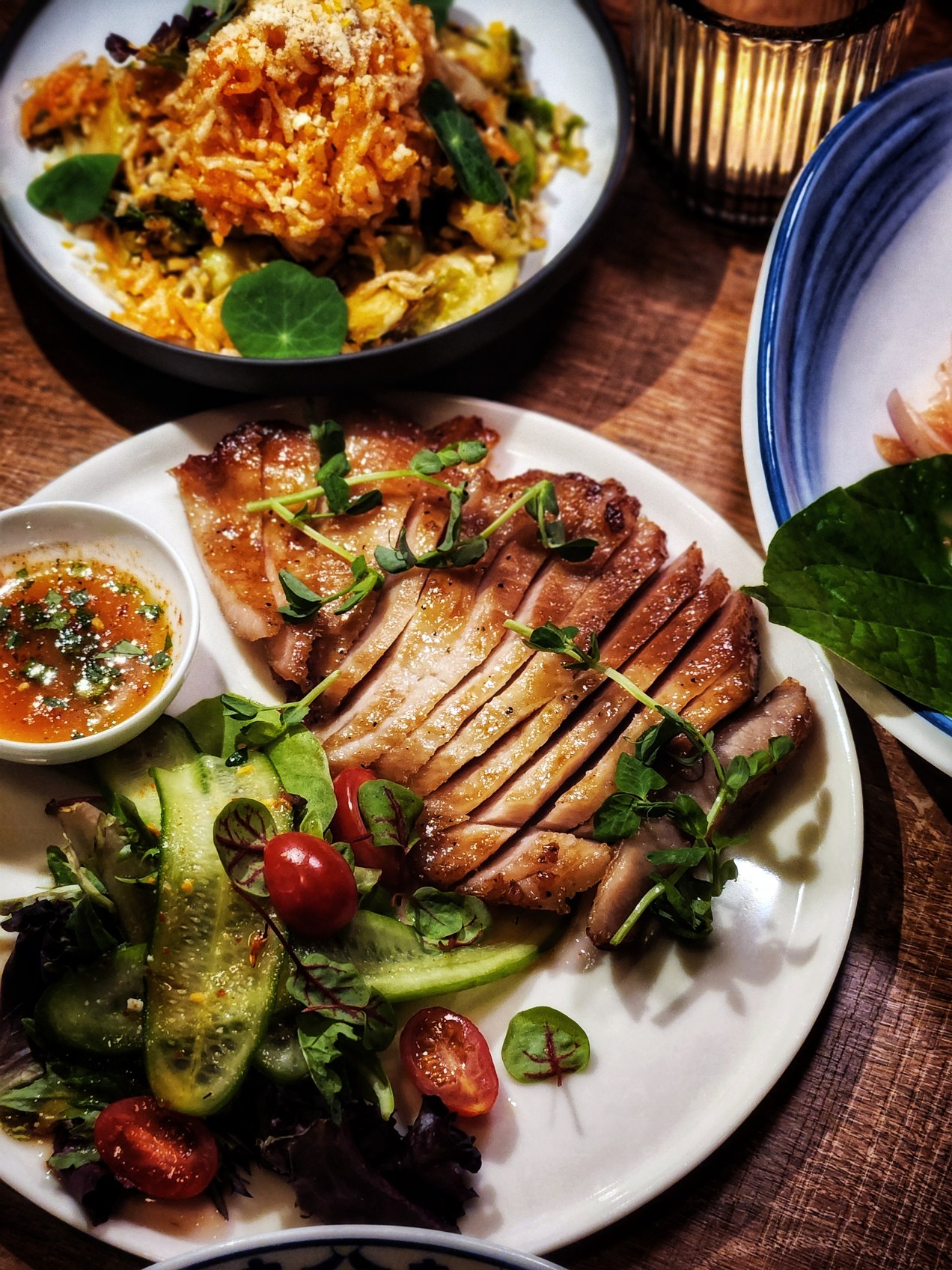
Khangrang’s dishes, developed with consulting chef @clement.kitchan, deftly walk the tightrope between tradition and an acknowledgment of what the masses want to eat nowadays. Non Khai chicken wings, tossed with cilantro and fried garlic, are sensational, while grilled pork jowl (pictured above) — which we were told tends to divide opinion even among Thai diners — was fork tender and seductively flavourful. So too was a green curry in which the typical protein choices of chicken or beef is ingeniously replaced with oxtail. Three-Flavoured Fish arrived begging to be Instagrammed, deboned but still whole, its tender innards extracted from its interior and tossed with bell pepper, fried basil, and a joltingly acidic (and presumably secret) “Mama Joy sauce.”

You will, without question, order the dessert of tempura-fried banana and coconut ice cream, an all-seasons champion that made us wish we hadn’t gorged ourselves so successfully earlier in the meal. Local and Asian beers (plus, lord knows why, Guinness) and a short international wine selection are offered, but you want to avail yourself of the cocktails, which were designed to complement the food and buttress the Thai motif with plenty of citrus and tropical fruit flavours. That said, we recommend the “Adults Only” Thai iced tea, whose generous rum content is all but undetectable until you realize two of them have ever so sweetly knocked you on your ass.

Jay Nok
127 W. 2nd Ave., Vancouver
604-683-7999
jaynokthai.com / Instagram: @jaynokthai

(Photo: Kley Klemens)

Standard
Belgian, Casual

InterJew #11: Nico Schuermans (chef, Chambar)

Visit our Instagram page

By Michael White

While he tries repeatedly, throughout an hour-long conversation, to deflect any suggestion that his accomplishments as a chef and restaurateur are exceptional, many of us can’t imagine Vancouver’s dining scene had Chef Nico Schuermans not moved here and opened Chambar in collaboration with his then-wife, Karri Green-Schuermans (who remains its principal owner).

Although Chambar has always been deservedly acclaimed for its food (much of the menu is a reflection of Nico’s Belgian heritage), it may be just as notable for serving as an incubator to many talented people who subsequently opened successful restaurants and other businesses of their own — among them past InterJew interviewees Robbie Kane (owner of Café Medina) and Kelcie Jones (Michelin’s 2023 Vancouver Sommelier of the Year). Think of Chambar as a benign octopus whose tentacles now embrace much of the city’s restaurant landscape, in ways both obvious and subtle.

At the time of this writing, in September 2024, Chambar is celebrating its 20th anniversary with a series of special events. Despite not being an especially public person (his response to people who suggest he should have a personal Instagram account: “For who? Anyone I care about, I see them every day”), Nico spoke enthusiastically and at length about a restaurant and a career that have far exceeded his expectations.

This interview has been edited for brevity and clarity.

What’s your earliest memory of being taken to a restaurant?
It was with my grandfather. He was a [military] reserve, not a career soldier. But in Belgium, if you get into the army, you become an officer. He was an officer, although he was a lawyer by trade. You would have these restaurants — they’re like a private club for officers — and I remember him taking me. I was probably eight or nine. There were round tables, napkins, very formal. That was the first time I experienced a high-end kind of restaurant.

What did they serve there?
Very traditional. It would have been coq au vin, stuff like that. But I knew that him taking us there was a big deal. This would’ve been the mid-’80s.

Prior to Vancouver, you had a fairly nomadic career. You were in Belgium, you were in London, you were in Australia. What brought you here?
This is actually not a joke: Every travel I did was following a girl. I went from Belgium to London because my girlfriend had an au pair job in England, and I really wanted to go to London, [where I got a job at] the Savoy. I went to Australia, following a French girl who was going there. And then from Australia, I followed Karri: We came to Canada for ski season. We never planned on staying. Karri loves skiing, I love skiing. Karri is Canadian, so we decided to come here. We got married on the way and I fell in love with Canada.

What did you hope Chambar could bring to Vancouver’s dining scene that wasn’t already here?
I felt in Australia that food was a little bit boring because of the [lack of distinct] seasons. Growing up in Belgium, the seasons are very exciting for a cook. They give you structure; you know what’s coming next and you always have something to look forward to.

But I also realized that Vancouver, for a city — compared to New York or Sydney — it was really not there yet. There was Le Crocodile — great food. Cactus Club. And there was Lumière, which was high-end; great food, but pretty stuffy, you know? My favourite restaurant was Bin 941. That was the kind of the food I was interested in: very technical, good flavours, but you didn’t have the stuffiness. [Writer’s note: Bin 941 was a very popular, very narrow restaurant in the West End, known for its creative small-plates dishes and extremely loud music. It closed in 2018.] I was looking for work, and I really struggled because I couldn’t find a person I wanted to work for. And I was still young — 25 years old — so I needed to learn. I started cooking when I was 14, so I still had a lot of experience, but I didn’t want to be a head chef, because I’d been a head chef in Australia and I found that I was running things more than cooking, and I already knew that was not something I was into.

I did, like, seven years in three Michelin-star restaurants. There was a lot to learn from it, but it didn’t match my personality. When I was 16, I wanted my parents to experience what I was doing, but it was out of reach for them. The price was too high; it was not their world. I wanted Chambar to be a place where everybody would feel welcome. I remember the first time I realized I had succeeded, about six months after opening the first location. I think it was the first time I’d stepped out of the kitchen for a whole evening, and I decided to sit at the bar with a friend of mine. I looked around the room and I saw every demographic I wanted to cook for. This is what I wanted.

I moved to Vancouver in 1999, and Chambar was the first new restaurant here whose opening I realized was being treated like an event. I think the first episode I saw of [Food Network Canada’s] Opening Soon was about Chambar. And I also remember that much of the attention being given to the opening was because of the location you chose, which at that time was considered a sort of a no-man’s land — there wasn’t really anything else on that block. Were you nervous about staking this very important venture of yours on a neighbourhood that people weren’t used to going to?
I didn’t know the city well enough. I was living on Commercial Drive and working in Kits. I wasn’t really aware of the problems of Vancouver… But Karri, she did her homework, and she knew that all those [condo] towers were getting built nearby. She said, “We’re going to have 2,500 new condos in this location in five years.”

But what we didn’t know about was hockey. We didn’t think the stadium [Rogers Arena] was gonna be such a draw for us. One night there was a Sting concert, and that night we went from doing 100, 120, 130 people one evening, to a line-up before 7:00 p.m. We got buried. It was a Saturday night and I shut down the kitchen by 9:00. We had no food left. And I remember coming back on Sunday, and I sat in the kitchen, thinking, “How are we gonna do this right?” I thought that we had an 80-seat restaurant. I didn’t know that Vancouver had three seatings, so the 80 seats turned into 160 real quick, and then we broke the 200-seat [threshold].

Did the Opening Soon episode have a lot to do with that?
It was huge. You know, seven years after that show, I met these Dutch people in the dining room, and they were saying that the reason why they came here — not to Vancouver, but to Chambar, while they were visiting — was because the Food Network sold the rights to the show in Holland, and they saw us. We had people from all over Canada coming to see us. It was a really well done show, and it represented us really well.

Two other people I’ve interviewed for this series, Robbie and Kelcie — they both said something very similar, which was that, number one, Chambar was where they learned more about the industry than anywhere else, and also that what was so great about their experience here is they were allowed to make mistakes, because in the process of making mistakes, you learn, and then you’re able to move on and either work elsewhere or do your own thing. Was that a conscious decision of yours, that you wanted Chambar to be a place where your staff could learn the industry better?
Well, Kelcie and Robbie, both of them — those are the talents you need. And once you give them a job, you’ve gotta let them run it. You can’t micro-manage or go after them when they make a mistake. We all make mistakes. I made some terrible decisions in the past. Mistakes are the best thing can happen to anyone. Now, if you make a mistake because of a lack of trying, that’s a problem. But talented people, let them try.

One of my old cooks, a friend of mine, Pat Hennessey — he owns Barbara — he told me years ago that we are the most generous and most demanding owners he ever worked for. And I actually don’t mind that. I’m like that with my cooks, and I’m like that with my kids, too. Like, “I’m gonna give you the best life, but these are the rules you can’t break.” When people ask me why Chambar is so successful, it’s because we surrounded ourselves with talent. Anything I can’t do, somebody has got to do it, and it has to be the best person.

Do you think you have a particular talent for recognizing potential in people? Robbie began as a server and look at everything he’s accomplished.
I think talent attracts talent. Talent is mutual respect. For me, I would never work for people I don’t respect.

Chambar is 20 years old this month [September 2024]. What are you proudest of?
Seeing the impact we’ve had on people — including staff, even more than customers, because I’m not that in contact with customers. Knowing I was able to allow people to learn and do their job and create a career out of a place like this, it’s more like I look back and I know how much people are touched. I have a dishwasher who worked for me for years. He ended up being able to buy a house in Langley. I’m very proud to be able to create an organization that allows people to do that.

(Photo: Jenna Low)

Standard
Asian Fusion, Casual

Review: Meo

Visit our Instagram page to see more photos

By Michael White

To restaurant patrons of a certain age (and here I mean myself and my Generation X peers), there are few sights in a restaurant as unexpected — and as immediately nostalgia-inducing — as carpet.

Throughout the 1970s and well into the ’80s, carpet was the default floor covering of almost any restaurant whose parking lot wasn’t bathed in the neon glow of an illustrated hamburger. Pizza Hut was carpeted, and literally every Chinese joint, and so was “the good steakhouse” where your parents celebrated special occasions without you. But then, for whatever reason, carpet fell sharply out of favour — in both commercial and residential interiors — to be replaced with hardwood, laminate or poured concrete. And restaurants were never quiet again.

Meo, in Vancouver’s Chinatown, is filled with carpet, from the raised dining section at the back of the room to the entire width of the staircase leading downstairs to the toilets. The carpet’s dominant crimson hue is marbled with beige, like a premium ribeye served at that same steakhouse your parents knew was too sophisticated for your loud, obnoxious, prepubescent mouth. This may seem too minor a detail to be occupying the first three paragraphs of a restaurant review, but it telegraphs Meo’s concept as clearly as anything else about it.

Like its upstairs neighbour, Kissa Tanto (both of which are under the ownership of restaurateur Tannis Ling, and chefs Joël Watanabe and Alain Chow; they also co-own Bao Bei), Meo is serious about its food, drink and atmosphere, but playful about it, too; as exacting about what it serves as the time and place it means to evoke. The cocktail list includes an irreverent version of a Grasshopper, for God’s sake — a cocktail that hasn’t been popular since cars came factory-equipped with an 8-track player.   

“Irreverent” is a key word here, which is why Meo’s proprietors clearly spent a fortune to make it look like a perfectly preserved adults-only lounge from the era when the Mr. Trudeau governing Canada was the one who has now been dead for almost a quarter century. (It came as no surprise that it’s the work of Ste. Marie, Vancouver’s cleverest and, it often seems, most ubiquitous interior-design firm.)  A new restaurant would never purposely look like this in 2024 unless it meant to make you laugh in disbelief.

And laugh we did. But we also smiled contentedly, and exclaimed enthusiastically about a succession of drinks and shareable plates that straddle past and present like Bruce Springsteen’s setlist.  

Mind you, we laughed (amusedly, not derisively) at some of the food, too. How else is anyone meant to react to croquetas filled with Caesar salad? And not authentic, fine-dining-calibre Caesar salad, but chicken Caesar salad, which most of us tend to associate with a sad office lunch in a plastic clamshell bought hastily at Safeway. But they were great, their crisp breaded exterior stuffed also with an incongruous Béchamel sauce. I wanted another order.

But there were too many other dishes to try, including the ethnic collision that was a Japanese-style milk bun filled with curried potato, which we were instructed to tear into pieces and spread with dabs of apple butter. Sure, why not?

Yukhoe, the Korean equivalent of tartare, was also highly memorable. Neither Kley nor I can ever get enough of a tartare, and this one — garnished with Nashi pear and nori alongside the expected cornichons, capers and egg yolk — looked as if it had too many elements to cohere, but somehow it was a success. The shards of semolina cracker we scooped the beef onto were both shatteringly crisp and appealingly dense. Our only criticism is there weren’t enough of them.

But the evening’s showstopper — and this seems to be happening more and more recently — was a burger. Specifically, what the menu describes as a beef bourguignon burger. Frankly, I couldn’t detect an obvious similarity to the eponymous French stew (and I’d have preferred half as much salt, although Kley’s Indonesian taste buds had zero complaints), but I still devoured it like the highbrow trash it means to be.

Cocktails are similarly mischievous in terms of how they defy expectation. I was forewarned that the Old Fashioned I ordered has proved divisive among customers because it doesn’t taste much like an Old Fashioned. And it doesn’t, but this is exactly why I enjoyed it; its chocolate bitters, splash of rum and — wait for it! — “duck fat wash” cancelled out the inherent sweetness of the conventional version, which I’ve always thought excessive. Kley opted for one of Meo’s own creations, called Sinful Blossom, which comes in a stubby bottle and somehow makes gin, port, rosé, salted plum and Osmanthus tea seem like they were always meant to be together.

Among the many ways Meo harks back to a long-gone point in history — it even has a vintage jukebox, albeit purely decorative (please do something about this!) — it feels reminiscent of the post-war period when adults who took themselves out for a night on the town actually acted like adults. Between its dim lighting, plush seats, and casual yet deferential service, Meo, above all else, feels very civilized, which can’t be said about most things in the 21st century. Must be the carpeting.

Meo
265 E. Pender St.
604-559-6181
meochinatown.com / Instagram: @meochinatown

(Photo: Kley Klemens)

Standard
Asian Fusion, Casual, Vietnamese

InterJew #10: Amélie and Vincent Nguyễn (owners; Anh and Chi, Good Thief)

Visit our Instagram page

By Michael White

Anh and Chi is one of Metro Vancouver’s greatest restaurant success stories of the past decade. Since day one, in 2016, its authentic yet elevated interpretation of traditional Vietnamese cuisine has proved so popular, it looks strange for there to not be a lineup extending past its Main Street storefront.

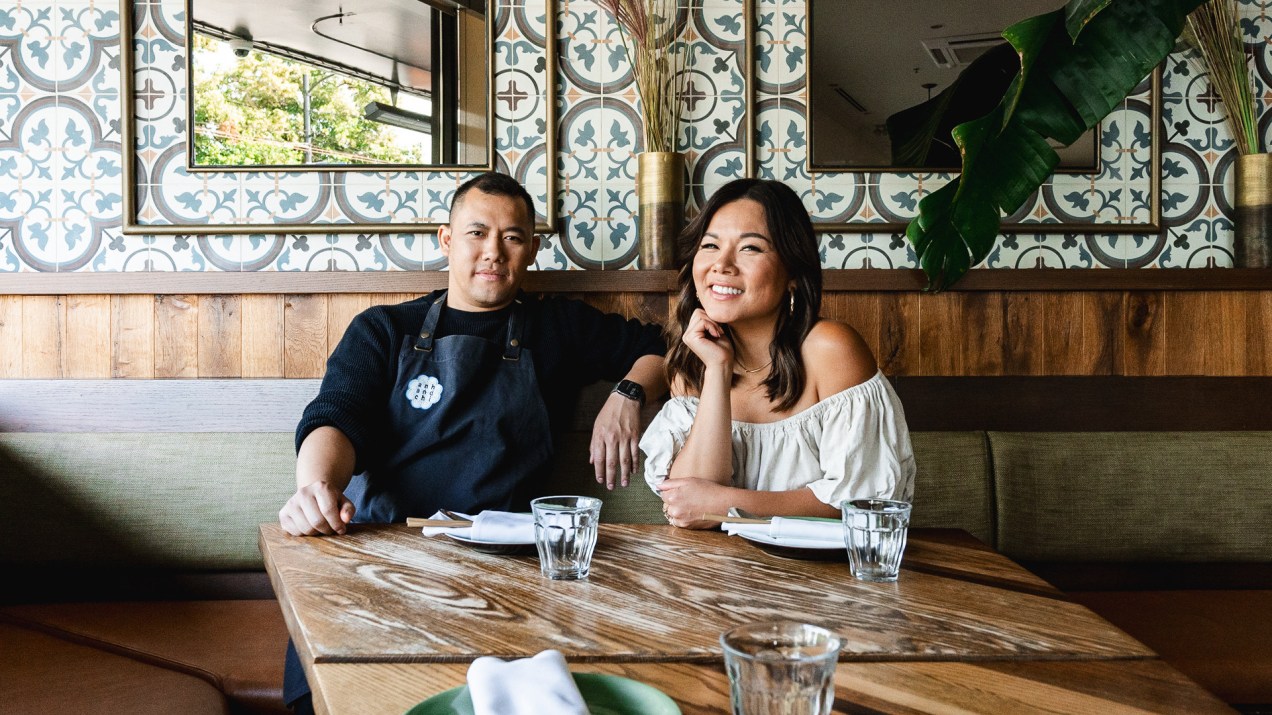
The restaurant’s owners, siblings Amélie and Vincent Nguyễn, opened Anh and Chi (its name translates as “elder brother and sister”) in the space that previously housed their refugee parents’ beloved Pho Hoàng, said to be Vancouver’s first pho specialty restaurant. When family patriarch Hoàng passed away, Amélie and Vincent decided to forego completing their university educations and instead honour their parents’ legacy with a new, modern dining destination. Eight years later, it remains as popular as ever (possibly even more so, after receiving a Bib Gourmand designation from Michelin). Amélie and Vincent’s mother, Lý, retains a crucial role in Anh and Chi’s success as its executive chef; in fact, her own home cooking has always been one of the menu’s primary inspirations.

Most recently, just weeks before the following interview took place, the Nguyễns opened a new venture, Good Thief, in the space next door to Anh and Chi. Like its neighbour, the interior and menu offerings at Good Thief are impeccable. Unlike its neighbour, the concept is more of a lounge, where inventive cocktails are served alongside small, shareable dishes such as fish-sauce-glazed frog legs, and an incomparable version of pommes frite, served with curry leaf and Thai green-chili aioli.  

Yet despite being in the midst of what may be the busiest period of their lives, Amélie and Vincent radiate calm and happiness — the glow of contentment that comes from knowing their hard work is being rewarded by the love and devotion of their community, as well as guests who come from near and far to experience a meal imbued with decades of pan-generational experience, meticulous attention to detail, and, Vincent repeatedly emphasizes, “love.”

This interview has been edited for brevity and clarity.

What’s your earliest memory of being taken to a restaurant?
Amélie: I can’t remember! We grew up very poor, and so we didn’t have the money to go out to eat. My mom and dad, they arrived [in Canada] as refugees in 1980. They used to buy the spines of chickens, because they couldn’t afford the meat. The cheapest part was the discards — the bones, the spine — and they would bring it home and they would braise it or deep-fry it and caramelize it. It was all they could afford, but it had amazing flavour.

But actually, my first childhood memory of a restaurant was the old Pho Hoàng, at Main and 20th. At nighttime — probably 9:00 or 10:00, and I was maybe six or seven years old — I would go with my two cousins, and we would skim the fat that rises to the top of the pho, which would simmer for 20 hours. In order for the pho to be very clear, all of that has to be taken off. We would occasionally scoop out a beef bone and eat the marrow, and it would be so sweet because of the spices and seasonings from the broth. We would dip it into hoisin sauce and my mom’s chili oil.

Were you curious about western food — particularly fast food and whatever you saw the white kids eating at school?
No, I don’t remember that.

You never were intrigued by McDonald’s or anything like that? It must have seemed exotic if you’d never had it.
Eventually we did go to McDonald’s. I remember my mom taking me to the one on Main. There’s still one there now, but it was different. It had a merry-go-round, and I remember eating [McNuggets] and fries, and eating it with honey. My mom introduced me to honey with chicken nuggets!

And I would go with my best friend to Riley Park — the skating rink — and there was a McDonald’s there. We didn’t have money, so we would ask for ketchup and we would eat the ketchup. We said we were “ketchup sisters.”

That’s tragic and adorable.
I know! (laughs)

[At this point, conversation turns to one of Amélie’s uncles, Tom, with whom she closely bonded when she encouraged him to come out as gay to the family. He did so a few months later.]

[Tom] is a restaurateur in Seattle, and now he owns a gay club in Capitol Hill. His restaurant, Tamarind Tree, inspired us to do Anh and Chi. We saw how successful it was, serving authentic Vietnamese food, but making it more elegant and beautiful, and pairing it with cocktails. And because it worked in Seattle, which is very close to Vancouver, we were like, “We can do it here.”

When you were preparing to open Anh and Chi, did you bring in any outside people to develop the menu, or was it just your mom?
My mom, but also my Aunt Mary and Uncle Tom. My aunt actually sacrificed a month of her life, away from her husband and her children, to come live with us in Vancouver.

Also, my mom, my brother, my sister and I, we took a family trip to Vietnam to get inspiration and make sure things would be authentic. We went to the north, where my mom’s home was. I jotted down all the things I ate, whether at a relative’s house or on the street or in a restaurant. Then we went down south to the Mekong Delta, to visit my dad’s side.

So, the inspiration for the menu came from our trip in Vietnam, and also dishes where it was like, “Mom, you make this at home” — like her caramelized fish — “Let’s make it here, too.” But we would use B.C. fish. Like, in the winter, we use Arctic char; recently, we’ve used sablefish. We try to bring in local ingredients that are sustainable, and then we incorporate that into our Vietnamese recipes.

What about, for instance, the plating, or choosing the glassware and the plates? From the very beginning, it was so sophisticated and so unlike what someone expects to see at a Vietnamese restaurant.
That’s all Uncle Tom. That’s all ‘Gay Uncle Tom,’ of course. (laughs) He actually found a source for the [place settings] in Vietnam — this village, an ancient village, and they make ceramics. He ordered so much for his restaurant that he was like, “You know what? You’re opening a restaurant. Just come to our storage locker and take some.” All of the dishes were made in Vietnam and hand painted.

Vincent [oversaw] more of the structural things, like the pipes and the water and the air con, and the stoves and vents.

How quickly did you realize that the success of Anh and Chi was exceeding your expectations? The lineups and the waiting list — those were there from the beginning, right?
Day one. We were blown away. We opened and then we had to close early that day because we ran out of everything. And there was no marketing, no PR. It was our parents’ legacy: The community knew that the children from Pho Hoàng were opening up a restaurant. And all the media outlets, like Vancouver magazine and the CBC, they all reached out to us. We didn’t work with a publicist.

Did you then have to scale up very quickly to meet the demand?
Our team grew. And the beauty was, because we had to scale up — it was great, because there were people who were very ambitious, that wanted to grow into management, and so we were able to grow, too. Part of the responsibility of being a business owner is, you’re growing with your team, and if you want to keep working with them, you have to be able to create a dream big enough to grow with.

[Vincent arrives and Amélie lets him take over the conversation while she tends to a meeting with the Good Thief team.]

How did you end up acquiring the space next door to Anh and Chi? It was a great stroke of luck that it became available.
Vincent: During the pandemic, a lot of places went out of business. Unfortunately, the hair salon and the framing store [that previously occupied the space] also went out of business. We have a great relationship with the landlord for Anh and Chi, so the landlord approached us and said, “Hey, do you want to expand?”

Did you ever contemplate just making it an extension of Anh and Chi?
We did think about it. But, you know, Anh and Chi is already a well-oiled machine, and to mess with that, it would add a bit of headache. I had wanted to create something of my own — my own identity, something that’s not a family-run restaurant.

So, Good Thief is more your project?
Yeah, it totally is. It’s the little brother going against tradition, following no rules, being rebellious.

Was it difficult to sell the idea to the rest of the family?
No, not at all. I think selling the idea of Anh and Chi — “Hey, Mom, I’m dropping out of med school and opening a restaurant!” — that was the hardest thing to do. It finally dawned on her: About four or five years [after opening], she had dinner with me and said, “Hey, you know, I’m proud of you for leaving medical school.”

What was the length of time from acquiring the Good Thief space to opening?
That was about two years. There were a lot of hiccups. Don’t build a restaurant where there’s no existing restaurant. Don’t do that. (laughs) But the benefit is I can be at both places at once. I don’t have to cross a bridge to tend to another restaurant.

There was no point at which you thought, “I’m busy enough already”?
Yeah. But we have to grow. We have an amazing team and they need to grow. And by growing, we can allow opportunities to meet new people, bring in new talent, and also expand.

Was Good Thief inspired by other places, not in Vancouver but elsewhere?
Oh, yeah. New York, L.A., in Japan, in southeast Asia. And that’s the whole idea behind the name Good Thief. It was us going around the world, stealing these ideas — the cocktails, the design, the service — and bringing them back and sharing them with the community.

Standard
Middle Eastern Cuisine

InterJew #9: Dallah El Chami (Chef, restaurateur; Superbaba, Mishmish)

Visit our Instagram page

By Michael White

Abdallah El Chami (you can call him Dallah) spent years working in the tech sector. But his mind was often elsewhere: specifically, in the world of restaurants, which so fascinated him that, while studying at university, he sketched a floorplan of an idealized establishment that would serve the cuisine of his native Middle East.

Eventually, the restaurant industry came to him, when the principals of Café Medina and Tacofino took interest in the food he was serving at various pop-ups in and around Vancouver. The result was Superbaba, which opened its first location in Victoria, in the summer of 2017. Vancouver followed, first as a food truck, then, in late 2020, as a bricks-and-mortar space.

It isn’t hyperbole to say Superbaba set a new standard in the region for casual Middle Eastern cuisine — an assertion supported by rave reviews and multiple awards. And just days before the conversation that follows, Dallah’s Midas touch proved itself again with the opening of Mishmish, a Middle Eastern-themed bakery and café that immediately generated ecstatic word of mouth.

This interview has been edited for brevity and clarity.

What’s your earliest memory of being taken to a restaurant?
Oh, geez. That’s a hard one to remember. My family moved [to North America from Saudi Arabia] in 1991, I believe. I was two years old, I think. My first memories of restaurants are McDonald’s or donut shops; probably Taco Bell, because one of my uncles worked there.

My parents came over here around the time of the Gulf War. They came to Oregon, where all my mom’s brothers were. The U.S. didn’t have a program yet to let people from that region stay, so we basically got into a van with my uncle and drove up to the Canadian border, and we ended up staying in Vancouver as refugees. We weren’t really going out to restaurants, but I can definitely remember going for fast food. There was a time when my mom worked at 7-Eleven and my dad worked as a pizza deliveryman, so there were a lot of Slurpees and pizza in my life. And the Filet-O-Fish was something we ate a lot; my mom was strict about not letting us eat beef or chicken outside of the house. The Filet-O-Fish was excellent, but no one else really ordered it.

And I think that’s still the case. I don’t know how it’s remained on the menu all this time! What sort of things was your mom cooking?
Almost strictly Lebanese food: green-bean stew; Mujadara, which is lentils and rice; chicken and rice. Saudi Arabia has a national dish called Kepsa, which is a very famous rice pilaf with chicken, stuffed grape leaves, zucchini, cabbage…

Obviously, what you were eating in those fast-food restaurants was very different from what your mom was making at home. Did you give very much thought to the fact that North American food — or at least your perception of it, from eating at McDonald’s and whatnot — was very unlike Lebanese food?
Once I was in school, it was very clear. We would bring lunches to school and I would have a pita wrap with cucumbers and labneh, and none of the other kids had that. The fun part about that was sometimes you would trade your food with other kids because they’d never had it before, so they wanted it, and I’d get to have a peanut-butter sandwich.

They were open-minded about it?
Lebanese food doesn’t really have anything funky in it; we don’t really have much fermentation that involves funk and smell. Our fermentation is, like, pickles, which never really have that much of a smell. So, when [North American] people see our food, it’s a little bit easier to introduce it to them, because there’s nothing out of the ordinary in terms of how it smells or how it tastes.

Do I understand correctly that your parents discouraged you from a career in food, which is why you previously worked in tech?
My dad loves entrepreneurship, and every immigrant family has an obsession with restaurants. My uncle owns a well-known donut shop in Oregon, and he does very well. And I had a lot of uncles who worked in restaurants. But they definitely wanted me to have an education, because they didn’t want me to struggle. My parents had been through several wars, and they had to move several times and restart their life. My dad had to restart his career several times. So, in their mind — and [this is probably true of most] immigrant families that come here — it’s like, “Get your degree,” because then at least you have something, right?

I was a pretty stubborn kid throughout high school and university, and I think I probably have some undiagnosed version of ADD, because the way I learn isn’t normal. When I would sit in lectures, it felt like the world was gonna end, it was so boring and so slow. It would have been better had my lectures been on YouTube, and I could put it at, like, 1.5 times the speed.

But eventually, I convinced my dad to loan me the money to open the first restaurant [Superbaba in Victoria].

But before that, you worked in tech for six or seven years. Was it painful? Were you pining to be working in, or owning, a restaurant instead?
It’s so weird. I can’t really nail down the exact moment that I was like, “I need to do a restaurant.” It sounds romanticized, but I have a notebook from university where I drew a floorplan of a restaurant I wanted to do. It was gonna be a saj-based restaurant; saj is a flatbread that you make on a plancha, almost. I still remember: it had a U-shaped counter where you could see everything being made… And also, I’d been cooking since high school, because my mom went back to Saudi Arabia when I was 17, because my dad was still working there. I started cooking for myself, then I would cook for my friends and I would try to make random things. I think I started baking for a while, too.

When I was in tech, and when I was travelling, I would go to restaurants, and I’d be like, “This is such a cool thing, but there’s no way I can do it, and I’m already too late.” They tell you to start your cooking career when you’re, like, 16 or 17. But then what happened was, when I was in tech, I started helping friends with catering, and I started learning from that. In tech, I was working in digital marketing and also product design. Half the day I would just be like, “What am I doing?” But I attribute that job to why I have restaurants today. That job opened my network exponentially. I met all these different people, and those connections eventually became the connections that helped me get my partners to open the first restaurant.

One of the things I found so impressive about Superbaba — even before I’d eaten there, when it was just in Victoria — is that it arrived seemingly fully conceptualized, from the branding to the interior to how concise the menu is. It was like an established chain from the get-go. Was that all your doing and your history in marketing?
The origin story of Superbaba is very complicated and involves a lot of people. I had a plan to open a Lebanese- or Arab-themed coffee shop. Then I met Robbie [Kane, owner of Café Medina]. He asked to meet me because he wanted to do events at Medina and he knew I’d done pop-ups. We got along really well, and then eventually he’s like, “You know, I’ve always wanted to do a small version of Medina that could be Middle Eastern.” I told him what my plan was, and then shortly afterwards I met Ryan Spong from Tacofino at one of my pop-ups, and he was like, “Hey, what’s your day job?” And I said I was in tech, but now I’m doing [pop-ups] and hopefully I’ll open a restaurant. He goes, “Great. We should talk.”

It turns out he and Robbie had been talking the whole time. They wanted to get into Middle Eastern food; they just didn’t have someone to pilot the ship. So, they got together with me and said, “How about, instead of doing it on your own, we could do it all together.” And the reason why the first restaurant is in Victoria is because around the time we signed the partnership, they had a space there that could work for the concept. I said yes, because I was sort of in limbo at that point. And Victoria wasn’t as daunting as opening in Vancouver.

Did you conceive the entire menu yourself?
No. Initially, Superbaba had no name, it barely had a concept. I was originally hired just to be the operator. And so, when I got to Victoria and we started working, there were two guys, Josh Carlsen and Mike Dawson, who run the Tacofino there, and they were going to be on the ground with me. They’re veteran cooks; they’ve been cooking forever… But we realized we didn’t really have a chef. I had cooked a couple of times for the partners — just like, “This is what I think the food should be” — and I was working on developing the pita bread for [Superbaba] in the Medina kitchen. And eventually I was like, “You know what? I can’t conceive of hiring somebody else to do the food — this food that I’ve known for so long — so I’m just gonna go for it.” And so we started testing menus, and the guys in Victoria were the sounding board for ideas, improvements, testing with them, and learning how to make recipes to scale. They were integral to helping me get that menu together and then scale it. I mean, you could call it “my menu” because I was spearheading it, but without Josh and Mike, I don’t think it would have [become what it is]. The menu went through many versions of recipes, many changes that a lot of people may not have noticed at all. Some of my recipes have 25 versions, so it wasn’t an overnight thing.

Which do you think is the most underrated restaurant in Metro Vancouver?
Magari by Oca, for me, is just pure, pure cooking, and pure hospitality — not in that they’ll bend over backwards for you, but that they treat you right. They make beautiful food. There are a lot of places now that are like that, like Gary’s and Bravo. These restaurants are coming back to a way where their cooking could be deemed classic and highly rated; it’s not this Instagram dining that we have now.

Standard
Paid Partnership, Wine

Chablis and Me: A Q&A with Award-winning Sommelier Kelcie Jones

Visit our Instagram page

By Michael White

Kley and I first met Kelcie Jones in June of 2022. We were enjoying our first dinner at Elephant, an acclaimed East Vancouver restaurant where she was working as sommelier and general manager. We immediately fell in love with her sass and energy, and her utter lack of pretension about the incredible wines she was pouring from behind Elephant’s diner-like counter.

Fast-forward two years, and while Kelcie is no longer at Elephant, both she and the restaurant are flourishing. Elephant received a Michelin recommendation in both 2022 and 2023 (the first two years in which Michelin was rating Vancouver restaurants), and Kelcie was named Michelin’s 2023 Vancouver Sommelier of the Year for her consulting work at Burdock & Co, a trailblazing farm-to-table restaurant that itself received a Michelin star two years in a row. Additionally, in December 2022, Kelcie co-launched her own wine school, whose very name is a reflection of her humour and straightforwardness: This is Wine School.

In late May, Kelcie hosted an event in Vancouver dedicated to Chablis — a beautifully accessible and versatile (yet, many would argue, underrated) wine named after the region in Burgundy from where it originates. We had the pleasure of attending the event, and the night concluded with the following one-on-one interview about Kelcie’s career, her recent industry honours, and her love for Chablis.

This interview has been edited for brevity and clarity.

For those who became aware of you when Michelin named you Vancouver’s 2023 Sommelier of the Year, it might surprise them to know you basically fell into this career by circumstance. You were in Toronto, working part-time for a film festival and studying the arts at university. How did this sudden turn into wine happen for you?
I loved film and I loved literature, and I wanted to be in academia, studying those things forever. But it was a strange time in academia; most of the people who were PhD students were struggling to make ends meet, and I already had to work in restaurants in the summer [to support myself]. And I thought, “I’m not going to be able to work in restaurants and complete my PhD at the same time.” In the restaurant, the sommelier seemed to be the person whose job was the most narrative, the closest to storytelling and the closest to art. So, I thought, “How can I talk to people who are artists and how can I engage with something that’s a food version of film and music and art?”

But also, my interest in wine came from it being the one [alcoholic beverage] that I understood why people liked it. I really got it. And then, when the narrative aspect fell into place — when I heard people talking about wine and place and family history, and why the story of a specific wine is important — then I got to bring the storytelling aspect, which is what I really loved, into it.

When you returned to Vancouver from Toronto, where did your new career take you first?
I was at Chambar for a number of years. In the industry, it’s well known as the restaurant where you go to learn how to do whatever it is you want to do. It’s a special restaurant for that. As owners, Karri and Nico are really good at letting people make mistakes — which you have to be allowed to do — and to be creative.

Chambar holds itself to very high standards, and you didn’t have very much experience at that point. What do you think Karri and Nico saw in you that made them want to bring you aboard?
I was young and at a good place in my career. I knew enough — I was doing the WSET [Wine & Spirit Education Trust] diploma; I was quite dedicated to learning — but I also was still young enough to be like, “Yes, I will work 80 hours a week to learn to do this thing!” It was just the right period for me, where I was not enough of a novice to be underqualified, but still hungry enough to really go to the wall for them. They gave me a chance when I was quite certain that I wouldn’t get the job.

Kley and I met you for the first time at Elephant. Was that your first opportunity to have complete ownership of a wine program?
At Chambar, I really did get to do what I wanted. That was full ownership in a very real sense. But Elephant, because [I was helping to open] it, that was the first time I built something from scratch, which is a very different thing than walking into a program where someone else has already built a cellar. Even if you’re allowed to do whatever you want with that cellar, there’s already an existing structure.

Elephant must have felt like being thrown in at the deep end, because Justin [Song-Ell, chef] doesn’t cook like anybody else, and his menu changes all the time. What was that experience like for you, in that you had complete independence but you also have to choose wines that complement the cooking of one of the most idiosyncratic chefs in Vancouver?
It was more exciting, more fun. You’re really being pushed. And sometimes, it’s easier to not have very many options for wines that would work. You’re like, “Well, this dish is quite spicy, but also very delicate, and so there are only one or two wines that could possibly work with this thing.” And rather than a very classical dish, where any full-bodied red wine with tannins would be nice, sometimes with Justin’s food it was like, “This wine is the only thing that could potentially work.” It made me really pair food and wine with the sense of “Taste a sauce and then taste a wine,” as opposed to just using the theory that you have in your head as a sommelier. Most of the time, you’re not really eating a dish and then pairing; you’re just working from your brain with the general rules that you know.

On the subject of Chablis, was it at Chambar or at Elephant where you first had to really consider its versatility and the most appropriate pairings?
I think Chablis was even earlier than my sommelier life. It was probably when I was a server in Toronto, working at The Chase, which is an oyster bar. Chablis was quite deeply part of their program. You needed to have wine that worked with oysters, so that was a big consideration, and having multiple wines from the same place was pretty common on their wine list. Pretty much from the beginning of starting to care about food and wine — as a server, before I even became a somm — pretty quickly I was like, “Pairing is something I’m going to care deeply about.”

Did you find that that Chablis was one of the more versatile wines?
I think it works so much better with certain foods than anything else. It’s a natural choice for a lot of things — oysters being the main one, but so many dishes that are also quite west coast. In Toronto, it was oysters. But here in Vancouver, we have a big focus on mussels, there’s lots of scallops, there’s lots of shrimp and different shellfish that need a wine that’s clean and precise. Not to say that there aren’t other nice white wines that work with shellfish, but Chablis is just the best pairing for the table.

Seafood aside, what do you think are some of the most natural pairings?
Thinking about the flavours in a lot of Chablis wines can unlock ideas for good pairings. Some Chablis have quite a green-apple quality, so it would pair well with a green-apple salad with aged cheddar and walnuts — an old-school pairing that has all the same flavours in the glass as on the plate. I like Chablis with a lot of creamier, cheesy things. Something kind of fun and lowbrow, like mac and cheese, is also really good. Anything that has a cream sauce — you can pick a protein and then something that has a creamier sauce — pairs nicely with richer premier- and grand-cru-style Chablis.

What’s your own favourite pairing for Chablis?
I know oysters are already a fairly obvious option, but I think that picking certain oyster types and certain Chablis wines is particularly nice, like certain premier crus with east coast oysters that are a little bit brine-ier. I also really like Gougère. How can you have a better thing than a beautiful little bread-dough ball with cheese in it, fresh out of the oven, very warm, soft texture. It’s not a meal, but it’s so traditional to Chablis. It’s light but also rich, which is true of the wine too.

Do you find that Chablis is relatively underrepresented on restaurant menus? Is awareness of it growing or is it still somewhat of an underdog?
I think awareness is quite deep in B.C., but maybe not beyond the fact that it exists and it’s delicious. The nuance of knowing that it’s made from Chardonnay is not always there. But people absolutely recognize it and it’s on most lists — at least one, if not a couple of options, which is awesome.

So, for the enlightenment of people reading this who aren’t necessarily well educated about wine, what is it that differentiates Chablis from Chardonnay?
Think of it as a wool/cashmere analogy. Chardonnay is a great variety that’s planted in every corner of planet Earth. If there’s a wine region that exists, they have Chardonnay. There’s nowhere without Chardonnay, basically — even places where it’s not the most popular grape. And in a lot of cases, Chardonnay has a lot of oak on it, and it’s grown in a lot of warmer climates. So, it’s like a richer, buttery, tropical wine. But Chablis is, in a certain sense, the prototype but also the purest expression of Chardonnay. None of the butteriness. In some cases, Chablis has a little bit of oak, but is usually more about purity and minerality. And if Chardonnay is wool, which for some people is scratchy and uncomfortable, Chablis is cashmere. It’s the softest, most supple and lovely texture.

You’re in the midst of pursuing your Master of Wine. What does the designation mean and what can it potentially lead to?
It’s not really a part of any traditional academic structure. It’s kind of its own institute: the Institute of Masters of Wine. And that designation is quite respected in the world of wine; the initials MW are only held by 300-ish people in the world. The program is about tasting wine as much as it is about the theory of winemaking and how wine is grown.

To be honest, I’m happy doing what I do now. I’m happy to get to talk to people, communicate, speak, teach — so I don’t really know if there are going to be that many more things that I’ll do in terms of true jobs. I just really love the idea of pursuing education and doing something that’s hard and pushing myself.

In the short time since Michelin named you Vancouver’s 2023 Sommelier of the Year, what’s been the most interesting revelation as a result of the exposure it created?
The wine world is very small. You meet people and they don’t live in the same place as you, but the community is small, so being kind to people is so important. I hope I’ve always been kind. (laughs) Also, I’ve learned how warm the world of wine is. People really do want to connect with one another, share and talk. At the end of the day, we all do this because we love getting together, sitting at the table, talking, sharing wine, maybe eating Gougère and drinking a glass of Chablis. It’s a special communal thing that a lot of other industries don’t have.

If someone reading this is new to Chablis, where do you recommend they start — especially if they only have access through government liquor stores?
I think we’re lucky in B.C., in that the quality of the baseline is excellent. There are a lot of really interesting options. There’s a good selection of wines from Jean-Marc Brocard, so you can taste multiple premier cru and grand cru, but also entry-level Chablis from Brocard, which I think are very classic expressions of the wine, on the more pure-mineral side of things — less rich, less round than some producers. And they’re accessible in a lot of stores, and they’re certified organic, which is great for a larger producer.

(Photo: Kley Klemens)

Standard