French, Fusion, West Coast, Wine

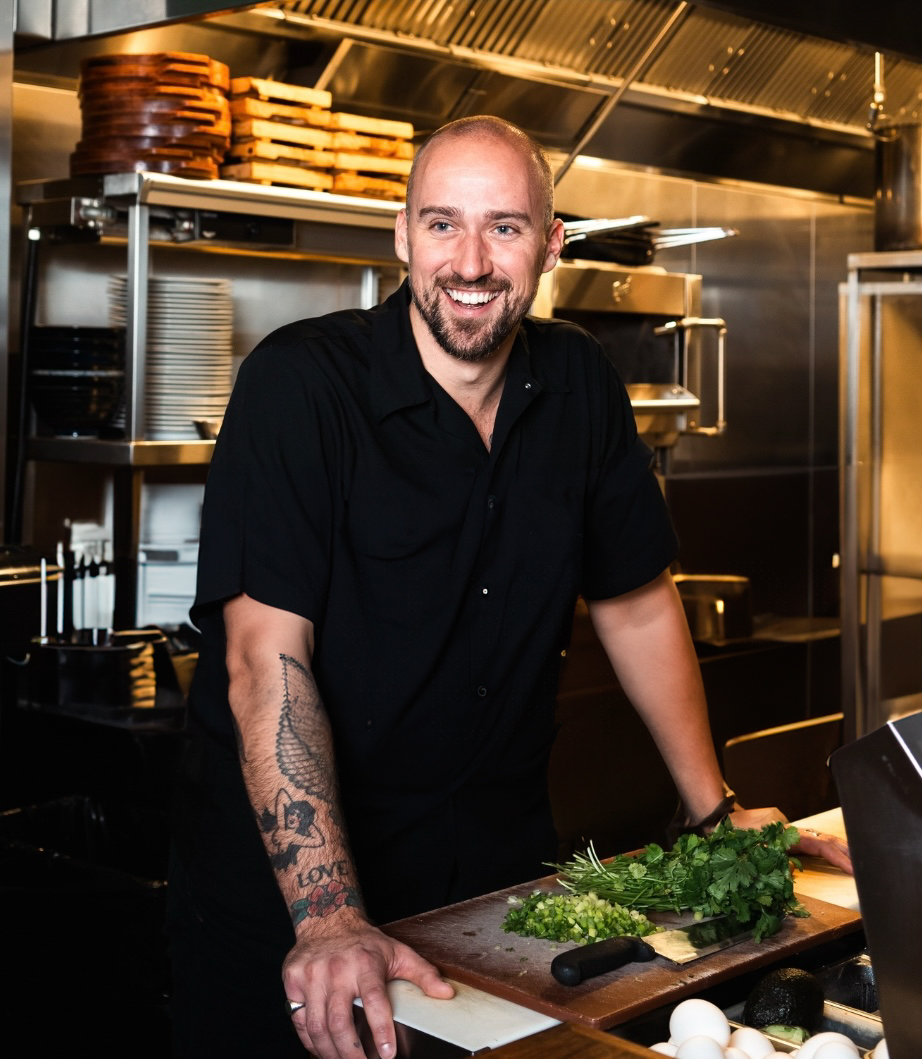
InterJew #12: Kovic Prévost (owner, chef; Is That French?)

Visit our Instagram page

By Michael White

The last person who expected Kovic Prévost to open a restaurant — least of all in Vancouver — was Kovic Prévost. A nomadic cook since his teenage years in his native Montreal, a combination of restlessness and unpredictable life circumstances brought him to Vancouver, home to Montreal, Vancouver again, Japan, the French alps, and Vancouver a third time (and possibly several other destinations he neglected to mention).

In Summer 2022, he opened @isthatfrench, a cheekily-named wine bar and small-plates eatery in the long-dormant space in Gastown’s Blood Alley that had previously housed the trailblazing Salt Tasting Room. Within weeks, it was attracting full houses — and it (very deservedly) still is. But had it not been for the persuasion of the building’s owner and various people in Prévost’s social circle, it never would have happened.

This interview has been edited for brevity and clarity.

What’s your earliest memory of being taken to a restaurant?
That’s a good question. It all leads back to family holidays. We used to go every year — or every couple of years, maybe — to the East Coast: Virginia Beach, Cape Cod, Provincetown. And then I grew up on seafood. My happiest memories are when the family would drive down to the East Coast. I was raised by parents that were, like, the kids’ menu was not an option. It was like, “You want to eat?  You eat with us.” And so I grew up eating mussels, lobster, clam chowder. I’m very grateful, because they exposed me to a lot of amazing food. My friends were eating pizza pockets. Even though my parents weren’t great cooks, they really enjoyed eating. We didn’t have much money, but food was always important.

This leads to the inevitable but very unoriginal question: What made you want to be a cook?
I just liked it. I came [to Vancouver] when I was 17 or 18, to learn English, and I stayed here for almost a year. And I helped out with a catering company in the Okanagan Valley: peeling potatoes, asparagus… They only bought food from the Okanagan, and they had their own pigs and made their own charcuterie, and grew their own vegetables. And one day, at the end of the summer, they were like, “Thank you so much for your work. We have an empty spot at one of the dinners. Do you want to come and eat?” And I did, and it was delicious. But even more than that, it was, “These guys are amazing at what they do.”

So, I went back to Montreal and I knew I wanted to become a cook. I started as a dishwasher in a restaurant. I enjoyed the fast pace. It was a very busy French restaurant, and the dish pit was full, and people were yelling, and the servers were running around, and I fell in love with it. I have ADHD, and this fed my brain. I would crush my work in the dish pit and then go to the chef and be like, “What are you doing now? Can I help?”

Did you go to culinary school?
No. I just worked in restaurants. I learned under two chefs in that French restaurant for four years. It was there for a long time — almost 30 years. It was tartar, duck-leg confit, pasta. I learned the basics: how to cure your duck, how to chop your tartar, trim your meat. But then I burned out — four years of a real grind. So, I left and came back to Vancouver. I needed to do something different.

What brought you back here the second time?
I didn’t really want to come back to Canada. (laughs) I was married to an Australian, and then we were stuck in Europe during the pandemic. I was a private chef, so in the winter we were working in France, in the Alps, taking care of a luxury chalet where she would manage and I would cook. And then the pandemic happened that winter, in March. We were so secluded in the Alps, and then, all of a sudden, everything shut down. We tried to go back to Australia, but we couldn’t, so we decided to try Canada. And then my wife managed to get a tourist visa, which was at least a guarantee of entry. I thought, should we go back to Quebec? But my wife said, “I cannot do those winters.” It would be minus 40C and she wouldn’t wear gloves. She came back and her hands were purple.

But I’d lived in Vancouver before, so I reached out to some friends, and they said it was a bit smoother here. Some patios were still open. I got to work straight away.

When you first arrived back, where were you working?
I worked for Meet. I’d opened the first location, on Main Street, before I left Vancouver over 10 years ago. I was their first head chef. It was a fun experience, but I was young — like, in my early 20s. I didn’t really know what I was doing, then I burned myself out working too much. That’s when I booked a one-way ticket to Japan and left. So, when I came back to Vancouver, I got a job with Meet before even landing. I wanted something safe, and they were doing a lot of takeout back then. I worked there for over a year.

And then I met Scott [Hawthorn], and he said, “Do you want to open a restaurant?” And I was, like, “What?” (laughs)

It was, of all people, your landlord — the owner of the former Salt Tasting Room space in Gastown — who persuaded you to open your own restaurant. How did that happen?
Do you know who Janaki Larsen is?

I don’t.
Janaki is quite a famous ceramist in Vancouver. I worked for her years ago, and we became good friends and we kept in touch. One day I went to her studio to say hi. And then I left, and then she texted me a few minutes later, saying, “By the way, I just moved into a new studio and I want to do an opening party. Do you want to do the food for it?” And obviously I said, “I’d love to do that for you.” So, I came and cooked, and Scott is Janaki’s landlord and also a good friend. He came to the event and we started chatting, and he tried my food. The Salt Tasting Room space had been empty for, like, a year and a half, and he’d had a hard time finding someone for the space. Salt had been there for, what, 16 or 17 years? When it closed, Scott was looking to put something meaningful in the space, but he had a hard time finding a tenant that fit with his vision.

Scott called me the day after Janaki’s party and he said, “She gave me your number. I really enjoyed your food and chatting with you. I’ve got this space for a restaurant. Are you interested in opening one?” But I was like, “Not really.” (laughs) My life was chaotic: I was going through a separation, working a lot at Meet and trying to figure out what I wanted to do with my life. I was like, “Do I want to stay in Vancouver?”

I asked, “Where’s the space?” He said Blood Alley. And I’m like, “The Salt Tasting Room space?” I used to go there all the time when I first lived in Vancouver. I didn’t know it was for rent.

I’ve never heard a story before about how a landlord was the primary catalyst to convince someone to open a restaurant.
When people ask me, “How did you end up opening a restaurant?”, I say, “It kind of came to me.” Scott and I met that same afternoon and talked for hours and hours. He asked me, “Pretend you could open a restaurant. What’s your vision?” And I was talking a lot about growing up in Montreal and missing the community, building community, doing something meaningful. And I also complained about the restaurant industry in Vancouver — the cost and everything. He said, “We’ve got the same vision. Go home and think about it. Build a business plan.”

Once you knew the Salt space was available to you, did you know immediately what you wanted to do with it in terms of the food you were going to serve?
Not really. I knew I was limited. I couldn’t burn anything. [The de facto kitchen, located behind the bar, is small, and isn’t designed for hood vents, which rules out stovetops and grills.] I love seafood, so I wanted oysters and wine. The goal was to open an oyster bar, because oysters are raw and you don’t need much space. And then I thought, “Let’s do small plates to start.” I didn’t have a lot of money to open, so equipment was very scarce. I put all my savings into it.

And then we opened and we slowly built on that. It was a small wine list, a small food menu — things that are safe. It wasn’t going to blow anyone’s mind, but we could do it. And then I started exploring: Where can I push this? I got an induction oven, a blowtorch; I began curing, fermenting, pickling. And I realized, “Oh, you can actually do a lot without a full oven!”  There was a lot of passion, a lot of love, and a lot of hours of work. I think my focus, when we first opened, was just the vibe and the service. I wanted to connect with people, for the service to be a warm. You know: “Welcome to our place!”

It’s funny: The person who was least enthusiastic about the idea of you opening a restaurant was you. It was the people around you who wanted you to do it.
It was because of community. I’d left for almost a decade and then came back, and then, not long after, there was a community telling me, “We want you to open a restaurant.” I don’t think I would have done it without that. Everything grows better with community, with the support of your friends.

(Photo: Max Chesnut)
Standard
Fusion, South American

InterJew #8: Ricardo Valverde (chef, owner; Suyo)

Visit our Instagram page

By Michael White

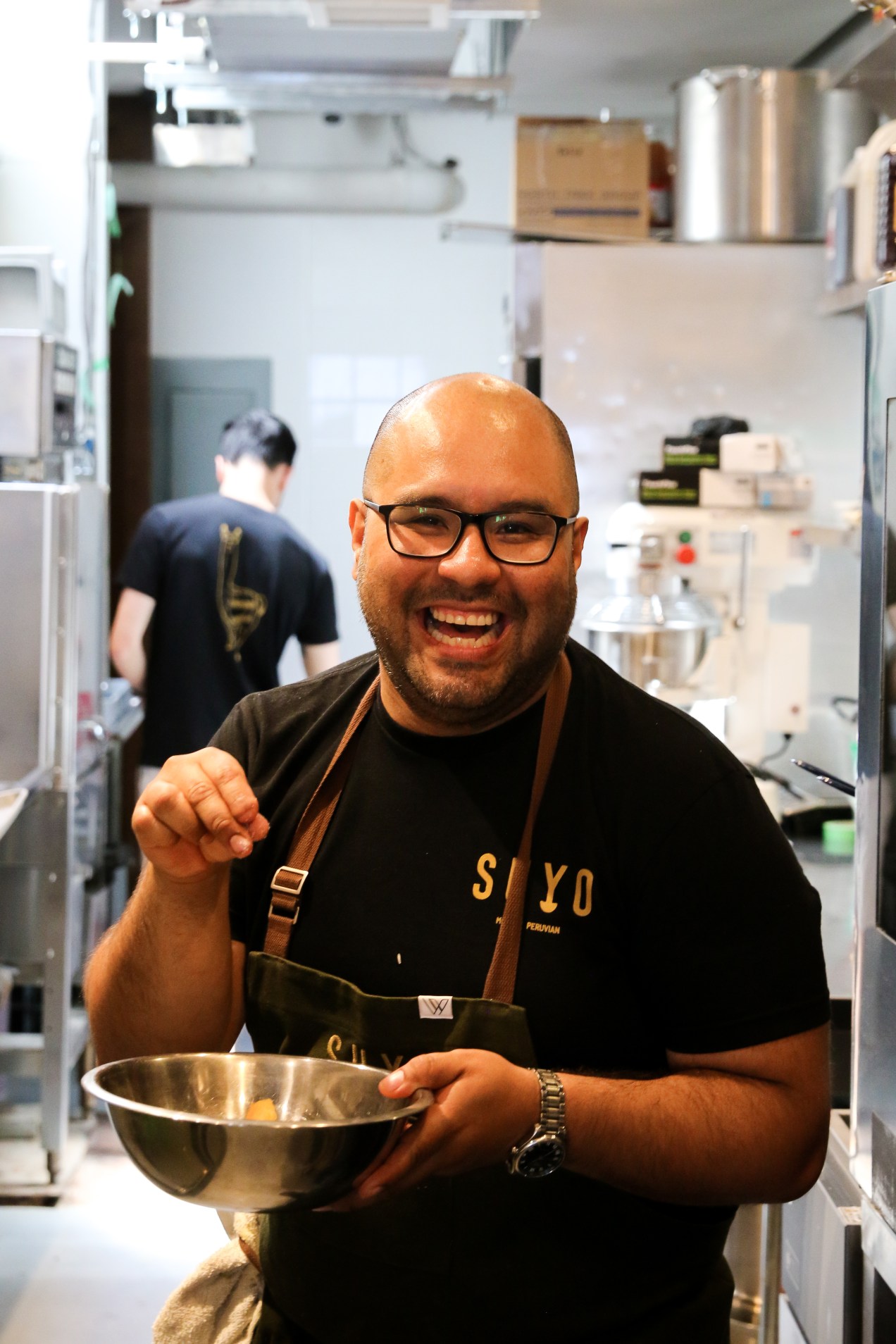
It sounds implausible, but before Suyo opened in August 2022, there wasn’t a single Peruvian-themed fine-dining restaurant in all of Canada. And it remains the only one of its kind to this day.

Suyo wouldn’t have existed without the vision of Peru-born chef Ricardo Valverde, who moved to Vancouver with his family in 1998. After culinary school, he worked at Blue Water Cafe and Ancora, two of the most revered seafood restaurants in the city. But Suyo, Valverde’s first venture as both chef and owner, is a highly personal tribute to (and elevation of) the distinctive cuisine of his homeland (hence the name: Suyo is the South American Indigenous word for “homeland”). Despite its newness, Suyo has already earned a Michelin recommendation, as well as Michelin’s Exceptional Cocktail Award.

Here, Ricardo shares how he evolved from the humiliation of his first Vancouver restaurant job (he was fired after four hours in the kitchen) to become one of the city’s most distinctive and celebrated chefs.

This interview has been edited for brevity and clarity.

What’s your earliest memory of being taken to a restaurant?
It was at my elementary school. There was a kiosk inside the school, run by the wife of the janitor. Sounds kind of weird, because you wouldn’t see that here, but it was a different time and a different kind of situation. This school was half private, half public; my dad used to work for a bank, and the children of bankers would get 50 percent off in this school. It brought all kinds of people together — very poor people whose parents [otherwise couldn’t] afford a semi-private education, and the children of parents who were like, “Okay, I have money, but if I can spend less….” (laughs)

So, there was this kiosk and there was this lady; her name was Elena and she sold food. Actually, there were two kiosks: There was one where you could sit for a full meal, and then one of them I just remember her selling chorizo sandwiches with fried egg; nice baguette-style, kind of like ciabatta but crispier, fluffier, lighter. She would wrap it nicely and cut it in half perfectly, and that’s my first memory of the exchange of food for money. I was seven, eight years old. I’d give her money and, in return, I’d get a sandwich. I was like, “That’s so cool!” And I would never buy just one; I would buy two or three. For me, food has no limits, so I’d eat until I couldn’t eat any more, basically. And I would go home and try to recreate what this woman was making.

What was your age when your family moved here?
I was 17.

Did you already have an inkling, before you moved to Canada, that you wanted to work in restaurants, or did that not come until much later?
Much later. The idea of working in kitchens was not even an option for me, because growing up in a middle-class Peruvian family, your parents will never encourage you to work in a kitchen. Both of my parents are engineers. When I came to Canada and I found out I was able to work — like, back home, I probably wouldn’t have worked until I was in university. If you’re middle class or higher, sometimes you don’t work. If your dad makes enough money, you don’t have to worry about work. Usually, the people who work minor jobs there — they’re like student jobs here, and these people need to work because their parents just don’t have the means. So, we came here and we understood that the culture was “Everyone works.” And I was like, “All right, I’m ready!”

You were excited about that.
Yes. My first job was at a place called Pasadena. In school in Peru, I took this home-ec cooking class, so I put it on my resumé, and then I guess [the owner] took it as my having gone to cooking school. But I got there and I didn’t know what a Caesar salad was — nothing, right? (laughs) My saving grace was that she gave me a menu, I studied it, and then I picked something on the menu like shrimp, and I had to clean it. I had never seen a shrimp in my life… She fired me the next day. I remember she asked me for a ladle, and I didn’t know what it was. I think I gave her a pot instead, or a wooden spoon. She said, “I thought you went to cooking school!” She’s just screaming at me. I was like, “Yeah, in my high school.” She had me wash dishes that night, and that was it. “Come pick up your cheque.” The minimum wage at the time was $7.15. I did four hours. I picked up my $28, minus tax.

Why did your family decide to move here?
My first memory of us thinking of moving to Canada was, we had this big framed picture in our living room, and it was a map of all the countries with all the information — population, language, all of that. I was looking at it one day, I was a probably eight or nine, and my mom said, “One day, we’re gonna go live in Canada.” So, my parents always had that in the back of their minds. My parents always wanted to give us a better future…. At that time — 1996 — I remember they were giving out a lot of visas, especially if you had a good career and a lot of kids. Our family had four boys. We ended up getting a lot of points to qualify for residence. Within six months of applying, we got approval for residence. But then there was a long wait and we moved here in March of 1998.

Vancouver was your first choice?
That’s what they gave us.

It was assigned to you?
You never choose. They tell you where to go. But after that, you can choose wherever you want.

I never knew that! But you haven’t left Vancouver, so obviously there was something about it you liked.
I remember we went to New York for a couple of weeks first, before we moved here. I was asking my dad what Vancouver looks like. We drove to Philadelphia to see some family, [who lived in] a really nice neighbourhood. My dad said, “This is what it looks like.” Everything was super clean; a nice suburban neighbourhood. My dad had come here a year prior and he stayed in Richmond, in the front of a church called St. Joseph [the Worker Parish] on Williams Road. He came here to check out jobs and things, and we ended up living three blocks from there, just coincidentally. And I ended up getting married in that church, and my parents live a block away now.

Was there one particular event, or one particular thing you ate, that made you decide you wanted a culinary career?
More than eating was the experience, the whole. When I came to Canada, I started working in fish-and-chips places in Steveston. My friends in high school worked there — one of them was a senior cook — so they got me a job. I started as a dishwasher and then I moved to the line. My first job was in a place called Shady Island… So, when I worked there, I was like, “This is cool, making salads!” And I thought, “Do I need to go to school for this?  Are they gonna just let me do this?” I was maybe a little traumatized from my first experience [at Pasadena], that made me think I need to have an education. Then that job came abruptly to an end because I had an accident and was out for, like, six months.

And then one day, I was sitting down with one of the main guys that ran the kitchen, and he told me that there’s a bigger world out there. Like, you know, “What you’re doing is nothing.” I think he was quitting. And I said, “You do so well here. Don’t you want it as a career?” He said, “Noooo.” I think he’s a broker now.

How old were you at the time?
Eighteen. I was like, “I love this. I want to learn more.” He was like, “Ricardo, there’s a bigger world out there.” I don’t know why, but he said to me, “You have to be Chef de Cuisine.” Those words stuck in my head.

Did you even know what Chef de Cuisine meant?
No, no. He said it was French.

And then, I was in love with a girl. I was hanging out with my friend, Alvaro — one of my best friends from cooking school. It was a Saturday night and we went to this place called Cloud 9. In those years, it was one of the fanciest places in the city. And I just remember seeing this cheesecake that comes with, like, the [decorative] dots and then they do the line [on the plate], like the old-school fine dining. And I looked at the view and the tablecloth, and there was the music, and I was thinking, “Holy shit, what is this?”

You’d never been in a restaurant like that before?
No, never. So, then I see this restaurant and I think, “I gotta bring this girl here.” I asked her out on a date and I brought her there. And then we’re eating and everything’s so delicious, and this girl tells me about how her family is so close to food and wine, and how her dad loves this and that. At that point, I’m thinking, “Okay, I gotta be a chef now, ’cause I’ve got a girl.”

So then, I remember we’re sitting there, just having dinner, and she taps me and then I look up. And then there’s the chef, with his big hat, super clean, white jacket, walking by all proud. And in that moment, I was just like, “Fuck, I love this.” I just got drawn into it — the experience of dining at a fancy place, and the service and the wine. That was when I was like, “I’m gonna be a chef.”

But obviously, being a customer in a fine-dining restaurant — or any restaurant — is very different from the reality of working in the kitchen.
t’s true. But I tell you, I love being in the kitchen. I never think of the kitchen as bad. I love it. There is not a point where I’m like, “Fuck this.” After we finish this interview, I’m gonna go in [to Suyo’s kitchen] and prep. I prep with the guys; I’m one of them. I could find someone else to do it, but I love being in there. I can’t pull myself out of that. When I took a sabbatical for three years [after Ancora], I went into a fucking huge depression. I worked as a private chef for a very wealthy guy for a while, but it wasn’t for me. I was depressed doing that, too, because I’m cooking for only one or two people, and then there were all these restrictions of how these people ate. I needed to be on the line, creating features, mentoring younger people. I’m addicted to it. I’m addicted to that good stress.

Why do you think no one wanted to do a Peruvian fine-dining restaurant before you?
You need to have someone with a background, who lives here and who understands the market. If I wanted to open a restaurant in Toronto tomorrow, I don’t have any contacts, I don’t know any suppliers, I don’t know who gives you the best tuna in town. I grew up in Vancouver — I know everyone here!

Which do you think is the most underrated restaurant in Metro Vancouver?
What comes to mind is Yuwa, the Japanese restaurant. I always recommend it to people. A lot of people haven’t even heard of it. Make the drive there — it’s a beautiful drive, a beautiful neighbourhood. I love the experience you have there. And they have something for everyone: If you want a California roll, they have it for you. (laughs) If you want a nice omakase, they do that too, and it’s beautiful.

(Photo: Chelsea Brown)


Standard
Asian Fusion, Fusion, Indonesian Cuisine, Italian, Latin American, Mexican, Middle Eastern Cuisine, West Coast

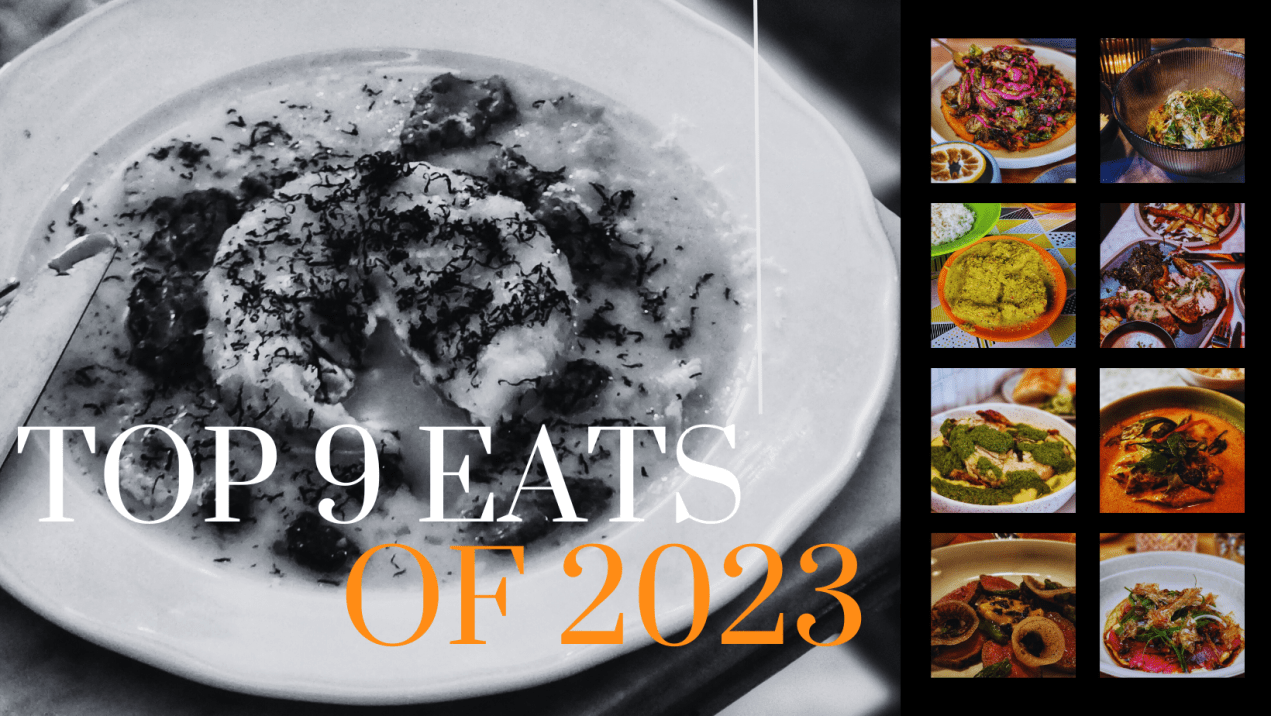
Our Top 9 Eats of 2023

Visit our Instagram page

By Michael White and Kley Klemens
Photos by Kley Klemens

Jewkarta may be only three years old, but we’ve visited a staggering number of restaurants, eaten and guzzled an overwhelmingly vast selection of food and beverages, and made the acquaintance of countless culinary professionals in this short period of time. And we’ve loved every minute of it!

2023 was, by far, our most interesting year yet, for reasons good (Kley’s long-overdue return to his native Indonesia; some of the greatest dining experiences we’ve had as a couple) and not (Michael’s sudden health downturn, which prevented him from participating in most of Jewkarta’s activities for the first half of the year).

But our annual Top 9 is all about emphasizing the positive — specifically, the most delicious and memorable dishes we ate throughout the past 12 months. Scroll down to discover them all. And whether you began following us three years or three minutes ago, we thank you for being a part of our gastronomic adventures in Metro Vancouver and beyond.

@barhaifa
HAIFA HALF CHICKEN

Chicken is often little more than a chef’s compromise for unadventurous customers. But the iteration at this new (and spectacular) Middle Eastern restaurant is one of the best we’ve had, thanks to its secret seasoning blend and a gravy good enough to redeem the foulest of fowls.

@liviasweets
SUNDAY ROAST PORCHETTA FOR TWO

Italy’s beloved pork dish (boneless, with shatteringly crisp skin and infused with the flavour of its own fat) is transcendent at this popular Commercial Drive eatery, its inherent richness amplified by a bed of velvet-soft polenta, and contrasted with the bracing heat and acidity of an emerald salsa verde.

@bar.gobo
ROASTED STRIP LOIN

The ever-changing menu at this edge-of-Chinatown wine bar means this simple yet perfectly executed dish from chef @so_j_one may not return for a long time, if ever. So excuse our conflicting emotions: thrilled that we were able to experience it, sad that we may never again.

@chupitococteleria
TOSTADA DE ATUN

This trailblazing seasonal dining space (located in an alleyway, and open only during warmer months) specializes in elevating familiar Mexican dishes to a state of luxury. We utterly devoured this photogenic tostada, which arrived topped with tuna, ginger mayonnaise, spicy soy sauce and fried katsoubuchi.

@elephantinvancouver
PORK NECK

Are we able to confirm that chef @justin.song.ell is human? His endless creations, which he invariably cooks and plates alone at a small prep station behind Elephant’s diner-like counter, are bizarre in theory yet astounding in reality. Berkshire pork neck flavoured with FIFTY-FOUR different types of Thai herb? Whatever you say, chef!

@zarakvancouver
BRUSSELS SPROUTS

Whoever discovered that the vegetable responsible for ruining countless childhood Thanksgivings could be fully redeemed by a swim in a deep fryer deserves the Nobel Peace Prize. For piling them onto a pool of red-pepper hummus and anointing them with a neon-pink masala sauce that looks like it belongs on a birthday cake, Zarak deserves the MacArthur Genius Grant.

@caffelatana
RAVIOLO

A single plate-sized pasta pillow, stuffed with black truffle, ricotta and herbs. Almost indecently rich and savoury, Kley continues to daydream about it as if it were a millionaire daddy offering to whisk him away to a private resort on the Amalfi Coast.  

Somewhere in North Sumatra, Indonesia (no website)
NANIURA

A highlight of Kley’s visit to his homeland: tilapia ceviche marinated in kafir lime juice mixed with torch ginger (a perennial plant native to Indonesia), turmeric, candlenut, Andaliman pepper, coriander and more. Another reason why Kley is baffled by Indonesian cuisine’s low international profile.

@hujanlocale
ACEHNESE GRILLED OCTOPUS

Another Indonesian dish — created by chef @meyrickwill, who helms the kitchen at this must-visit restaurant in Bali — the complexity of which Kley can’t describe or compare to anything he’d had before. Acidic and spicy, creamy yet light — Kley asks, “How is it that I’m Indonesian and Chef Meyrick isn’t??”

Standard
American, Farm to Table, Fusion, Gastropub

Mini Review: Straight & Marrow

Click here to see more photos

By Michael White

Straight & Marrow didn’t set out to be a divisive restaurant. Its menus aren’t conceived to repel timid diners or upset vegans — although it might do either. But possibly more than any restaurant Kley and I have discovered since Jewkarta began, it has its own point of view and its own notion of delicious, and either you agree with it or are keen to investigate, or else you keep a very wide berth.

We ran toward it with great enthusiasm, and not only were we not disappointed — you might say we got carried away.

Straight & Marrow chef Chris Lam’s mission is to spotlight “overlooked ingredients,” meaning proteins and “off-cuts” of which the mainstream (in this part of the world, at least) is either unfamiliar or finds off-putting. On the night we visited, that meant octopus carpaccio, beef heart tartare, frog with grits, braised lamb neck and other assorted creatures and parts rarely seen on North American menus. The space (formerly home to the much-missed Bistro Wagon Rouge) is narrow and dark and emits an unmistakable “dude” energy but isn’t obnoxious about it.

Once we settled in at the bar and were served the first of many inventive cocktails made for us by the engaging @chadaptation (we both raise two thumbs up for the “Bent, Not Broken,” essentially a Vesper with the shouldn’t-work-but-it-does addition of charred-rosemary olive oil), we began eating and didn’t stop for quite some time.

We ordered so much, in fact, that the very thought of detailing everything here is exhausting. But we can say we unreservedly loved — LOVED! — the above-mentioned octopus and its smoked-paprika aioli; luscious bone marrow decorated with pickled shiitake, porcini dust and chicken crackling; charred “street” corn mingled with delicate gnocchi, cotija cheese, chili crème fraîche and fried shards of pig’s ear; and perhaps the most convincing argument you could find that frog has the potential to be nose-to-tail cooking’s answer to the hot wing.

Side note: While the dishes might be perceived as somewhat primal, the plating is anything but. This is very pretty food, presented as if you were in a room that charges twice as much and serves everything with a side of attitude.

Between the food, the drinks, the room and the service (and our not having to work the next day), we emerged three hours later, bouncing in a bubble of happy and (over-)satiety — no straighter than before, but absolutely converted to their culinary orientation.

Straight & Marrow
1869 Powell St., Vancouver
604-251-4813
straightandmarrow.com / Instagram: @straight_and_marrow

(Photo: Kley Klemens)

Standard
Farm to Table, Fusion, Japanese Cuisine, West Coast

Special-occasion review: Dachi

By Michael White

Seemingly no type of dining space, no matter how well-funded, has been immune to the economic ravages of the COVID-19 pandemic. To wit, within a five-kilometre radius of Jewkarta headquarters, in Vancouver’s West End, we informally estimate that two-thirds of the Starbucks locations that were here have shuttered during the past year — papered over, gone forever. Few of us mourn their passing — another one is never far away, after all — but if this globe-spanning coffee colossus can be so dramatically cut down to size in so short a time, what chance is there for the little people?

Wherever you live, you’ve undoubtedly seen the casualties. What famed New York chef Gabrielle Hamilton referred to (in her heartbreaking New York Times essay) as the “sweet, gentle citizen restaurant” is struggling to survive the storm most of all, sending up distress flares while frantically bailing buckets of rainwater overboard. This is the sort of restaurant that defines neighbourhoods and cities, that gives them their character and enlightens the populace about previously unknown possibilities for food and drink. If they all go, so too does the evolution of dining (and the futures of many who trained for careers in this world).

So it was all the more reassuring to walk into Dachi — as sweet and gentle a citizen restaurant as you could hope to find — one recent Saturday night, in celebration of my 97th birthday (give or take), to find it very much alive and, it would seem, thriving.

Dachi opened in late 2018 in Hastings-Sunrise, in an unassuming corner lot previously occupied by Campagnolo Roma. It had its work cut out for it — everyone had loved Campagnolo Roma’s pizzas and pastas, and Dachi co-owners Miki Ellis and Stephen Whiteside would be bringing into the space a much more rarefied experience, informed by their shared history at the Aburi restaurant group. There would be sakes and obscure natural wines, and a menu informed not by a particular cuisine but by what local purveyors and the seasons make available at any given time. A little Japanese, a little West Coast, a lot farm-to-table.

And hey, presto! The locals (and many from far beyond) love it, because Dachi is what all neighbourhood restaurants aspire to be: a spot worthy of both destination dining and a casual drop-in.

We loved it, too. A year into the pandemic, we could almost believe, for a couple of hours, that it wasn’t happening. It all felt so normal. Dachi made the sophisticated decision to partition its tables not with plexiglass but with plants, and the normally 40-seat space has been reduced in capacity just enough to ensure safety but to retain liveliness. Aside from the masks our terrific servers (which included co-owner Whiteside) were wearing, we felt we’d been transported back to the Before Times, lazing in the low hum of positive energy that occurs when everyone in the room is happy and the kitchen is sending out many delicious things.

Speaking of which…. Our delicious things included delicate slices of barely seared beef (pictured above), attractively plated with pickled daikon, finely cubed carrot and celery, and dabs of pungent chimichurri. More rustic in presentation, but no less savagely devoured by us, were a thick slab of pork-and-duck pâté with grilled sourdough (which was properly sour) and an assortment of house-pickled vegetables; and meaty, smoky strands of Pacific octopus mingled with cilantro, watermelon radish, and salsa macha — the Mexican equivalent of chile crisp.

After stoking the evening’s glow with house cocktails (including the Just Might Work, which is built upon a foundation of peated whiskey and is, therefore, my new favourite thing), our server directed us toward an extraordinary, intensely aromatic Alsatian Gewürztraminer that tasted like the attainment of every vacation we wish we’d been able to take over the past 12 months. After polishing off the bottle, I no longer felt the sting of being so damn old.

Dachi is the sort of restaurant we need to be here right now while this clusterfuck of global events sorts itself out, and the sort of restaurant we’ll want to still be standing when it all finally blows over. Support it, and others like it, if and when you can. In a small but not insignificant way, the soul of your city depends on it.

Dachi
2297 E. Hastings St.
604-569-0456
dachivancouver.com / Instagram: @dachivancouver

(Photo: Kley Klemens)

Standard