
Asian Fusion, Fusion, Indonesian Cuisine, Italian, Latin American, Mexican, Middle Eastern Cuisine, West Coast

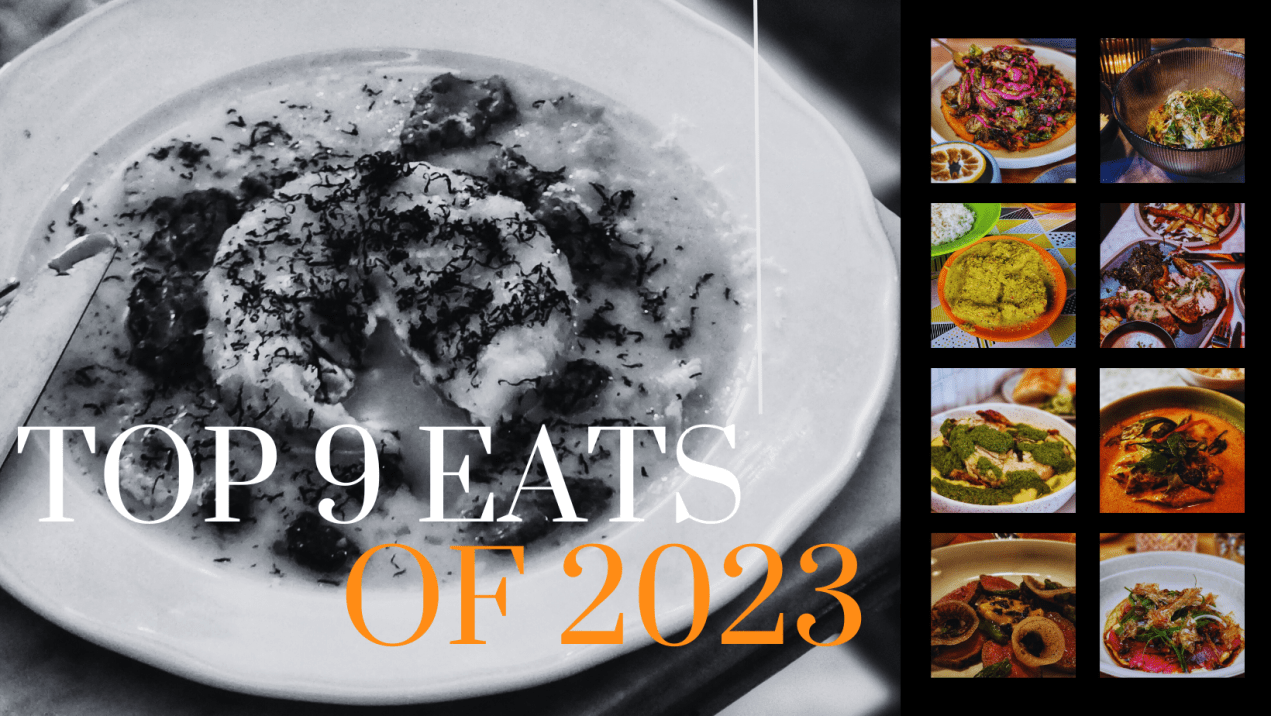
Our Top 9 Eats of 2023

Visit our Instagram page

By Michael White and Kley Klemens
Photos by Kley Klemens

Jewkarta may be only three years old, but we’ve visited a staggering number of restaurants, eaten and guzzled an overwhelmingly vast selection of food and beverages, and made the acquaintance of countless culinary professionals in this short period of time. And we’ve loved every minute of it!

2023 was, by far, our most interesting year yet, for reasons good (Kley’s long-overdue return to his native Indonesia; some of the greatest dining experiences we’ve had as a couple) and not (Michael’s sudden health downturn, which prevented him from participating in most of Jewkarta’s activities for the first half of the year).

But our annual Top 9 is all about emphasizing the positive — specifically, the most delicious and memorable dishes we ate throughout the past 12 months. Scroll down to discover them all. And whether you began following us three years or three minutes ago, we thank you for being a part of our gastronomic adventures in Metro Vancouver and beyond.

@barhaifa
HAIFA HALF CHICKEN

Chicken is often little more than a chef’s compromise for unadventurous customers. But the iteration at this new (and spectacular) Middle Eastern restaurant is one of the best we’ve had, thanks to its secret seasoning blend and a gravy good enough to redeem the foulest of fowls.

@liviasweets
SUNDAY ROAST PORCHETTA FOR TWO

Italy’s beloved pork dish (boneless, with shatteringly crisp skin and infused with the flavour of its own fat) is transcendent at this popular Commercial Drive eatery, its inherent richness amplified by a bed of velvet-soft polenta, and contrasted with the bracing heat and acidity of an emerald salsa verde.

@bar.gobo
ROASTED STRIP LOIN

The ever-changing menu at this edge-of-Chinatown wine bar means this simple yet perfectly executed dish from chef @so_j_one may not return for a long time, if ever. So excuse our conflicting emotions: thrilled that we were able to experience it, sad that we may never again.

@chupitococteleria
TOSTADA DE ATUN

This trailblazing seasonal dining space (located in an alleyway, and open only during warmer months) specializes in elevating familiar Mexican dishes to a state of luxury. We utterly devoured this photogenic tostada, which arrived topped with tuna, ginger mayonnaise, spicy soy sauce and fried katsoubuchi.

@elephantinvancouver
PORK NECK

Are we able to confirm that chef @justin.song.ell is human? His endless creations, which he invariably cooks and plates alone at a small prep station behind Elephant’s diner-like counter, are bizarre in theory yet astounding in reality. Berkshire pork neck flavoured with FIFTY-FOUR different types of Thai herb? Whatever you say, chef!

@zarakvancouver
BRUSSELS SPROUTS

Whoever discovered that the vegetable responsible for ruining countless childhood Thanksgivings could be fully redeemed by a swim in a deep fryer deserves the Nobel Peace Prize. For piling them onto a pool of red-pepper hummus and anointing them with a neon-pink masala sauce that looks like it belongs on a birthday cake, Zarak deserves the MacArthur Genius Grant.

@caffelatana
RAVIOLO

A single plate-sized pasta pillow, stuffed with black truffle, ricotta and herbs. Almost indecently rich and savoury, Kley continues to daydream about it as if it were a millionaire daddy offering to whisk him away to a private resort on the Amalfi Coast.  

Somewhere in North Sumatra, Indonesia (no website)
NANIURA

A highlight of Kley’s visit to his homeland: tilapia ceviche marinated in kafir lime juice mixed with torch ginger (a perennial plant native to Indonesia), turmeric, candlenut, Andaliman pepper, coriander and more. Another reason why Kley is baffled by Indonesian cuisine’s low international profile.

@hujanlocale
ACEHNESE GRILLED OCTOPUS

Another Indonesian dish — created by chef @meyrickwill, who helms the kitchen at this must-visit restaurant in Bali — the complexity of which Kley can’t describe or compare to anything he’d had before. Acidic and spicy, creamy yet light — Kley asks, “How is it that I’m Indonesian and Chef Meyrick isn’t??”

Standard
Indonesian Cuisine

Review: Bakmie Amei

Watch the video review here!

By Michael White

Since the onset of the COVID-19 pandemic, scores of articles have been published — in the New York Times, Eater, and elsewhere — about the sudden proliferation of ghost kitchens, largely due to restaurateurs who have had to “pivot” (surely an overlooked contender for 2020’s Word of the Year) to a delivery- or takeout-only model, to compensate for dining rooms that were forced to close.

But the ghost-kitchen model is by no means new, and it isn’t exclusively an outgrowth of previously existing eateries (nor of the pandemic). For years, ghost kitchens have provided a solution to the increasingly prohibitive costs of building and operating a restaurant, and to home-based cooks of modest ambition who want nothing more than to share their culinary labours with the public. (See also: underground supper clubs — now, like so much else this past year, a distant memory from Before All This Shit Happened.)

The ghost-kitchen concept has been especially valuable to ethnic populations whose cuisine can’t easily be found at bricks-and-mortar establishments. In Jewkarta’s first review, I pointed out that Bali Thai, in the International Village food court, is one of the only places in Greater Vancouver (if not all of British Columbia) to find classic Indonesian dishes such as beef rendang and nasi goreng. Which is why this region’s small, close-knit Indonesian community has long made a practice of selling its cooking to one another via invitation-only social-media groups and other under-the-radar means. Some of the most pleasurable meals I’ve eaten in the past year have come from private citizens I’ve never met, prepared in houses and apartments whose locations I don’t know.

Bakmie Amei, which launched in November 2020, is very much in the ghost-kitchen mold. But there are some key differences here that distinguish it from the clandestine operations of its Indonesian neighbours. The owners — a husband-and-wife team, originally from Jakarta — share years of experience in the restaurant industry. They sought out and acquired all the legal approvals needed for a domestic kitchen engaged in commercial activity, including FoodSafe Level 1 certification. And, most noteworthy of all, they want everyone — not just fellow Indonesians — to discover them.

And let me tell you: You should. Oh, my god, you should.

The star of Bakmie Amei’s menu is, appropriately, bakmie (also spelled bakmi). Bakmie, if you don’t know (I certainly didn’t until Kley, the Jakarta-born half of Jewkarta, schooled me), is a beloved Indonesian dish in which noodles are topped with meat and vegetables, and accompanied with broth. (So — soup? Sure. But what a soup!) In Muslim-majority Indonesia, chicken is usually the featured protein, in accordance with halal. Historically, “bakmie” — as opposed to simply “mie” — was code for noodles that contain either pork meat or pork grease, but nowadays it merely indicates that the dish’s broth is served on the side for the diner to pour over top at his or her discretion.

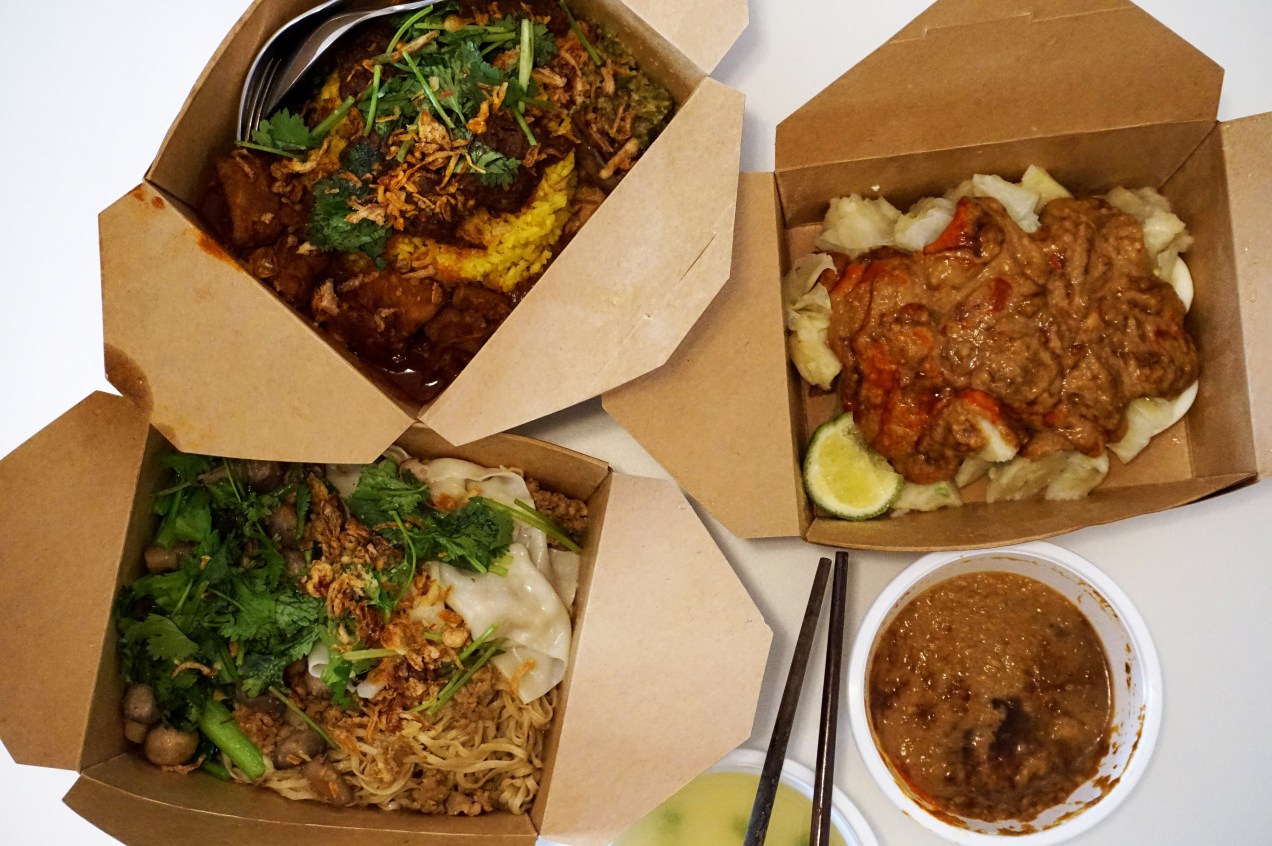
Bakmie Amei’s menu is tightly focused, to say the least: four variations of bakmie (each $12 regular; $15 large), plus pangsit, which even I was able to immediately recognize as fried wontons ($5 regular; $8 large). True to its name, pork plays a starring role in each of them, and broth comes alongside. Thanks to the skills they honed while working at a ramen restaurant, Bakmie Amei make all of their noodles by hand, and allows them to rest for one day before serving them to customers. Somehow, they seem to have arrived at a perfect formula for ensuring the noodles remain at optimal texture after travelling to their destination. Ours were exemplary — yielding exactly enough to the bite, and subtly imbued with the flavours of their companions in the sturdy reusable soup bowls in which they were delivered.

Every ingredient in each of the bakmie was the obvious result of great skill and attention to detail. Pork was outstandingly seasoned wherever it appeared, whether in Bakmie Laksa with shrimp, hard-boiled egg and a senses-filling coconut curry broth, or affectionately assaulting your palate with lord knows how many chiles in the showstopping Bakmie Rica-Rica. We could have easily destroyed twice as many of the pangsit — which maintained epic crunch hours after arriving — without blinking. Altogether, this was the sort of meal for which you become nostalgic while it’s still happening, and we’ve been craving more of it regularly throughout the days since. (In fact, right now as I write this.)

The couple behind Bakmie Amei would like to open a storefront eventually, when restaurants in general have ceased to be an unwitting reminder of the all-embracing fucked-upness of life on Planet Earth. In the meantime, the only means of bringing their food to your face is to visit their Instagram or Facebook page, text your order, and arrange a pick-up day and location. (Locations rotate weekly.) Payment is by Interac e-transfer only. Of course this isn’t the most convenient way to acquire sustenance, especially at a time when countless restaurants are bending over backward to deliver directly to you home. But Bakmie Amei is worth going out of your way. This is some of the most wildly delicious food I’ve eaten in recent memory, and it must be pointed out that the prices are far below what quality and quantity justify. This humble ghost kitchen will haunt your appetite in the best possible way from here forward.

Bakmie Amei
No address; pick-up only at designated locations
Text or WhatsApp: 778-233-1975
Instagram: @bakmieamei / Facebook: facebook.com/bakmieamei

(Photo: Kley Klemens)

Standard
Indonesian Cuisine, Southeast Asian Cuisine

Review: Bali Thai Indonesian Cuisine

Watch the video review here!

By Michael White
No matter how much the city of Vancouver continues to change beyond the recognition of those who have lived here long enough to have a fixed idea of it, there are some things that, for better or worse, are always exactly as we remember them.

Case in point: International Village Mall.

Opened in 1999 (the year I moved to Vancouver from Ontario), this two-level, 195,000-square-foot shopping centre at the border of “the Stadium District” and Chinatown is — and seemingly forever will be — a defiantly changeless monument to failure. It remains as strange and terrible and depressing a place today as when I first walked through its doors 20-plus years ago. Tenants may come and go, but its occupancy rate holds steadfast below 50 percent. Those tenants reliably appear marked for death from day one: makeshift operations peddling phone accessories, womenswear, home furnishings — most of them bearing brand names you’ve never heard of. Almost no one buys these things, because almost no one who comes here has any money. Right now, in the midst of the COVID-19 pandemic, International Village’s one reliable draw — a multiplex theatre — is closed, and so everything is quieter, eerier, sadder than ever.

And this is where, upstairs in the food court, where so many patrons aren’t eating or doing much of anything but trying to pass the time, you’ll find Bali Thai Indonesian Cuisine.

I’d been successfully ignoring Bali Thai for years, until Kley — the other half of Jewkarta, who lived for 20 years in his native Indonesia before settling in Vancouver — told me I had to try it. If I hadn’t already been in love with him, my gratitude for his introducing me to this unassuming stall and its ridiculously delicious food would’ve sealed it.

Bali Thai opened at International Village in 2014, after a short tenancy at nearby Harbour Centre. Owners Linda and Tommy (their shared surname is none of our business) took over from its founding proprietors in 2011. Originally Southeast Asian-themed when they acquired it, Linda and Tommy narrowed the menu concept to strictly Indonesian; they kept the name Bali Thai, however, so as not to confuse their already dedicated clientele (and because registering a new name seemed more trouble than it was worth). When Harbour Centre’s management redeveloped the food court and insisted the couple convert their stall into a popular national Thai chain, they decided to move instead. Despite the volatility of International Village’s never-busy corridors (the only food-court tenant I know to have consistently survived is Taco Time), Bali Thai has hung on for more than six years — an apparent testament to Vancouver’s precious few Indonesian dining options and the excellence with which Bali Thai fills the gap. (That said, Linda estimates the pandemic has reduced their business by at least 80 percent.)

I won’t pretend to be an authority about Indonesian cuisine, but as an authority about my own equal-opportunity palate, I can say with absolute authority that Bali Thai’s flavour and texture combinations push more buttons than a 1940s switchboard operator.

Indonesia is home to more than 600 recognized ethnic groups, and each of its indigenous culinary traditions seems to have absorbed some degree of foreign influence, whether Chinese or Middle Eastern or Dutch (the latter the result of centuries of colonization). So, in a single Indonesian dish — say, beef rendang (named “World’s Most Delicious Food” in a 2011 CNN poll) — the symphony in your mouth might seem to play notes of Madras curry, or one of the more memorable Szechuan dishes you’ve had, or a traditional British stew given an ugly-duckling makeover to reveal the hot, brash, head-turning swan that was hiding within. Bali Thai’s rendition of beef rendang honours the dish’s inherent complexity, its falling-apart-tender beef simmered for hours in an immodest amount of coconut milk with the likes of ginger, lemongrass, garlic, turmeric, and however many chilis the cook sees fit. Linda and Tommy elect to make their rendang’s heat level acceptable to their many discerning expat-Indonesian customers, but not so much as to alienate the white and curious.

You can order beef rendang as part of the “Create Your Own” combo plate, the best course of action for discovering as much of the menu as possible for the least outlay. Two proteins and one vegetable dish are yours alongside rice — plain steamed or turmeric-coconut (don’t be an idiot; get the turmeric-coconut) — for $11.95, which, given the portion size, is a price as frozen in the past as International Village. I urge you to also opt for the Balinese chicken, a pleasantly smouldering riot of chilis, garlic, ginger, lime leaf, fish sauce, and whatever else Linda and Tommy have invited to the party. My favourite of the vegetable options is simply grilled Japanese eggplant, imbued with subtle smoke and — should you choose it — a stripe of house-made green chili sauce I’d slather onto everything in sight if I didn’t fear being judged. Vegans won’t feel slighted by fried tempeh or fried tofu, and certainly not by the corn fritters, which are essentially a great bar snack in search of a bar. Should you like, Linda will finish your plate with a scattering of cilantro and fried shallots. Say yes.

Elsewhere on the menu, mee ayam (essentially Indonesia’s answer to cure-all chicken soup; $11.95), satay, nasi goreng (fried rice generously heaped with shrimp, chicken, beef, vegetables, and scrambled egg; $12.50), and the self-explanatory Chicken Nugget Crunch (with the above-mentioned coconut-turmeric rice and tempeh; $12.50) check off a list of Indonesian cuisine’s greatest hits and do all of them justice.

Having been blissfully ignorant of Bali Thai for so long, obviously I don’t have the moral high ground to wag a shaming finger at the countless others who have failed to help make its owners wealthy and in need of additional staff. (If Linda isn’t behind the counter, if Tommy isn’t out back in the kitchen, they aren’t open.) Typical of so many under-the-radar eateries in this and other cities where diners are spoiled for choice, Bali Thai is better than it knows and too modest for its own good. Linda and Tommy should be getting up in your face — in everyone’s face — about how good their unobtrusive little enterprise is. But in all likelihood, this isn’t a part of their skill set and not in their nature. They just make the food.

So, let them just make the food. And just listen to me when I say: Go there.

Bali Thai Indonesian Cuisine
International Village Mall
88 West Pender, 2nd Floor
604-291-7990
(no website) / Instagram: @balithaivancouver
Delivery platforms: Skip the Dishes, Uber Eats
Take-out available

Standard