Mexican

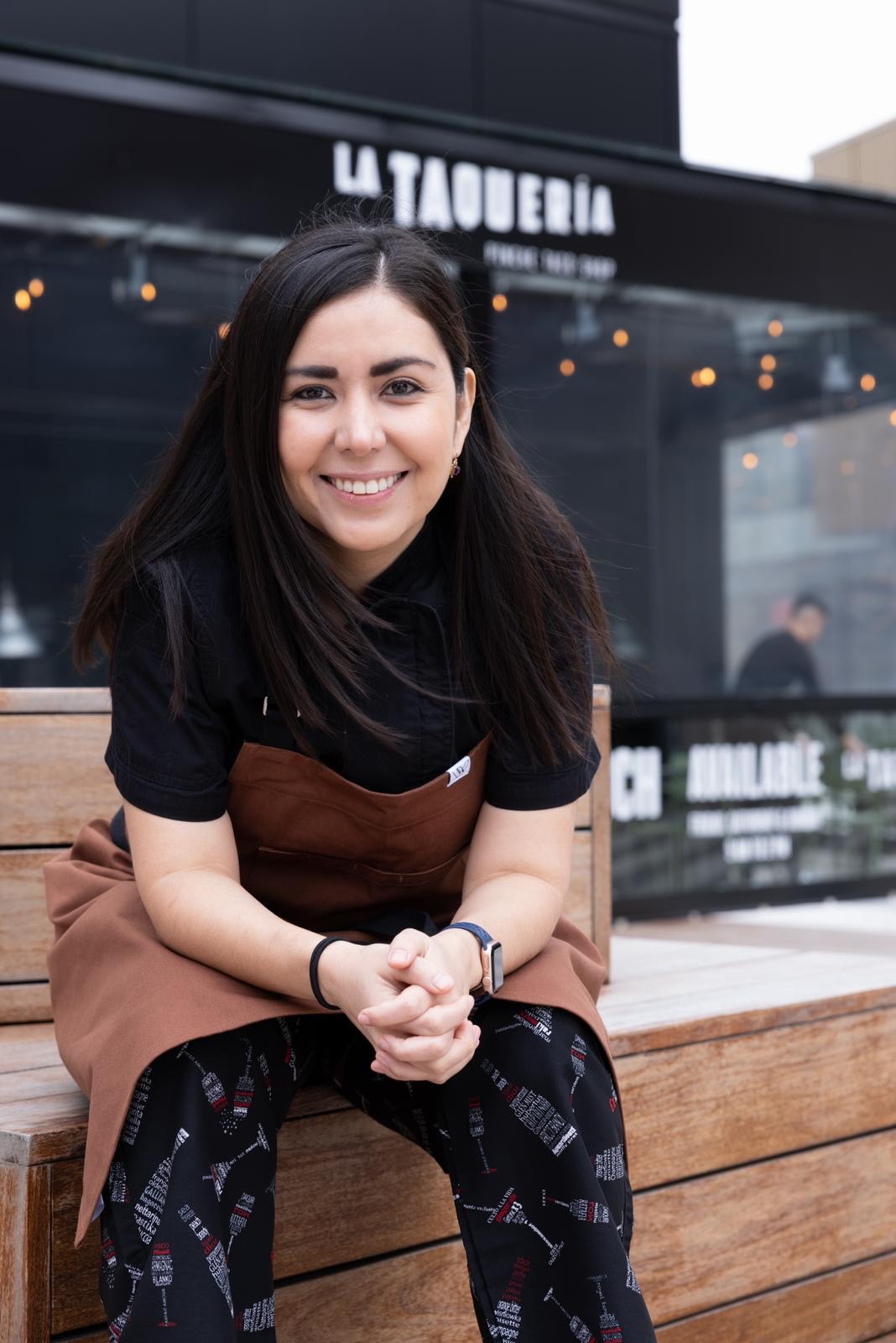
InterJew #14: Tara Davies (operarting partner, Chupito)

Visit our Instagram page

By Michael White

Among the dozens of outdoor restaurants and patio extensions that hastily opened during the COVID-19 pandemic’s indoor-dining ban, arguably the most interesting (and delicious) of them all was Chupito.

Situated in a narrow lot behind the original location of La Taqueria, near Gastown, and accessible only by way of one of the neighbourhood’s many grim alleyways, both its food and environment sought to replicate similar ultra-informal eateries Tara Davies experienced during many years she spent in Mexico. In this simple but perfectly conceived space, expertly prepared seafood and street-food staples (tacos, tostados) — as well as excellent mezcal- and tequila-based cocktails — were delivered to crowded tables from a cramped kitchen inside a repurposed shipping container. Vancouver had never seen anything like it, and its joyous atmosphere achieved the rare feat of temporarily thawing the city’s legendary social frigidity. People tended to be their best selves when they were at Chupito.

It deservedly achieved great success (including two Michelin ‘Bib Gourmand’ designations). But when the building that housed La Taqueria became slated for demolition in 2024, Chupito had no choice but to find a new home. It now occupies half of La Taqueria’s Yukon Street location, and while it would have been impossible to replicate the singular charm of the outdoor site, the food and drink remain as sublime and transporting as ever.

Oh… and Tara was named Bartender of the Year at the 2025 Vancouver Magazine Restaurant Awards.

This interview has been edited for brevity and clarity.

What’s your earliest memory of being taken to a restaurant?
I think it was when I was with my mom and dad. We were driving to Disneyland and we passed through Seattle. I was young — I still had a security blanket — and we went to this restaurant in Seattle that was like, I would say, mid- to upscale, and I was wearing a white dress because I wanted to get dressed up, because I thought going to a restaurant was an event. And I spilled my red Jell-O all over my white dress. In retrospect, it’s just really funny because it’s not a big deal, but I remember being like, “My red dress, in this restaurant! This is going to ruin [everyone’s] night!”

And then I also used to go to Fresgo’s on Davie Street [in Vancouver’s West End]. It’s now the Junction. They served huge plates of spaghetti, and that’s the only restaurant my parents would take me to, because they felt like, I guess, everyone belonged there, so they could bring their child. We were served by drag queens. My parents loved going there.

So, obvious question: What drew you into the restaurant world?
I’ve been in the restaurant industry since I was 16 — initially, I guess, because it was an accessible job. I was a host at Wings on Granville. And then one day, a server didn’t show up, so I ended up serving her whole section, which was like 24 two-tops or something. And ever since then, I’ve been serving. That’s, like, 20 years. I think my desire for hospitality probably came from these large group dinners that my parents had. My mom was very detail oriented; if my dad tried to put out mustard in the container, my mom would be like, “Excuse me, there’s a plate for that and a spoon for that!” And she had to make sure everybody always had a full glass of wine. She really enjoyed hosting people. I think hospitality was really driven into me from those experiences. I don’t know if I found that desire at Wings.

And then I moved to Mexico, and I started learning a lot about tequila and mezcal, because I was teaching English in Tequila, a city outside of Guadalajara, where I was living. I was teaching English at tequila factories there, so they could sell their product abroad.

How old were you then?
Twenty. I was only planning to go to Guadalajara for a little while, and I ended up staying for almost eight years. That’s where my desire and inspiration for cuisine came from. I ended up spending a lot of time in Culiacán, which is where my partner at the time was from. We went to the beaches and made a lot of seafood. The style of eating there, I think, even furthered my desire to be in the hospitality industry: You would go with your family or friends and you’d sit at the same table for four hours, and small plates of food would keep coming, and people would come and go. That style of dining was so contrary to the North American style of dining — the quick in-and-out — and I just found so much pleasure in that, getting to know a culture through their food, but also getting to know people.

When you decided to move to Mexico, it was initially just for a job? You didn’t have any preexisting knowledge of the culture there?
No. All of my friends in high school were from Mexico; my first partner was from Guadalajara. That was when there was a big influx of people from Mexico coming to Vancouver, so I ended up having a lot of friends from there, and I was like, “I’m going to go visit them” [after school ended and they returned to Mexico]. And I just kind of never came back, because I loved it. What I found is that the culture is so, so warm, but also that food really brings people together. If you’re getting to know someone, the highest honour is being invited to their home.

Why did you come back?
My dad fell sick; he was diagnosed with cancer. I came back to Vancouver and he survived, and then I moved to Toronto to study photography. I was big into food photography after my experience in Mexico. I wanted to study and photograph how food is culture. I went there and I applied for a job at Bar Raval, and then I was like, “Oh, this is how you make a drink!” I decided that’s what I wanted to learn.

Did you start as a barback?
No. Well, in between this, I had also worked at La Mezcaleria, which is where I met [co-owners Marcelo Romero and Ignacio Arrieta], which is an important part of my story here, obviously. And when I was at La Mezcaleria, that’s where I really [honed] my skills for front-of-house management. So, I applied as an Assistant General Manager at Bar Reval, and was hired as such. And then I decided that I wanted to learn how to bartend. So, Robin Goodfellow, who opened Bar Reval, is a beautiful human — an intimidating human and a beautiful human — and I finally got the courage to ask him if he would teach me, and he said yes. And then I went to his home and he talked to me about ice for two weeks straight. (laughs) And that’s where I met my mentor, Ana [Wolkowski]; she was the bar manager of Bar Reval at the time, and she taught me all the things that I know.

And so, ultimately, you did leave Toronto. You were there for how long?
Two and a half years.

When you decided to come back to Vancouver, did you already have a plan in place?
My dad fell sick again, and it was during the pandemic. [The City of Vancouver] had started giving out temporary patio permits, and Marcelo, who had become my best friend, was like, “Hey, do you want to open that restaurant we’ve always been talking about?” And I was like, “Sure!” The City had offered him a temporary patio permit for the rooftop space at the original La Taqueria location. I knew after my time in Mexico that I wanted to showcase the style of eating and the style of seafood that I had experienced there, that had played such an important part in my life. Marcelo was a very successful restaurateur in Vancouver by that time. [The City] offered him a permit for a temporary space on the roof, and we said, “Okay, let’s do it.” People like me, who do not come from money, could open a restaurant. It was just this sweet spot in history that was, unfortunately, caused by a pandemic.

The idea of Chupito as most people know it, which is a space off of an alleyway near the Downtown Eastside — how did that idea come to you? Did it initially seem too audacious to be realistic?
The idea came to Marcelo and myself, because we were travelling through Europe, and we went to Berlin and there are many restaurants there that occupy an entire building as well as the parking lot while being different spaces. A lot of things operate out of shipping containers. And we had been to Mexico City many times, and they tend to utilize the empty lots because there are so many humans in that city. I knew that my desire in anything that I did moving forward was to be low-waste, and so we decided to reuse materials like a shipping container. That sparked a lot of ideas, like reused wood and metal for our tables.

People often talked about, or wrote about, Chupito when it was in an outdoor space, and they meant this in a complimentary way, but so much of the charm of it was that it looked so slapdash. But from a logistical standpoint, it looked like a very difficult thing to put together. What was the reality? Was it hard?
It was incredibly hard. We had to crane in a shipping container. We had to get plumbing up from downstairs [in La Taqueria] to make a fully functioning bar and kitchen in that shipping container. We needed a glass washer; we needed to build a roof. In terms of space, it was incredibly challenging. And getting electricity up there, Wi-Fi up there, getting a ramp so that it was wheelchair accessible… It was very intentionally minimalist, because the only thing that I wanted to matter was the feeling of sitting down and getting good service and eating a good meal and having a good drink, as if you were in someone’s backyard or on the beach.

What was the timespan from conception to opening?
Six months. But here’s the thing: I moved back from Toronto to Vancouver, and I broke my ankle and I shattered it in two places, and I was bedridden for three months. So, Marcelo came over every day, and we wrote the menu and we decided on the floorplan from my bed. Obviously, the financial strain that La Taqueria was going through because of the pandemic was a motivating factor to open it. Every restaurant was just bleeding money.

Was Chupito slammed from the get-go?
No, it was not. As you can imagine, there’s not a lot of foot traffic in an alley. The first two weeks, there was not a single soul.

You must have panicked!
At this point, my beautiful sister had given me money, but I also put all my savings into it, which was not much, but it’s what I had. I sold my car, that I drove back from Toronto in, to put that money into Chupito, and I was like, “This is it. I put all my eggs in one basket.” And then this young woman — I don’t know why she was walking down the alley, but she was — she came in, and I saw her walking out of the gate backwards, filming on her phone, and I was like, “This is my first guest? What’s happening here?” She didn’t even order anything. She put a TikTok video up — I still don’t know her; if she’s reading this, thank you — and the day after, it had a million views and we had a three-hour line-up.

(Photo: Ruben Nava)
Standard
Asian Fusion, Fusion, Indonesian Cuisine, Italian, Latin American, Mexican, Middle Eastern Cuisine, West Coast

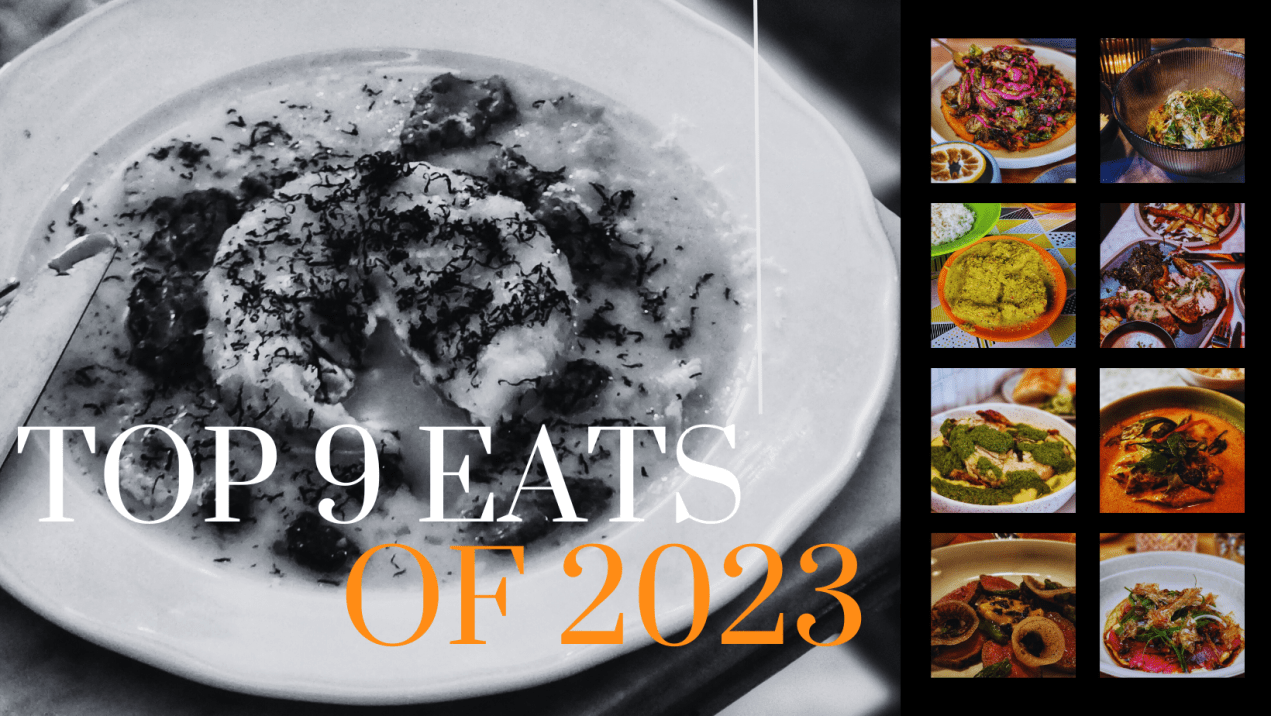
Our Top 9 Eats of 2023

Visit our Instagram page

By Michael White and Kley Klemens
Photos by Kley Klemens

Jewkarta may be only three years old, but we’ve visited a staggering number of restaurants, eaten and guzzled an overwhelmingly vast selection of food and beverages, and made the acquaintance of countless culinary professionals in this short period of time. And we’ve loved every minute of it!

2023 was, by far, our most interesting year yet, for reasons good (Kley’s long-overdue return to his native Indonesia; some of the greatest dining experiences we’ve had as a couple) and not (Michael’s sudden health downturn, which prevented him from participating in most of Jewkarta’s activities for the first half of the year).

But our annual Top 9 is all about emphasizing the positive — specifically, the most delicious and memorable dishes we ate throughout the past 12 months. Scroll down to discover them all. And whether you began following us three years or three minutes ago, we thank you for being a part of our gastronomic adventures in Metro Vancouver and beyond.

@barhaifa
HAIFA HALF CHICKEN

Chicken is often little more than a chef’s compromise for unadventurous customers. But the iteration at this new (and spectacular) Middle Eastern restaurant is one of the best we’ve had, thanks to its secret seasoning blend and a gravy good enough to redeem the foulest of fowls.

@liviasweets
SUNDAY ROAST PORCHETTA FOR TWO

Italy’s beloved pork dish (boneless, with shatteringly crisp skin and infused with the flavour of its own fat) is transcendent at this popular Commercial Drive eatery, its inherent richness amplified by a bed of velvet-soft polenta, and contrasted with the bracing heat and acidity of an emerald salsa verde.

@bar.gobo
ROASTED STRIP LOIN

The ever-changing menu at this edge-of-Chinatown wine bar means this simple yet perfectly executed dish from chef @so_j_one may not return for a long time, if ever. So excuse our conflicting emotions: thrilled that we were able to experience it, sad that we may never again.

@chupitococteleria
TOSTADA DE ATUN

This trailblazing seasonal dining space (located in an alleyway, and open only during warmer months) specializes in elevating familiar Mexican dishes to a state of luxury. We utterly devoured this photogenic tostada, which arrived topped with tuna, ginger mayonnaise, spicy soy sauce and fried katsoubuchi.

@elephantinvancouver
PORK NECK

Are we able to confirm that chef @justin.song.ell is human? His endless creations, which he invariably cooks and plates alone at a small prep station behind Elephant’s diner-like counter, are bizarre in theory yet astounding in reality. Berkshire pork neck flavoured with FIFTY-FOUR different types of Thai herb? Whatever you say, chef!

@zarakvancouver
BRUSSELS SPROUTS

Whoever discovered that the vegetable responsible for ruining countless childhood Thanksgivings could be fully redeemed by a swim in a deep fryer deserves the Nobel Peace Prize. For piling them onto a pool of red-pepper hummus and anointing them with a neon-pink masala sauce that looks like it belongs on a birthday cake, Zarak deserves the MacArthur Genius Grant.

@caffelatana
RAVIOLO

A single plate-sized pasta pillow, stuffed with black truffle, ricotta and herbs. Almost indecently rich and savoury, Kley continues to daydream about it as if it were a millionaire daddy offering to whisk him away to a private resort on the Amalfi Coast.  

Somewhere in North Sumatra, Indonesia (no website)
NANIURA

A highlight of Kley’s visit to his homeland: tilapia ceviche marinated in kafir lime juice mixed with torch ginger (a perennial plant native to Indonesia), turmeric, candlenut, Andaliman pepper, coriander and more. Another reason why Kley is baffled by Indonesian cuisine’s low international profile.

@hujanlocale
ACEHNESE GRILLED OCTOPUS

Another Indonesian dish — created by chef @meyrickwill, who helms the kitchen at this must-visit restaurant in Bali — the complexity of which Kley can’t describe or compare to anything he’d had before. Acidic and spicy, creamy yet light — Kley asks, “How is it that I’m Indonesian and Chef Meyrick isn’t??”

Standard
Mexican

InterJew #3: Maria Ponce (executive chef; La Taqueria, Chupito)

Visit our Instagram page

By Michael White

In September 2022, we were invited to try some dishes from the new brunch menu at the Yukon Street location of La Taqueria, a chainlet of Mexican street-food restaurants that began in 2009 as a single, narrow counter-service room in Vancouver’s Downtown Eastside and has since expanded to five bustling outlets in Vancouver, North Vancouver, Burnaby and Victoria, plus a food truck that can usually be found on West Georgia Street in Downtown Vancouver.

This was La Taqueria’s first attempt to become a part of the city’s tirelessly competitive, hugely lucrative brunch wars, and we arrived with no expectations other than to not leave hungry. What we experienced was, quite simply, one of the best meals we’d have that year, as well as one of the most unique and revelatory successions of brunch dishes we’d had in our lives.

These dishes shared one thing in common: They were each the creation of La Taqueria’s then-new executive chef, Maria Ponce, who had recently relocated to Vancouver from her native Mexico despite having never set foot in the city (or anywhere else in Canada) before. Since then, Maria has elevated the food at La Taqueria — as well as at the Michelin-recommended Chupito — to new heights of creativity and deliciousness.

This interview has been edited for brevity and clarity.

What’s your earliest memory of being taken to a restaurant?
It’s funny, because Chupito has something to do with it. Where I’m from is Navojoa, a little town in the north of Mexico, and it’s a desert but it’s also beach. My dad took me there and I used to eat the paté de camarón all the time, so it’s the one we now have at Chupito. I think I was three years old, and I learned how to tie my shoes, so it’s also a memory that I have of that restaurant.

You learned to tie your shoes at the restaurant?
Yeah. There was a kid there — the child of the owner — who taught me how to do it. She was older, but she used to play with me.

Was there one particular meal or restaurant that made you want to be a chef?
No. I think it was just my whole life, because I used to eat so well … My mom doesn’t eat pork or shrimp [for religious reasons] — she’s practically Jewish! So, my dad used to make something for her, something for me, and something for my brother and him. It was like a buffet all the time. My dad also loved to make a really big meal on Sundays.

But [in terms of] restaurants, it was my first internship, at the Greenbrier. It’s a huge restaurant and an amazing hotel in West Virginia, in a little town called White Sulphur Springs. They [the head chefs] were really rough there, but that was when I knew, “I want this.”

Had you spent any time in the U.S. before that?
No. This was a one-year internship from my college.

It must have been a huge culture shock. It’s one thing to go to New York or L.A. But West Virginia…
There’s nothing there! It’s a little town, but the hotel is enormous. That was where I was like, “OK. I want to do this the rest of my life.”

What kind of food were you cooking there?
It was fine dining, but the hotel has five restaurants: it has a steakhouse, it has breakfast… But it was the people there: they used to hit me, burn me, yell at me.

They hit you?
Yeah, like this. (mimes a little jostle) But not in a bad way; in a good way, to say, “Hey, you can do this.” And I loved it! The chef would say [in an encouraging tone], “Hey, you’re tough! You can do this!” And I’d be like, “Yes, yes, yes!”

How old were you then?
Nineteen.

Had you worked in restaurant kitchens in Mexico before that?
No. Never.

Oh, wow! And I assume the dishes you were cooking there were very different from anything you would’ve been eating at home.
Yes, of course — it was fine dining. And it was so disciplined, but so good! And all the kids in the internship were the same as me; they were like, “It’s not about the money. I want to do this.”

How many other cities did you live in before you came to Vancouver?
Well, there was another internship in Hilton Head Island, South Carolina; and then I went to Amsterdam and Manchester, and then I went to other parts of Mexico: Ensenada and Guadalajara.

So how did you end up here in Vancouver?
My last restaurant job was with the father of Marcelo [Ramirez Romero, owner of La Taqueria and La Mezcaleria]; I worked there five years with him. He’s the best; really a good man. He was like my dad there, and that’s how I met Marcelo. And I started making recipes for La Mezcaleria, and for Chupito during their first year, even when I wasn’t [living in Vancouver]. And the chef who was at La Mezcaleria, Marianna [Gabilondo], went to Mexico and we worked together for a week or two, and she came back with new ideas. I continued sending recipes, then Marcelo told me about the job and I was like, “Yes!”

You didn’t visit here first to make sure you liked the city?
No. (laughs)

How did you know it would be a good fit for you?
I didn’t. I asked Marcelo questions, like, “Where should I live there?” But I didn’t know anything about Vancouver.

What was your first impression?
I loved it from the first day.

Did you arrive on a sunny day?
No. I arrived on the worst day in the year and a half I’ve lived here. But I loved it anyway. I spent seven hours in the airport without eating, without water. Nothing.

Because of immigration?
Because of immigration. It was nothing bad. They [the officers] were changing shifts, and this and that. And then COVID [tests]. And I was like, “I’m so hungry! I’m so thirsty! I just want to get out of here.” And then I took a cab to my Airbnb, where Marcelo was waiting for me. It was raining — the worst rain I’d ever seen. Really, really hard. The next day, my best childhood friend, who was living here, took me to breakfast.

Do you remember where you had breakfast?
The restaurant with the sun [in the logo].

Cora??
Yes, that’s the one.

Oh, no! Their food is terrible!
I know. I never went back after that. (laughs)

What was the first great meal you had here?
It’s a shame, because now it’s closed, but Ubuntu Canteen. And then Kissa Tanto. Como Taperia was love at first sight: If you want a drink, you just go; if it’s after work, you just go; if you want a really good meal, you just go. Savio Volpe also.

When you first looked at the menu at La Taqueria, before you had the opportunity to put your stamp on it, what did you think was missing, or that you thought you could bring to it that wasn’t already there?
It was good — I’m not sure if I’m saying this right — but a little more flavour, because there was no one here to train people all the time, because you need [consistency], teaching the cooks techniques, different kinds of skills. For example, the first time I did something here was for breakfast, and it was so different for all of them. And now, I believe, after one year and eight months, the cooks think differently, their vision is different. They want to be more like cooks, rather than just plating.

Was anybody within the company nervous about how these sorts of dishes would appeal to Vancouver diners?
Yes, all of us, because when you do something the same way for so many years, it’s hard. We didn’t remove [any of the dishes]; just, every day, trying to make it better.

So now, more than a year later, La Taqueria has a new location [at the Amazing Brentwood in Burnaby]. How would you say the overall response has been to what you’ve brought to the restaurants?
It wasn’t easy, because people tend to not like change: “Hey, what’s going on? Why is it different?” And we now have table service instead of counter service. But I believe people understand us now. We knew it would be hard, but now we’re on the right path.

What’s your favourite restaurant in Vancouver right now?
I’m gonna stick with Como.

(Photo: Ruben Nava)

Standard
Caribbean, Cuban, Latin American, Mexican, Tacos

Review: Havana

Click here to see our video!

By Michael White

I’ve had a tendency to defer too much to the superior wisdom of The New York Times when I write for Jewkarta, and I had no intention of doing so again today. But then, mere hours ago, as if it had prophesied what I was struggling to articulate in the sentences that follow here, the Gray Lady published an article that provides a perfect framing for why Kley and I are so fond of Havana right now.

In the Times piece, California restaurant critic Tejal Rao ponders the increasingly lopsided balance of power in the relationship between servers and customers. During a time when all of us should be hyper-aware of the stress and sadness roiling inside our fellow humans — including, if not especially, those struggling to maintain a livelihood preparing and bringing us meals — instead we learn that public-facing workers, from restaurant staff to supermarket cashiers to Amazon drivers, are being subjected to more disrespect and outright abuse than ever from the masses.

This, needless to say, is some bullshit. Not only does it fly in the face of basic social decency; it lays bare a grotesque lack of gratitude toward people whose job is to risk their own health for no reason other than to provide us comforts we want but don’t need, perhaps even to pierce our year-plus bubble of loneliness with a warm-seeming “Hello,” an attentive “What can I do for you?”

What does this have to do with Havana? Frankly, everything.  

Havana has been a fixture of Vancouver’s Commercial Drive for more than 20 years. If ever it was considered one of the city’s crucial restaurants, it was before I lived here. It isn’t among the best, nor the most creative. Its menu is more Cuban-inspired than Cuban in practice. (I doubt any bona fide Cubanos consider carnitas tacos or pulled-pork eggs Benedict to be signatures of their homeland’s cuisine.) But none of this matters in the least. Because what Havana seems to want to be more than anything is A Great Hang: an environment in which we have an opportunity to not feel the rough edges of everyday life for a short time; where the food and drink are reliably good (at times great); where, if not everybody knows your name, at least a few staff are likely to remember it if you’ve become a familiar enough sight. Havana is where, lately, Kley and I have most consistently been able to forget — despite our servers’ masks and the sanitizer dispenser at the door and the plexiglass partitions hanging behind our backs — that we currently live under profoundly fucked-up circumstances. This is no small feat.

“Unlike service, which is technical and easy to describe, hospitality is abstract, harder to define,” writes Rao. “It doesn’t hinge on the quality of the glassware, or the folding of a napkin while you’re in the bathroom…. Hospitality is both invisible and formidable — it surrounds you.” The individual components of the hospitality we’ve routinely experienced at Havana are nothing remarkable. In an ideal world, they would be par for the course. But, of course, this isn’t an ideal world, and hospitality workers are performing their duties under such pressure nowadays that I don’t take it personally if they don’t seem receptive to my pathological politeness. I understand their inertia: I’ve had it up to here with people, too.

So, I don’t know to what I should attribute the happy hum of energy that the staff at Havana have consistently brought to our table — long before they discovered we were unimportant food bloggers with a three-figure following. They’ve brought the sort of genuine (or else very impressively faked) engagement and kindness that make people like us become regulars, even though Havana isn’t remotely close to either of our homes.

But I don’t mean to suggest Havana is worth your time and money simply because chances are the person taking your order will be nice. I’d cross the city again just for the Cheesy Poblano & Corn Dip ($15), a gorgeous sludge of niblets and molten herb-garlic Oaxaca cheese, crisped and blistered from the broiler. Grilled octopus ($19) is among the best I’ve had in a long time, imparting beautiful smoke and perfect texture, mingled with other good things including chorizo and charred shishito peppers in a smoked Romesco sauce. And we both quietly lost our collective shit over Mariquitas ($7): long, curling strips of fried plantain served with a chimichurri aioli that I implored the manager to bottle and sell. (He’s considering it.)

At brunch recently, Kley made best friends with the Governor Sour ($12), a pretty and bracingly — but not cloyingly — sweet cocktail of pisco, passionfruit, coconut, lime and egg white. I tend to skew bitter (ask anyone) and so was very taken with the Cuban old fashioned ($14), which builds upon an unlikely base of brown-butter Havana Club rum dosed with Angostura and cacao-coffee bitters. Our glows thus stoked, we sat further back in our patio chairs and watched the Drive’s bohemian and hipster-parent hordes parade past. Against all odds, life seemed sweet.

Speaking of patios… at the time of this writing, British Columbia’s indoor-dining ban continues, and so the covered patio is the only seating at Havana for the time being. This is no bad thing. Spring has sprung, and everyone seems all the more content (for reasons of both public health and general happiness) to be here next to the benign din of the sidewalk. As I write this, I wish I were there.

Havana
1212 Commercial Dr., Vancouver
604-253-9119
havanavancouver.com / Instagram: @havanavancouver
Delivery platform: DoorDash

(Photo: Kley Klemens)

Standard
Mexican, Mexican American, Tacos

Review: The Pawn Shop YVR

Watch the video review here!

By Michael White

Arguably no Vancouver street betrays the local economic and social impacts of the pandemic as nakedly as the Granville Strip. The five blocks between Robson and Drake streets — especially south of Nelson — have been cosmically ugly for as long as most of us can remember. Not as existentially depressing as, say, Main and Hastings, but a top-rank urban eyesore nevertheless — dirty and charmless and seemingly disgusted with itself. To my knowledge, the City has never initiated any meaningful attempts to beautify it, presumably because there is no point: every weekend, hundreds of suburban dipshits swarm the Strip, to drink and to fight and to projectible vomit across its sidewalks and onto its storefronts. Or at least they did, until COVID-19 put the brakes to that, as it did to so much other human activity. (Of course, it didn’t stop all of them. Some dipshits can never be stopped their dipshitting.) And so, what was once merely unattractive is now both unattractive and barren — a debauched party from which everyone went home after trashing the house.

This is the ailing environment in which The Pawn Shop exists and, similar to countless other restaurants here and worldwide, is currently struggling to hold on. The Pawn Shop (or, to use its full unwieldy name, The Pawn Shop YVR) is doubly cursed in that it was purpose-built for the Strip and those who frequent it: young club-hoppers and nearby office workers seeking uncomplicated tacos, burritos, and tequila-based cocktails with which to either stoke the celebratory fires of a wild night out or to cushion the blow of workday drudgery. The room — heavily graffitied walls, high-top tables, dim lighting, not a single soft surface to absorb the din — is of a piece with the food. It isn’t most people’s idea of a destination eatery, but if you happen to be in the neighbourhood for the reasons most people come to this neighbourhood, in all probability it’s exactly what you want.

The Pawn Shop bills itself as “East L.A. inspired,” which is a bold claim — some of the most authentic and savagely delicious Mexican food to be found outside of Mexico is in Los Angeles communities such as El Sereno and nearby Boyle Heights. This isn’t that. (The Mexican, one block north, is closer to the mark.) What The Pawn Shop is, however, is a very good — occasionally excellent —purveyor of the sort of Mexican-American go-tos that make white people (this one included) very happy when alcohol is flowing and the day’s miseries are soon to be forgotten. The dining room, so crucial to the full Pawn Shop experience, is quieter nowadays, of course, due to reduced capacity and social-distancing measures — a stark contrast to the shoulder-to-shoulder atmosphere of the Before Times. But our takeout experience (we tried both pick-up and delivery) revealed that their fare travels well, and is a great complement to yet another evening on the sofa watching whatever Netflix drivel best soothes your frazzled pandemic nerves.

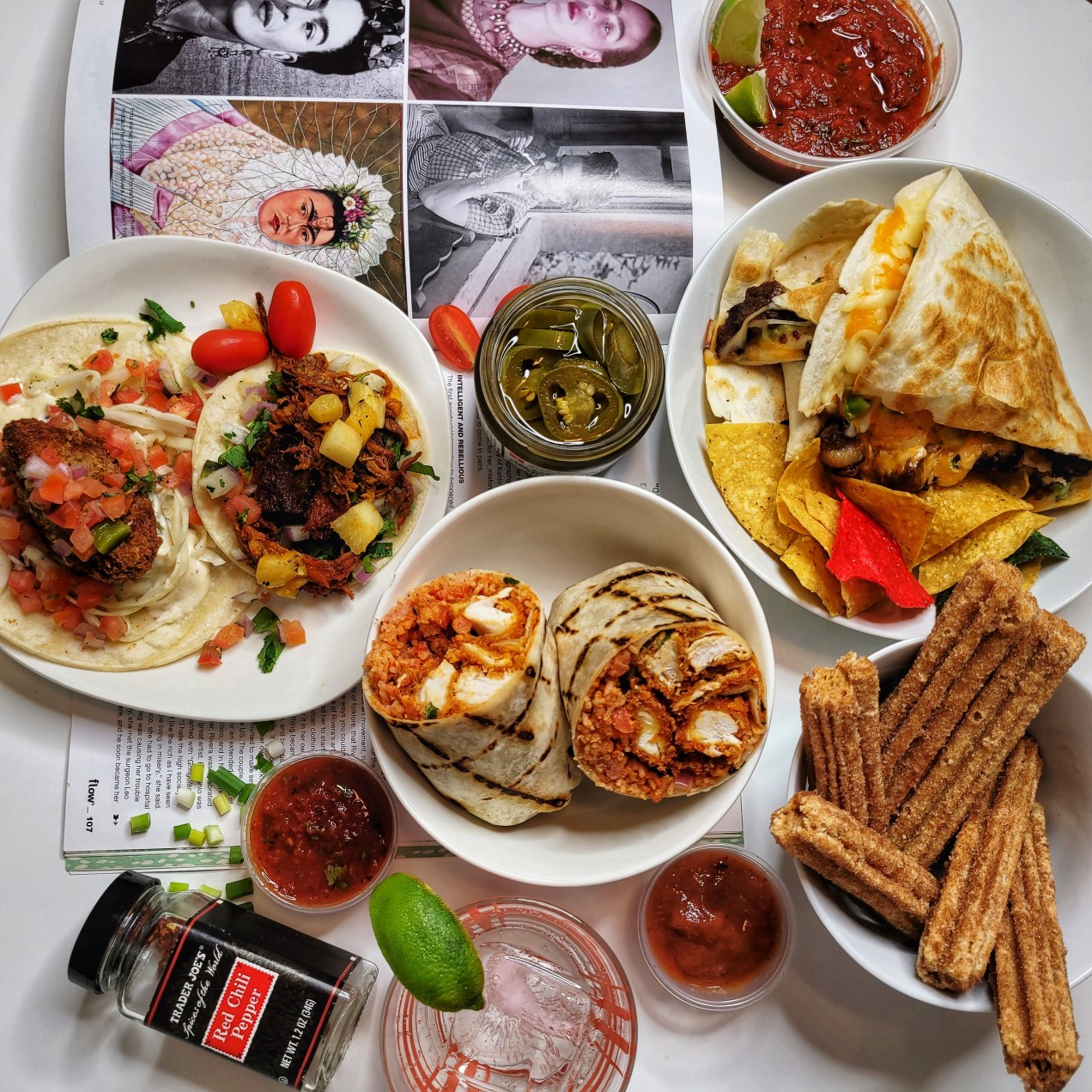
The Pawn Shop offers 10 different tacos, five of which are “O.G.” (meaning traditional; three for $10.95) and the rest “bougee” (presumably meaning they have ideas above their station; three for $13.95). Carnita, Al Pastor and Chicken Tinga deliver what you expect and likely want: tender marinated meats; acidic counterpoints (cilantro, grilled pineapple, raw onion); small, pliable flour tortillas. We wish the salsa had delivered more heat (or that we’d been offered jalapenos to compensate), but the flavours were harmonious and the textural contrasts on point. Best of the lot was Crispy Avocado (one of two vegetarian tacos), in which the millennially beloved fruit is panko-crusted and deep-fried, its mild unctuousness melding beautifully with shredded white cabbage, pico de gallo, and salsa verde.

We were especially enthusiastic about our quesadilla ($15.95), an oversized land mine of starch and fat stuffed with beef brisket (one of six options) and, crucially, an immobilizing bog of melted cheese. Were we meant to receive sour cream alongside the (we repeat, too mild) salsa? We didn’t. But no matter, because we found enough additional ballast in the Big Bird Burrito ($15.95), the star ingredient of which is breaded buffalo chicken. This is roughly as near to bona fide Mexican cuisine as the Doritos Locos Taco — but fuck it. This, again, isn’t the point.

The Pawn Shop is probably best experienced as part of a large group, the better to explore the extensive selection of shareables from the appetizer list, which includes sundry other deep-fried things (cheese tots, jalapeno poppers, tempura wings, vegan cauliflower florets for that one virtuous person who tagged along; $9.95 and up) and, naturally, a nachos platter the size of a postmature baby ($14.95-$24.95). Half a dozen flavours of margarita, fishbowl drinks and “spiked slushes” do what they’re meant to do, as are an array of tall-boy cans from independent breweries. The Pawn Shop is doing its best to draw you in, including a generous Happy Hour featuring $4.95 drinks and $1.99 tacos (after a minimum initial order). If you have a trusted bubble to accompany you, this might be just the place to enjoyably kill a few hours before returning to the safety of your home. Or do what we did: Bring home a heaving bag of much too much, and assault your already abused digestive system with the leftovers at breakfast time. To quote a very wise song out of context: It’s not right, but it’s OK.

The Pawn Shop YVR
117 Granville St.
604-687-7474
thepawnshopyvr.com / Instagram: thepawnshopyvr
Delivery platforms: DoorDash, Uber Eats

(Photo: Kley Klemens)

Standard