
Visit our Instagram page
By Michael White
Kley and I first met Kelcie Jones in June of 2022. We were enjoying our first dinner at Elephant, an acclaimed East Vancouver restaurant where she was working as sommelier and general manager. We immediately fell in love with her sass and energy, and her utter lack of pretension about the incredible wines she was pouring from behind Elephant’s diner-like counter.
Fast-forward two years, and while Kelcie is no longer at Elephant, both she and the restaurant are flourishing. Elephant received a Michelin recommendation in both 2022 and 2023 (the first two years in which Michelin was rating Vancouver restaurants), and Kelcie was named Michelin’s 2023 Vancouver Sommelier of the Year for her consulting work at Burdock & Co, a trailblazing farm-to-table restaurant that itself received a Michelin star two years in a row. Additionally, in December 2022, Kelcie co-launched her own wine school, whose very name is a reflection of her humour and straightforwardness: This is Wine School.
In late May, Kelcie hosted an event in Vancouver dedicated to Chablis — a beautifully accessible and versatile (yet, many would argue, underrated) wine named after the region in Burgundy from where it originates. We had the pleasure of attending the event, and the night concluded with the following one-on-one interview about Kelcie’s career, her recent industry honours, and her love for Chablis.
This interview has been edited for brevity and clarity.
For those who became aware of you when Michelin named you Vancouver’s 2023 Sommelier of the Year, it might surprise them to know you basically fell into this career by circumstance. You were in Toronto, working part-time for a film festival and studying the arts at university. How did this sudden turn into wine happen for you?
I loved film and I loved literature, and I wanted to be in academia, studying those things forever. But it was a strange time in academia; most of the people who were PhD students were struggling to make ends meet, and I already had to work in restaurants in the summer [to support myself]. And I thought, “I’m not going to be able to work in restaurants and complete my PhD at the same time.” In the restaurant, the sommelier seemed to be the person whose job was the most narrative, the closest to storytelling and the closest to art. So, I thought, “How can I talk to people who are artists and how can I engage with something that’s a food version of film and music and art?”
But also, my interest in wine came from it being the one [alcoholic beverage] that I understood why people liked it. I really got it. And then, when the narrative aspect fell into place — when I heard people talking about wine and place and family history, and why the story of a specific wine is important — then I got to bring the storytelling aspect, which is what I really loved, into it.
When you returned to Vancouver from Toronto, where did your new career take you first?
I was at Chambar for a number of years. In the industry, it’s well known as the restaurant where you go to learn how to do whatever it is you want to do. It’s a special restaurant for that. As owners, Karri and Nico are really good at letting people make mistakes — which you have to be allowed to do — and to be creative.
Chambar holds itself to very high standards, and you didn’t have very much experience at that point. What do you think Karri and Nico saw in you that made them want to bring you aboard?
I was young and at a good place in my career. I knew enough — I was doing the WSET [Wine & Spirit Education Trust] diploma; I was quite dedicated to learning — but I also was still young enough to be like, “Yes, I will work 80 hours a week to learn to do this thing!” It was just the right period for me, where I was not enough of a novice to be underqualified, but still hungry enough to really go to the wall for them. They gave me a chance when I was quite certain that I wouldn’t get the job.
Kley and I met you for the first time at Elephant. Was that your first opportunity to have complete ownership of a wine program?
At Chambar, I really did get to do what I wanted. That was full ownership in a very real sense. But Elephant, because [I was helping to open] it, that was the first time I built something from scratch, which is a very different thing than walking into a program where someone else has already built a cellar. Even if you’re allowed to do whatever you want with that cellar, there’s already an existing structure.
Elephant must have felt like being thrown in at the deep end, because Justin [Song-Ell, chef] doesn’t cook like anybody else, and his menu changes all the time. What was that experience like for you, in that you had complete independence but you also have to choose wines that complement the cooking of one of the most idiosyncratic chefs in Vancouver?
It was more exciting, more fun. You’re really being pushed. And sometimes, it’s easier to not have very many options for wines that would work. You’re like, “Well, this dish is quite spicy, but also very delicate, and so there are only one or two wines that could possibly work with this thing.” And rather than a very classical dish, where any full-bodied red wine with tannins would be nice, sometimes with Justin’s food it was like, “This wine is the only thing that could potentially work.” It made me really pair food and wine with the sense of “Taste a sauce and then taste a wine,” as opposed to just using the theory that you have in your head as a sommelier. Most of the time, you’re not really eating a dish and then pairing; you’re just working from your brain with the general rules that you know.
On the subject of Chablis, was it at Chambar or at Elephant where you first had to really consider its versatility and the most appropriate pairings?
I think Chablis was even earlier than my sommelier life. It was probably when I was a server in Toronto, working at The Chase, which is an oyster bar. Chablis was quite deeply part of their program. You needed to have wine that worked with oysters, so that was a big consideration, and having multiple wines from the same place was pretty common on their wine list. Pretty much from the beginning of starting to care about food and wine — as a server, before I even became a somm — pretty quickly I was like, “Pairing is something I’m going to care deeply about.”
Did you find that that Chablis was one of the more versatile wines?
I think it works so much better with certain foods than anything else. It’s a natural choice for a lot of things — oysters being the main one, but so many dishes that are also quite west coast. In Toronto, it was oysters. But here in Vancouver, we have a big focus on mussels, there’s lots of scallops, there’s lots of shrimp and different shellfish that need a wine that’s clean and precise. Not to say that there aren’t other nice white wines that work with shellfish, but Chablis is just the best pairing for the table.
Seafood aside, what do you think are some of the most natural pairings?
Thinking about the flavours in a lot of Chablis wines can unlock ideas for good pairings. Some Chablis have quite a green-apple quality, so it would pair well with a green-apple salad with aged cheddar and walnuts — an old-school pairing that has all the same flavours in the glass as on the plate. I like Chablis with a lot of creamier, cheesy things. Something kind of fun and lowbrow, like mac and cheese, is also really good. Anything that has a cream sauce — you can pick a protein and then something that has a creamier sauce — pairs nicely with richer premier- and grand-cru-style Chablis.
What’s your own favourite pairing for Chablis?
I know oysters are already a fairly obvious option, but I think that picking certain oyster types and certain Chablis wines is particularly nice, like certain premier crus with east coast oysters that are a little bit brine-ier. I also really like Gougère. How can you have a better thing than a beautiful little bread-dough ball with cheese in it, fresh out of the oven, very warm, soft texture. It’s not a meal, but it’s so traditional to Chablis. It’s light but also rich, which is true of the wine too.
Do you find that Chablis is relatively underrepresented on restaurant menus? Is awareness of it growing or is it still somewhat of an underdog?
I think awareness is quite deep in B.C., but maybe not beyond the fact that it exists and it’s delicious. The nuance of knowing that it’s made from Chardonnay is not always there. But people absolutely recognize it and it’s on most lists — at least one, if not a couple of options, which is awesome.
So, for the enlightenment of people reading this who aren’t necessarily well educated about wine, what is it that differentiates Chablis from Chardonnay?
Think of it as a wool/cashmere analogy. Chardonnay is a great variety that’s planted in every corner of planet Earth. If there’s a wine region that exists, they have Chardonnay. There’s nowhere without Chardonnay, basically — even places where it’s not the most popular grape. And in a lot of cases, Chardonnay has a lot of oak on it, and it’s grown in a lot of warmer climates. So, it’s like a richer, buttery, tropical wine. But Chablis is, in a certain sense, the prototype but also the purest expression of Chardonnay. None of the butteriness. In some cases, Chablis has a little bit of oak, but is usually more about purity and minerality. And if Chardonnay is wool, which for some people is scratchy and uncomfortable, Chablis is cashmere. It’s the softest, most supple and lovely texture.
You’re in the midst of pursuing your Master of Wine. What does the designation mean and what can it potentially lead to?
It’s not really a part of any traditional academic structure. It’s kind of its own institute: the Institute of Masters of Wine. And that designation is quite respected in the world of wine; the initials MW are only held by 300-ish people in the world. The program is about tasting wine as much as it is about the theory of winemaking and how wine is grown.
To be honest, I’m happy doing what I do now. I’m happy to get to talk to people, communicate, speak, teach — so I don’t really know if there are going to be that many more things that I’ll do in terms of true jobs. I just really love the idea of pursuing education and doing something that’s hard and pushing myself.
In the short time since Michelin named you Vancouver’s 2023 Sommelier of the Year, what’s been the most interesting revelation as a result of the exposure it created?
The wine world is very small. You meet people and they don’t live in the same place as you, but the community is small, so being kind to people is so important. I hope I’ve always been kind. (laughs) Also, I’ve learned how warm the world of wine is. People really do want to connect with one another, share and talk. At the end of the day, we all do this because we love getting together, sitting at the table, talking, sharing wine, maybe eating Gougère and drinking a glass of Chablis. It’s a special communal thing that a lot of other industries don’t have.
If someone reading this is new to Chablis, where do you recommend they start — especially if they only have access through government liquor stores?
I think we’re lucky in B.C., in that the quality of the baseline is excellent. There are a lot of really interesting options. There’s a good selection of wines from Jean-Marc Brocard, so you can taste multiple premier cru and grand cru, but also entry-level Chablis from Brocard, which I think are very classic expressions of the wine, on the more pure-mineral side of things — less rich, less round than some producers. And they’re accessible in a lot of stores, and they’re certified organic, which is great for a larger producer.
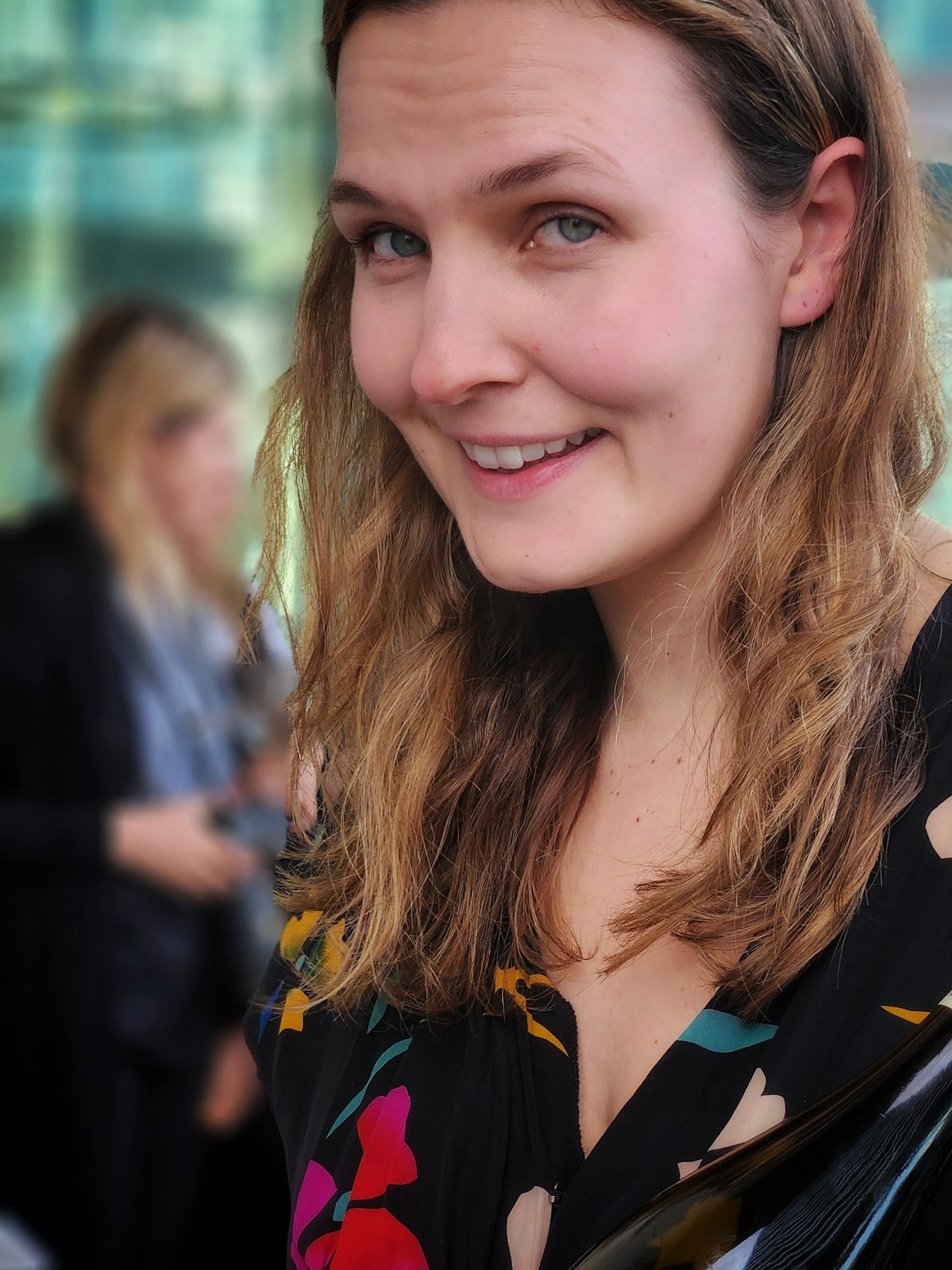
(Photo: Kley Klemens)
 Jewkarta