Fine Dining, Wine

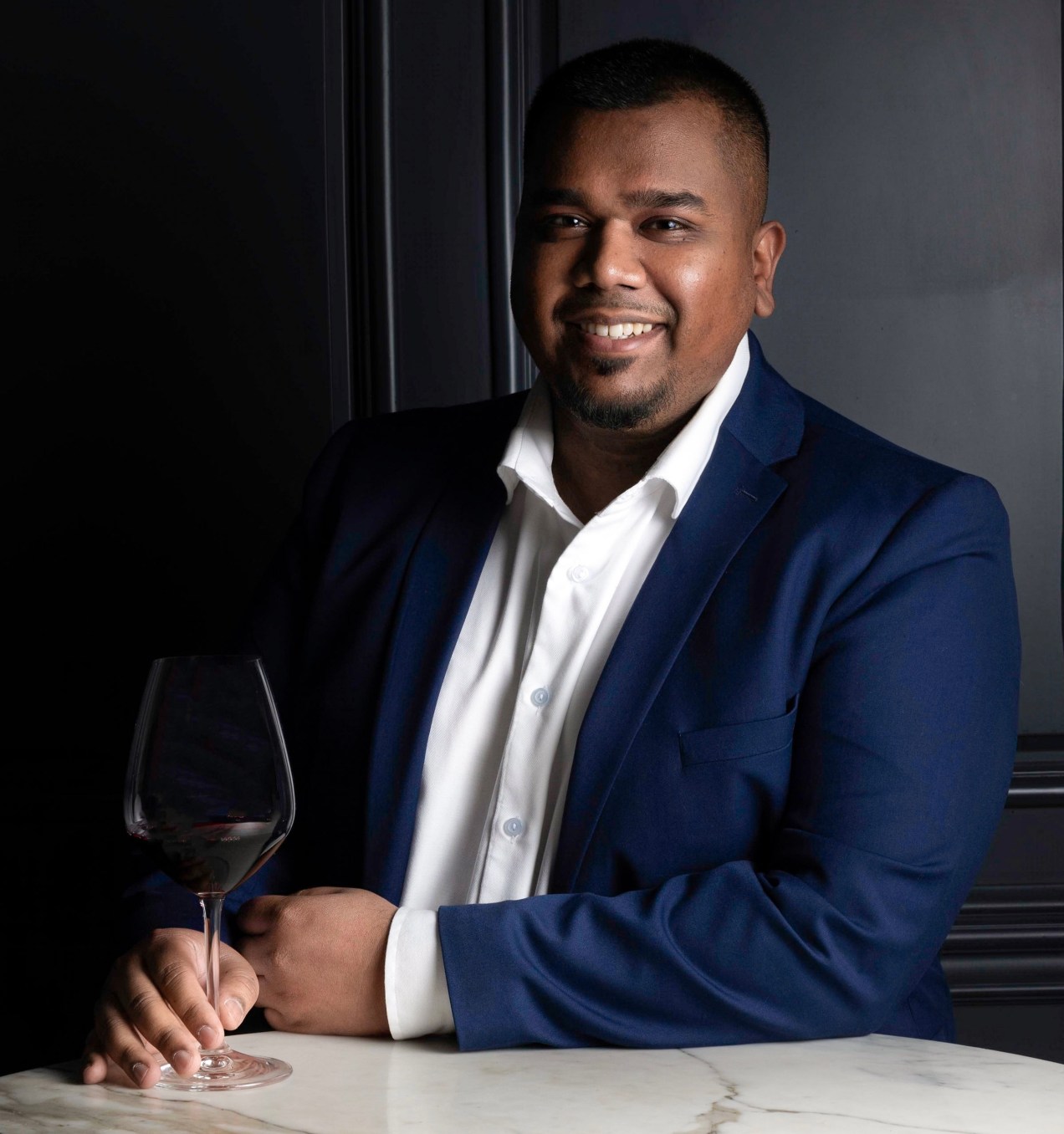
InterJew #15: Ashwan Luckheenarain (sommelier, Boulevard Kitchen & Oyster Bar)

Visit our Instagram page

By Michael White

Shortly after the COVID-19 pandemic’s indoor-dining restrictions were lifted in Vancouver, Kley and I became somewhat obsessed with Como Taperia, the Mount Pleasant neighbourhood’s soon-to-be award-winning tapas bar.

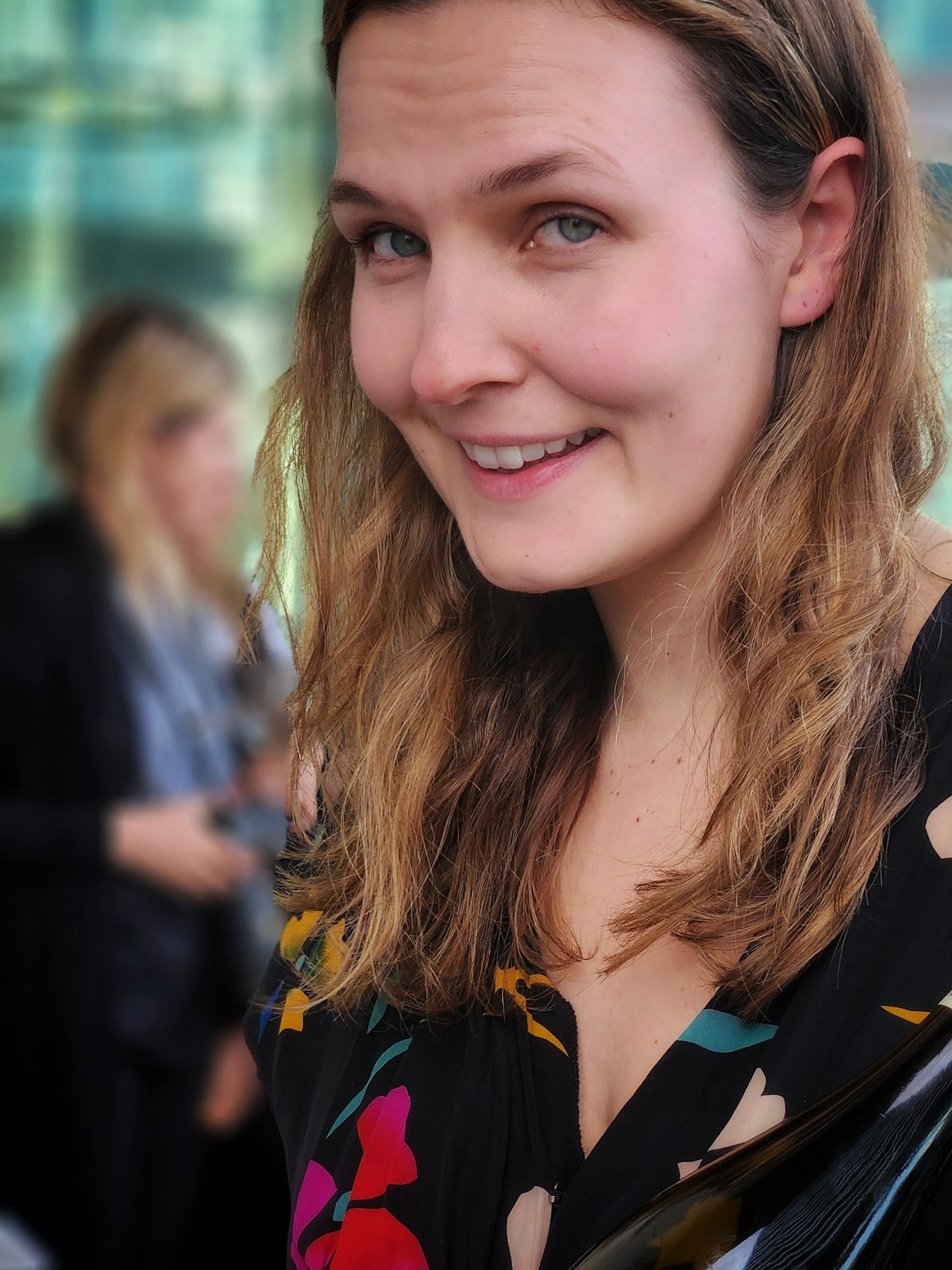
It was there that we met Ashwan Luckheenarain, who had recently come aboard as manager and wine buyer. We were immediately struck by his charm and seemingly innate flare for hospitality. To our surprise, we eventually learned that Ashwan had never intended to pursue a career in restaurant management or wine, until a single meal compelled him to change course. Earlier this year, Ashwan moved from the raucous, freewheeling party that is Como to the lively yet civilized environs of one of Vancouver’s most acclaimed fine-dining establishments, Boulevard Kitchen & Oyster Bar.

Read on to discover how a former aspiring engineer from Mauritius became a wine and hospitality virtuoso with an unquenchable thirst for knowledge.

This interview has been edited for brevity and clarity.

What’s your earliest memory of being taken to a restaurant?
Oh, that would be back home in Mauritius; a place called King Dragon. Mauritius’s demographic is pretty diverse: you have African descendants, Asian descendants, east, west, everywhere. After slavery was abolished, people started coming from all over, and everybody brought something [culinarily] from where they came from. One of the things the country is very proud of and really loves is Chinese food, because it’s comfort food; wherever you go, there’s a little snack bar serving chow mein noodles, or something almost like dandan noodles. King Dragon was one of those restaurants. It was casual and family friendly.

One of the things that’s pretty famous is you find these little stalls that sell Dhalpuri and rotis. If you’re really hungry, you eat three of them and then you’re set for the day.

When you were growing up, were restaurants strictly a special-occasion situation?
Yeah. I come from a working family, so it wasn’t a priority to go to a restaurant to eat. It was always special, like if there was a birthday, someone got a promotion at work, or someone graduated from school — something to celebrate.

Did you work in hospitality when you were in Mauritius?
So, this is how my story goes. I was probably 14 years old, and I had friends who started a catering company, and there would often be weddings — we’re talking about 400 to 1,000 people. So, I was working to go out and have fun, you know? You’re 14 years old; you just want to be outside. You don’t want to be home. It was very fun, because at the same time it was wedding season, there were also corporate events happening.

Were you cooking or serving?
I was serving and then, eventually, bartending, but just doing, like, highballs. I was doing it just for fun, but my goal was to become an engineer. I was a big fan of design and technology. I was into science. I was pretty good at math, but I was pretty bad at physics. So, eventually, I was like, “I really want to follow that path.” But it’s really hard for people in Mauritius to go elsewhere to study or even just move, so you always have to find these little loopholes. It’s not really a loophole, but there was a journey, in a sense. The journey was that I could do a course for two years [in another country] and then get a work permit. The options I had were that I could go to Ireland, I could go to Australia; I really wanted to go to London, just because I was a big fan of the Premier League. But then, in 2014, my sister moved [to Vancouver]. And then a year later, it was time for me to move, and my parents were like, “You know what? Why don’t you move there as well, where you already have someone to guide you?”

The course I could do was either hospitality management or business administration. My sister did business administration, and I didn’t like the job that she was doing; I found it very boring, and I never saw myself doing a 9-to-5 office job.

So, eventually, I chose to do hospitality management. I joined Douglas College in Vancouver, and for me the goal was to get my work permit and try to get my [permanent residency]. And then from there, I needed to find a job. I said to myself, “I’m going to find a job in a kitchen, something back-of-house. I’ll give [that and front-of-house] two years, and then I’m going to see which I love most. The kitchen thing was pretty fun, but pretty hard as well. The kitchen I started at was Dubh Linn Gate [a now closed Irish-themed pub]. I started there washing dishes, peeling potatoes…

What were your first impressions of Vancouver?
Me being in Canada was my first time being outside of Mauritius, so, obviously, it was culture shock, but I was trying to be open-minded as much as possible. I was living in Surrey, in a master bedroom, for $300. Me and my sister and one other friend, we were sharing the whole house for $1,100. It was beautiful. I worked at Cactus Club in Coal Harbour for almost two years, and this is where I started working on the line. The kitchen team was really great.

And then, one day, I went to dinner at L’Abattoir to celebrate my sister’s graduation, and this is where I fell in love with the things they were doing. It was a stellar dinner from start to finish. I told myself, “When I leave the kitchen, I’m going to work at this place.” And then I started as a food runner [at L’Abattoir]. That was the one thing I could do, and it opened a whole world of things.

How much time passed between that first meal and you starting to working there?
Probably six months, because I was still in school, so I was part-time. But also, this is how the wine thing started. I was given homework by Kristi [Linneboe, L’Abattoir’s wine director at the time] to grab a bottle at the liquor store and learn about it, tell her about it. And one of the things about wine is it’s like a rabbit hole: If I go to learn about this region, I’m going to learn something else that I was not intending to learn. But this information always sticks with you.

Did you already have an interest in wine before you started working there?
No, it was after, because I was studying at school. One of the courses was Food and Beverage, and with beverages you’re learning about wine pairings, and we’re talking very mainstream wine: Pinot Noir, Gamay, Cab Sav, Merlot, Chardonnay… Kristi and Lisa [Haley, sommelier] were really into education, so there was always someone coming in to talk about wines. It encouraged me to go through my WSET [Wine & Spirit Education Trust]. And from there, one day it kind of hit me where I was like, “[My future is in] hospitality” — because I was still thinking of becoming an engineer, to follow that route. I was like, “What if I accept hospitality [as a career], and what would it bring it to me?” And the day I did that, it just took me to the next level.

Then I got the opportunity to start running the private dining room for L’Abattoir, so there was the management side of things that I was learning. And then COVID happened and it wasn’t sustainable for me to stay at L’Abattoir anymore. But it had been close to four years by then. It was time to move on. This is when Kristi had started working at Como, and they were hiring people, and she was like, “Hey, you should come work here. It’s a pretty fun place.” I hadn’t been there yet, so I was curious. I wasn’t really keen on going into a casual restaurant, because I really love the fine-dining side of things. But, eventually, that Como journey started and I got to meet so many people; I was exposed to a different type of cuisine, a different country, including in terms of wine — we’re just talking about Spanish wine. I was just a server, but eventually there was some turnover in the staff, and that opened the way for me to become a manager. I was already in management, but I wanted to learn more. It changed my way of thinking. At L’Abattoir, it was so straightforward and so linear; it was black and white, like, “This is how we do things,” whereas at Como, there was this grey area of operating. It was a little more free, you know? You’re here to do a job, and these are the responsibilities and the duties, but everybody is able to show their personality. Everyone’s dressed so differently. And also it’s Main Street, so everybody is a character. It was very fun to be at Como.

Did it surprise you that you became as interested in wine as you did?
No. Something I realized too was, if you were to move along in this industry, going back to the Cactus days, working in the kitchen — you don’t get paid for shit. I knew that the money was in front-of-house. And when I was on the path to learning about management, I knew that wine knowledge was going to get me even further. Learning in management is non-stop; same with wine.

But then, eventually, me and Como parted ways in April [2025] and I was at Casa Molina. I really love those people, the Paella Guys. I went there for their friends-and-family [preview dinner], and I found they didn’t have a GM, and so I applied for it and eventually got the job. I was there for about six months or so. But it kind of hit me that I was way too comfortable, because I was dealing with the same things [as at Como] and I really needed to grow.

And then Lisa, who’s the GM at Boulevard now and who I’d worked with at L’Abattoir, called me up for a chat. It was to take over the management position at Boulevard and also be the somm — they usually go side by side. I really love it. I love how the management team operates: They’re pros and they work really hard, and it’s a fine-dining setting. It was going to be a make-or-break, where either I was going to like it or hate it. We used to have Adrian [Lindner] as wine director; he was doing all the heavy lifting and I was there to support him in terms of the sales, but I wasn’t taking on any more responsibility yet. But then, as I was about to take on a little bit more responsibility, Adrian moved on, and I was given the opportunity to take over the wine program, which is huge. We’re talking about working with 800-plus labels of wine. L’Abattoir probably had 200 back then; at Como there were 40; Casa was only 20.

(Photo: Leila Kwok)
Standard
French, Fusion, West Coast, Wine

InterJew #12: Kovic Prévost (owner, chef; Is That French?)

Visit our Instagram page

By Michael White

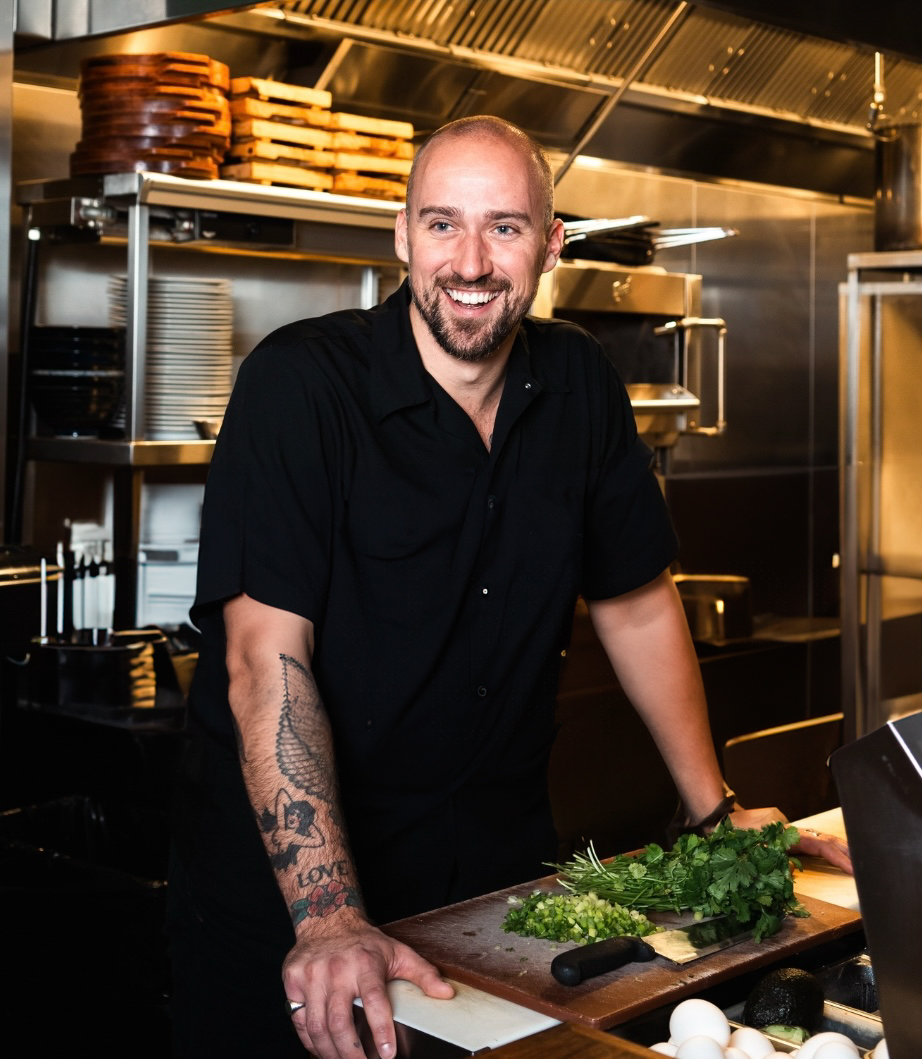
The last person who expected Kovic Prévost to open a restaurant — least of all in Vancouver — was Kovic Prévost. A nomadic cook since his teenage years in his native Montreal, a combination of restlessness and unpredictable life circumstances brought him to Vancouver, home to Montreal, Vancouver again, Japan, the French alps, and Vancouver a third time (and possibly several other destinations he neglected to mention).

In Summer 2022, he opened @isthatfrench, a cheekily-named wine bar and small-plates eatery in the long-dormant space in Gastown’s Blood Alley that had previously housed the trailblazing Salt Tasting Room. Within weeks, it was attracting full houses — and it (very deservedly) still is. But had it not been for the persuasion of the building’s owner and various people in Prévost’s social circle, it never would have happened.

This interview has been edited for brevity and clarity.

What’s your earliest memory of being taken to a restaurant?
That’s a good question. It all leads back to family holidays. We used to go every year — or every couple of years, maybe — to the East Coast: Virginia Beach, Cape Cod, Provincetown. And then I grew up on seafood. My happiest memories are when the family would drive down to the East Coast. I was raised by parents that were, like, the kids’ menu was not an option. It was like, “You want to eat?  You eat with us.” And so I grew up eating mussels, lobster, clam chowder. I’m very grateful, because they exposed me to a lot of amazing food. My friends were eating pizza pockets. Even though my parents weren’t great cooks, they really enjoyed eating. We didn’t have much money, but food was always important.

This leads to the inevitable but very unoriginal question: What made you want to be a cook?
I just liked it. I came [to Vancouver] when I was 17 or 18, to learn English, and I stayed here for almost a year. And I helped out with a catering company in the Okanagan Valley: peeling potatoes, asparagus… They only bought food from the Okanagan, and they had their own pigs and made their own charcuterie, and grew their own vegetables. And one day, at the end of the summer, they were like, “Thank you so much for your work. We have an empty spot at one of the dinners. Do you want to come and eat?” And I did, and it was delicious. But even more than that, it was, “These guys are amazing at what they do.”

So, I went back to Montreal and I knew I wanted to become a cook. I started as a dishwasher in a restaurant. I enjoyed the fast pace. It was a very busy French restaurant, and the dish pit was full, and people were yelling, and the servers were running around, and I fell in love with it. I have ADHD, and this fed my brain. I would crush my work in the dish pit and then go to the chef and be like, “What are you doing now? Can I help?”

Did you go to culinary school?
No. I just worked in restaurants. I learned under two chefs in that French restaurant for four years. It was there for a long time — almost 30 years. It was tartar, duck-leg confit, pasta. I learned the basics: how to cure your duck, how to chop your tartar, trim your meat. But then I burned out — four years of a real grind. So, I left and came back to Vancouver. I needed to do something different.

What brought you back here the second time?
I didn’t really want to come back to Canada. (laughs) I was married to an Australian, and then we were stuck in Europe during the pandemic. I was a private chef, so in the winter we were working in France, in the Alps, taking care of a luxury chalet where she would manage and I would cook. And then the pandemic happened that winter, in March. We were so secluded in the Alps, and then, all of a sudden, everything shut down. We tried to go back to Australia, but we couldn’t, so we decided to try Canada. And then my wife managed to get a tourist visa, which was at least a guarantee of entry. I thought, should we go back to Quebec? But my wife said, “I cannot do those winters.” It would be minus 40C and she wouldn’t wear gloves. She came back and her hands were purple.

But I’d lived in Vancouver before, so I reached out to some friends, and they said it was a bit smoother here. Some patios were still open. I got to work straight away.

When you first arrived back, where were you working?
I worked for Meet. I’d opened the first location, on Main Street, before I left Vancouver over 10 years ago. I was their first head chef. It was a fun experience, but I was young — like, in my early 20s. I didn’t really know what I was doing, then I burned myself out working too much. That’s when I booked a one-way ticket to Japan and left. So, when I came back to Vancouver, I got a job with Meet before even landing. I wanted something safe, and they were doing a lot of takeout back then. I worked there for over a year.

And then I met Scott [Hawthorn], and he said, “Do you want to open a restaurant?” And I was, like, “What?” (laughs)

It was, of all people, your landlord — the owner of the former Salt Tasting Room space in Gastown — who persuaded you to open your own restaurant. How did that happen?
Do you know who Janaki Larsen is?

I don’t.
Janaki is quite a famous ceramist in Vancouver. I worked for her years ago, and we became good friends and we kept in touch. One day I went to her studio to say hi. And then I left, and then she texted me a few minutes later, saying, “By the way, I just moved into a new studio and I want to do an opening party. Do you want to do the food for it?” And obviously I said, “I’d love to do that for you.” So, I came and cooked, and Scott is Janaki’s landlord and also a good friend. He came to the event and we started chatting, and he tried my food. The Salt Tasting Room space had been empty for, like, a year and a half, and he’d had a hard time finding someone for the space. Salt had been there for, what, 16 or 17 years? When it closed, Scott was looking to put something meaningful in the space, but he had a hard time finding a tenant that fit with his vision.

Scott called me the day after Janaki’s party and he said, “She gave me your number. I really enjoyed your food and chatting with you. I’ve got this space for a restaurant. Are you interested in opening one?” But I was like, “Not really.” (laughs) My life was chaotic: I was going through a separation, working a lot at Meet and trying to figure out what I wanted to do with my life. I was like, “Do I want to stay in Vancouver?”

I asked, “Where’s the space?” He said Blood Alley. And I’m like, “The Salt Tasting Room space?” I used to go there all the time when I first lived in Vancouver. I didn’t know it was for rent.

I’ve never heard a story before about how a landlord was the primary catalyst to convince someone to open a restaurant.
When people ask me, “How did you end up opening a restaurant?”, I say, “It kind of came to me.” Scott and I met that same afternoon and talked for hours and hours. He asked me, “Pretend you could open a restaurant. What’s your vision?” And I was talking a lot about growing up in Montreal and missing the community, building community, doing something meaningful. And I also complained about the restaurant industry in Vancouver — the cost and everything. He said, “We’ve got the same vision. Go home and think about it. Build a business plan.”

Once you knew the Salt space was available to you, did you know immediately what you wanted to do with it in terms of the food you were going to serve?
Not really. I knew I was limited. I couldn’t burn anything. [The de facto kitchen, located behind the bar, is small, and isn’t designed for hood vents, which rules out stovetops and grills.] I love seafood, so I wanted oysters and wine. The goal was to open an oyster bar, because oysters are raw and you don’t need much space. And then I thought, “Let’s do small plates to start.” I didn’t have a lot of money to open, so equipment was very scarce. I put all my savings into it.

And then we opened and we slowly built on that. It was a small wine list, a small food menu — things that are safe. It wasn’t going to blow anyone’s mind, but we could do it. And then I started exploring: Where can I push this? I got an induction oven, a blowtorch; I began curing, fermenting, pickling. And I realized, “Oh, you can actually do a lot without a full oven!”  There was a lot of passion, a lot of love, and a lot of hours of work. I think my focus, when we first opened, was just the vibe and the service. I wanted to connect with people, for the service to be a warm. You know: “Welcome to our place!”

It’s funny: The person who was least enthusiastic about the idea of you opening a restaurant was you. It was the people around you who wanted you to do it.
It was because of community. I’d left for almost a decade and then came back, and then, not long after, there was a community telling me, “We want you to open a restaurant.” I don’t think I would have done it without that. Everything grows better with community, with the support of your friends.

(Photo: Max Chesnut)

Standard
Paid Partnership, Wine

Chablis and Me: A Q&A with Award-winning Sommelier Kelcie Jones

Visit our Instagram page

By Michael White

Kley and I first met Kelcie Jones in June of 2022. We were enjoying our first dinner at Elephant, an acclaimed East Vancouver restaurant where she was working as sommelier and general manager. We immediately fell in love with her sass and energy, and her utter lack of pretension about the incredible wines she was pouring from behind Elephant’s diner-like counter.

Fast-forward two years, and while Kelcie is no longer at Elephant, both she and the restaurant are flourishing. Elephant received a Michelin recommendation in both 2022 and 2023 (the first two years in which Michelin was rating Vancouver restaurants), and Kelcie was named Michelin’s 2023 Vancouver Sommelier of the Year for her consulting work at Burdock & Co, a trailblazing farm-to-table restaurant that itself received a Michelin star two years in a row. Additionally, in December 2022, Kelcie co-launched her own wine school, whose very name is a reflection of her humour and straightforwardness: This is Wine School.

In late May, Kelcie hosted an event in Vancouver dedicated to Chablis — a beautifully accessible and versatile (yet, many would argue, underrated) wine named after the region in Burgundy from where it originates. We had the pleasure of attending the event, and the night concluded with the following one-on-one interview about Kelcie’s career, her recent industry honours, and her love for Chablis.

This interview has been edited for brevity and clarity.

For those who became aware of you when Michelin named you Vancouver’s 2023 Sommelier of the Year, it might surprise them to know you basically fell into this career by circumstance. You were in Toronto, working part-time for a film festival and studying the arts at university. How did this sudden turn into wine happen for you?
I loved film and I loved literature, and I wanted to be in academia, studying those things forever. But it was a strange time in academia; most of the people who were PhD students were struggling to make ends meet, and I already had to work in restaurants in the summer [to support myself]. And I thought, “I’m not going to be able to work in restaurants and complete my PhD at the same time.” In the restaurant, the sommelier seemed to be the person whose job was the most narrative, the closest to storytelling and the closest to art. So, I thought, “How can I talk to people who are artists and how can I engage with something that’s a food version of film and music and art?”

But also, my interest in wine came from it being the one [alcoholic beverage] that I understood why people liked it. I really got it. And then, when the narrative aspect fell into place — when I heard people talking about wine and place and family history, and why the story of a specific wine is important — then I got to bring the storytelling aspect, which is what I really loved, into it.

When you returned to Vancouver from Toronto, where did your new career take you first?
I was at Chambar for a number of years. In the industry, it’s well known as the restaurant where you go to learn how to do whatever it is you want to do. It’s a special restaurant for that. As owners, Karri and Nico are really good at letting people make mistakes — which you have to be allowed to do — and to be creative.

Chambar holds itself to very high standards, and you didn’t have very much experience at that point. What do you think Karri and Nico saw in you that made them want to bring you aboard?
I was young and at a good place in my career. I knew enough — I was doing the WSET [Wine & Spirit Education Trust] diploma; I was quite dedicated to learning — but I also was still young enough to be like, “Yes, I will work 80 hours a week to learn to do this thing!” It was just the right period for me, where I was not enough of a novice to be underqualified, but still hungry enough to really go to the wall for them. They gave me a chance when I was quite certain that I wouldn’t get the job.

Kley and I met you for the first time at Elephant. Was that your first opportunity to have complete ownership of a wine program?
At Chambar, I really did get to do what I wanted. That was full ownership in a very real sense. But Elephant, because [I was helping to open] it, that was the first time I built something from scratch, which is a very different thing than walking into a program where someone else has already built a cellar. Even if you’re allowed to do whatever you want with that cellar, there’s already an existing structure.

Elephant must have felt like being thrown in at the deep end, because Justin [Song-Ell, chef] doesn’t cook like anybody else, and his menu changes all the time. What was that experience like for you, in that you had complete independence but you also have to choose wines that complement the cooking of one of the most idiosyncratic chefs in Vancouver?
It was more exciting, more fun. You’re really being pushed. And sometimes, it’s easier to not have very many options for wines that would work. You’re like, “Well, this dish is quite spicy, but also very delicate, and so there are only one or two wines that could possibly work with this thing.” And rather than a very classical dish, where any full-bodied red wine with tannins would be nice, sometimes with Justin’s food it was like, “This wine is the only thing that could potentially work.” It made me really pair food and wine with the sense of “Taste a sauce and then taste a wine,” as opposed to just using the theory that you have in your head as a sommelier. Most of the time, you’re not really eating a dish and then pairing; you’re just working from your brain with the general rules that you know.

On the subject of Chablis, was it at Chambar or at Elephant where you first had to really consider its versatility and the most appropriate pairings?
I think Chablis was even earlier than my sommelier life. It was probably when I was a server in Toronto, working at The Chase, which is an oyster bar. Chablis was quite deeply part of their program. You needed to have wine that worked with oysters, so that was a big consideration, and having multiple wines from the same place was pretty common on their wine list. Pretty much from the beginning of starting to care about food and wine — as a server, before I even became a somm — pretty quickly I was like, “Pairing is something I’m going to care deeply about.”

Did you find that that Chablis was one of the more versatile wines?
I think it works so much better with certain foods than anything else. It’s a natural choice for a lot of things — oysters being the main one, but so many dishes that are also quite west coast. In Toronto, it was oysters. But here in Vancouver, we have a big focus on mussels, there’s lots of scallops, there’s lots of shrimp and different shellfish that need a wine that’s clean and precise. Not to say that there aren’t other nice white wines that work with shellfish, but Chablis is just the best pairing for the table.

Seafood aside, what do you think are some of the most natural pairings?
Thinking about the flavours in a lot of Chablis wines can unlock ideas for good pairings. Some Chablis have quite a green-apple quality, so it would pair well with a green-apple salad with aged cheddar and walnuts — an old-school pairing that has all the same flavours in the glass as on the plate. I like Chablis with a lot of creamier, cheesy things. Something kind of fun and lowbrow, like mac and cheese, is also really good. Anything that has a cream sauce — you can pick a protein and then something that has a creamier sauce — pairs nicely with richer premier- and grand-cru-style Chablis.

What’s your own favourite pairing for Chablis?
I know oysters are already a fairly obvious option, but I think that picking certain oyster types and certain Chablis wines is particularly nice, like certain premier crus with east coast oysters that are a little bit brine-ier. I also really like Gougère. How can you have a better thing than a beautiful little bread-dough ball with cheese in it, fresh out of the oven, very warm, soft texture. It’s not a meal, but it’s so traditional to Chablis. It’s light but also rich, which is true of the wine too.

Do you find that Chablis is relatively underrepresented on restaurant menus? Is awareness of it growing or is it still somewhat of an underdog?
I think awareness is quite deep in B.C., but maybe not beyond the fact that it exists and it’s delicious. The nuance of knowing that it’s made from Chardonnay is not always there. But people absolutely recognize it and it’s on most lists — at least one, if not a couple of options, which is awesome.

So, for the enlightenment of people reading this who aren’t necessarily well educated about wine, what is it that differentiates Chablis from Chardonnay?
Think of it as a wool/cashmere analogy. Chardonnay is a great variety that’s planted in every corner of planet Earth. If there’s a wine region that exists, they have Chardonnay. There’s nowhere without Chardonnay, basically — even places where it’s not the most popular grape. And in a lot of cases, Chardonnay has a lot of oak on it, and it’s grown in a lot of warmer climates. So, it’s like a richer, buttery, tropical wine. But Chablis is, in a certain sense, the prototype but also the purest expression of Chardonnay. None of the butteriness. In some cases, Chablis has a little bit of oak, but is usually more about purity and minerality. And if Chardonnay is wool, which for some people is scratchy and uncomfortable, Chablis is cashmere. It’s the softest, most supple and lovely texture.

You’re in the midst of pursuing your Master of Wine. What does the designation mean and what can it potentially lead to?
It’s not really a part of any traditional academic structure. It’s kind of its own institute: the Institute of Masters of Wine. And that designation is quite respected in the world of wine; the initials MW are only held by 300-ish people in the world. The program is about tasting wine as much as it is about the theory of winemaking and how wine is grown.

To be honest, I’m happy doing what I do now. I’m happy to get to talk to people, communicate, speak, teach — so I don’t really know if there are going to be that many more things that I’ll do in terms of true jobs. I just really love the idea of pursuing education and doing something that’s hard and pushing myself.

In the short time since Michelin named you Vancouver’s 2023 Sommelier of the Year, what’s been the most interesting revelation as a result of the exposure it created?
The wine world is very small. You meet people and they don’t live in the same place as you, but the community is small, so being kind to people is so important. I hope I’ve always been kind. (laughs) Also, I’ve learned how warm the world of wine is. People really do want to connect with one another, share and talk. At the end of the day, we all do this because we love getting together, sitting at the table, talking, sharing wine, maybe eating Gougère and drinking a glass of Chablis. It’s a special communal thing that a lot of other industries don’t have.

If someone reading this is new to Chablis, where do you recommend they start — especially if they only have access through government liquor stores?
I think we’re lucky in B.C., in that the quality of the baseline is excellent. There are a lot of really interesting options. There’s a good selection of wines from Jean-Marc Brocard, so you can taste multiple premier cru and grand cru, but also entry-level Chablis from Brocard, which I think are very classic expressions of the wine, on the more pure-mineral side of things — less rich, less round than some producers. And they’re accessible in a lot of stores, and they’re certified organic, which is great for a larger producer.

(Photo: Kley Klemens)

Standard