
French, Fusion, West Coast, Wine

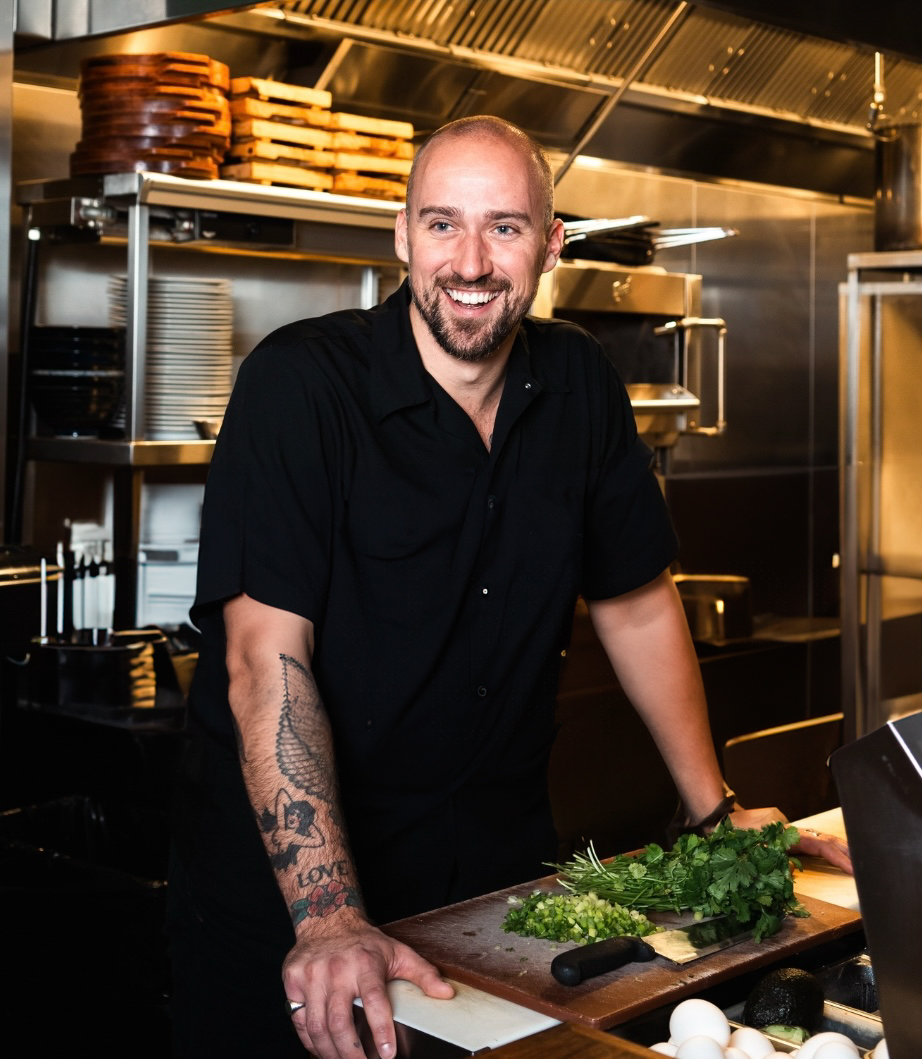
InterJew #12: Kovic Prévost (owner, chef; Is That French?)

Visit our Instagram page

By Michael White

The last person who expected Kovic Prévost to open a restaurant — least of all in Vancouver — was Kovic Prévost. A nomadic cook since his teenage years in his native Montreal, a combination of restlessness and unpredictable life circumstances brought him to Vancouver, home to Montreal, Vancouver again, Japan, the French alps, and Vancouver a third time (and possibly several other destinations he neglected to mention).

In Summer 2022, he opened @isthatfrench, a cheekily-named wine bar and small-plates eatery in the long-dormant space in Gastown’s Blood Alley that had previously housed the trailblazing Salt Tasting Room. Within weeks, it was attracting full houses — and it (very deservedly) still is. But had it not been for the persuasion of the building’s owner and various people in Prévost’s social circle, it never would have happened.

This interview has been edited for brevity and clarity.

What’s your earliest memory of being taken to a restaurant?
That’s a good question. It all leads back to family holidays. We used to go every year — or every couple of years, maybe — to the East Coast: Virginia Beach, Cape Cod, Provincetown. And then I grew up on seafood. My happiest memories are when the family would drive down to the East Coast. I was raised by parents that were, like, the kids’ menu was not an option. It was like, “You want to eat?  You eat with us.” And so I grew up eating mussels, lobster, clam chowder. I’m very grateful, because they exposed me to a lot of amazing food. My friends were eating pizza pockets. Even though my parents weren’t great cooks, they really enjoyed eating. We didn’t have much money, but food was always important.

This leads to the inevitable but very unoriginal question: What made you want to be a cook?
I just liked it. I came [to Vancouver] when I was 17 or 18, to learn English, and I stayed here for almost a year. And I helped out with a catering company in the Okanagan Valley: peeling potatoes, asparagus… They only bought food from the Okanagan, and they had their own pigs and made their own charcuterie, and grew their own vegetables. And one day, at the end of the summer, they were like, “Thank you so much for your work. We have an empty spot at one of the dinners. Do you want to come and eat?” And I did, and it was delicious. But even more than that, it was, “These guys are amazing at what they do.”

So, I went back to Montreal and I knew I wanted to become a cook. I started as a dishwasher in a restaurant. I enjoyed the fast pace. It was a very busy French restaurant, and the dish pit was full, and people were yelling, and the servers were running around, and I fell in love with it. I have ADHD, and this fed my brain. I would crush my work in the dish pit and then go to the chef and be like, “What are you doing now? Can I help?”

Did you go to culinary school?
No. I just worked in restaurants. I learned under two chefs in that French restaurant for four years. It was there for a long time — almost 30 years. It was tartar, duck-leg confit, pasta. I learned the basics: how to cure your duck, how to chop your tartar, trim your meat. But then I burned out — four years of a real grind. So, I left and came back to Vancouver. I needed to do something different.

What brought you back here the second time?
I didn’t really want to come back to Canada. (laughs) I was married to an Australian, and then we were stuck in Europe during the pandemic. I was a private chef, so in the winter we were working in France, in the Alps, taking care of a luxury chalet where she would manage and I would cook. And then the pandemic happened that winter, in March. We were so secluded in the Alps, and then, all of a sudden, everything shut down. We tried to go back to Australia, but we couldn’t, so we decided to try Canada. And then my wife managed to get a tourist visa, which was at least a guarantee of entry. I thought, should we go back to Quebec? But my wife said, “I cannot do those winters.” It would be minus 40C and she wouldn’t wear gloves. She came back and her hands were purple.

But I’d lived in Vancouver before, so I reached out to some friends, and they said it was a bit smoother here. Some patios were still open. I got to work straight away.

When you first arrived back, where were you working?
I worked for Meet. I’d opened the first location, on Main Street, before I left Vancouver over 10 years ago. I was their first head chef. It was a fun experience, but I was young — like, in my early 20s. I didn’t really know what I was doing, then I burned myself out working too much. That’s when I booked a one-way ticket to Japan and left. So, when I came back to Vancouver, I got a job with Meet before even landing. I wanted something safe, and they were doing a lot of takeout back then. I worked there for over a year.

And then I met Scott [Hawthorn], and he said, “Do you want to open a restaurant?” And I was, like, “What?” (laughs)

It was, of all people, your landlord — the owner of the former Salt Tasting Room space in Gastown — who persuaded you to open your own restaurant. How did that happen?
Do you know who Janaki Larsen is?

I don’t.
Janaki is quite a famous ceramist in Vancouver. I worked for her years ago, and we became good friends and we kept in touch. One day I went to her studio to say hi. And then I left, and then she texted me a few minutes later, saying, “By the way, I just moved into a new studio and I want to do an opening party. Do you want to do the food for it?” And obviously I said, “I’d love to do that for you.” So, I came and cooked, and Scott is Janaki’s landlord and also a good friend. He came to the event and we started chatting, and he tried my food. The Salt Tasting Room space had been empty for, like, a year and a half, and he’d had a hard time finding someone for the space. Salt had been there for, what, 16 or 17 years? When it closed, Scott was looking to put something meaningful in the space, but he had a hard time finding a tenant that fit with his vision.

Scott called me the day after Janaki’s party and he said, “She gave me your number. I really enjoyed your food and chatting with you. I’ve got this space for a restaurant. Are you interested in opening one?” But I was like, “Not really.” (laughs) My life was chaotic: I was going through a separation, working a lot at Meet and trying to figure out what I wanted to do with my life. I was like, “Do I want to stay in Vancouver?”

I asked, “Where’s the space?” He said Blood Alley. And I’m like, “The Salt Tasting Room space?” I used to go there all the time when I first lived in Vancouver. I didn’t know it was for rent.

I’ve never heard a story before about how a landlord was the primary catalyst to convince someone to open a restaurant.
When people ask me, “How did you end up opening a restaurant?”, I say, “It kind of came to me.” Scott and I met that same afternoon and talked for hours and hours. He asked me, “Pretend you could open a restaurant. What’s your vision?” And I was talking a lot about growing up in Montreal and missing the community, building community, doing something meaningful. And I also complained about the restaurant industry in Vancouver — the cost and everything. He said, “We’ve got the same vision. Go home and think about it. Build a business plan.”

Once you knew the Salt space was available to you, did you know immediately what you wanted to do with it in terms of the food you were going to serve?
Not really. I knew I was limited. I couldn’t burn anything. [The de facto kitchen, located behind the bar, is small, and isn’t designed for hood vents, which rules out stovetops and grills.] I love seafood, so I wanted oysters and wine. The goal was to open an oyster bar, because oysters are raw and you don’t need much space. And then I thought, “Let’s do small plates to start.” I didn’t have a lot of money to open, so equipment was very scarce. I put all my savings into it.

And then we opened and we slowly built on that. It was a small wine list, a small food menu — things that are safe. It wasn’t going to blow anyone’s mind, but we could do it. And then I started exploring: Where can I push this? I got an induction oven, a blowtorch; I began curing, fermenting, pickling. And I realized, “Oh, you can actually do a lot without a full oven!”  There was a lot of passion, a lot of love, and a lot of hours of work. I think my focus, when we first opened, was just the vibe and the service. I wanted to connect with people, for the service to be a warm. You know: “Welcome to our place!”

It’s funny: The person who was least enthusiastic about the idea of you opening a restaurant was you. It was the people around you who wanted you to do it.
It was because of community. I’d left for almost a decade and then came back, and then, not long after, there was a community telling me, “We want you to open a restaurant.” I don’t think I would have done it without that. Everything grows better with community, with the support of your friends.

(Photo: Max Chesnut)
Standard
Asian Fusion, Fusion, Indonesian Cuisine, Italian, Latin American, Mexican, Middle Eastern Cuisine, West Coast

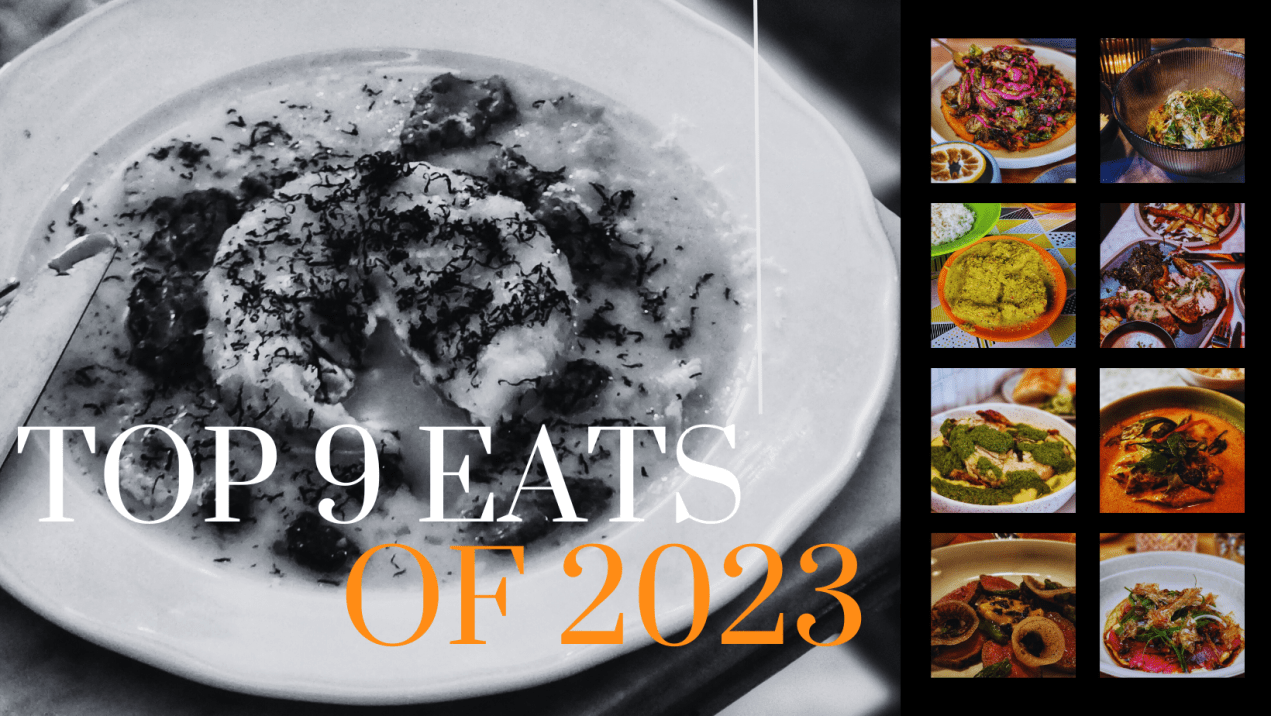
Our Top 9 Eats of 2023

Visit our Instagram page

By Michael White and Kley Klemens
Photos by Kley Klemens

Jewkarta may be only three years old, but we’ve visited a staggering number of restaurants, eaten and guzzled an overwhelmingly vast selection of food and beverages, and made the acquaintance of countless culinary professionals in this short period of time. And we’ve loved every minute of it!

2023 was, by far, our most interesting year yet, for reasons good (Kley’s long-overdue return to his native Indonesia; some of the greatest dining experiences we’ve had as a couple) and not (Michael’s sudden health downturn, which prevented him from participating in most of Jewkarta’s activities for the first half of the year).

But our annual Top 9 is all about emphasizing the positive — specifically, the most delicious and memorable dishes we ate throughout the past 12 months. Scroll down to discover them all. And whether you began following us three years or three minutes ago, we thank you for being a part of our gastronomic adventures in Metro Vancouver and beyond.

@barhaifa
HAIFA HALF CHICKEN

Chicken is often little more than a chef’s compromise for unadventurous customers. But the iteration at this new (and spectacular) Middle Eastern restaurant is one of the best we’ve had, thanks to its secret seasoning blend and a gravy good enough to redeem the foulest of fowls.

@liviasweets
SUNDAY ROAST PORCHETTA FOR TWO

Italy’s beloved pork dish (boneless, with shatteringly crisp skin and infused with the flavour of its own fat) is transcendent at this popular Commercial Drive eatery, its inherent richness amplified by a bed of velvet-soft polenta, and contrasted with the bracing heat and acidity of an emerald salsa verde.

@bar.gobo
ROASTED STRIP LOIN

The ever-changing menu at this edge-of-Chinatown wine bar means this simple yet perfectly executed dish from chef @so_j_one may not return for a long time, if ever. So excuse our conflicting emotions: thrilled that we were able to experience it, sad that we may never again.

@chupitococteleria
TOSTADA DE ATUN

This trailblazing seasonal dining space (located in an alleyway, and open only during warmer months) specializes in elevating familiar Mexican dishes to a state of luxury. We utterly devoured this photogenic tostada, which arrived topped with tuna, ginger mayonnaise, spicy soy sauce and fried katsoubuchi.

@elephantinvancouver
PORK NECK

Are we able to confirm that chef @justin.song.ell is human? His endless creations, which he invariably cooks and plates alone at a small prep station behind Elephant’s diner-like counter, are bizarre in theory yet astounding in reality. Berkshire pork neck flavoured with FIFTY-FOUR different types of Thai herb? Whatever you say, chef!

@zarakvancouver
BRUSSELS SPROUTS

Whoever discovered that the vegetable responsible for ruining countless childhood Thanksgivings could be fully redeemed by a swim in a deep fryer deserves the Nobel Peace Prize. For piling them onto a pool of red-pepper hummus and anointing them with a neon-pink masala sauce that looks like it belongs on a birthday cake, Zarak deserves the MacArthur Genius Grant.

@caffelatana
RAVIOLO

A single plate-sized pasta pillow, stuffed with black truffle, ricotta and herbs. Almost indecently rich and savoury, Kley continues to daydream about it as if it were a millionaire daddy offering to whisk him away to a private resort on the Amalfi Coast.  

Somewhere in North Sumatra, Indonesia (no website)
NANIURA

A highlight of Kley’s visit to his homeland: tilapia ceviche marinated in kafir lime juice mixed with torch ginger (a perennial plant native to Indonesia), turmeric, candlenut, Andaliman pepper, coriander and more. Another reason why Kley is baffled by Indonesian cuisine’s low international profile.

@hujanlocale
ACEHNESE GRILLED OCTOPUS

Another Indonesian dish — created by chef @meyrickwill, who helms the kitchen at this must-visit restaurant in Bali — the complexity of which Kley can’t describe or compare to anything he’d had before. Acidic and spicy, creamy yet light — Kley asks, “How is it that I’m Indonesian and Chef Meyrick isn’t??”

Standard
Brunch, mediterranean, West Coast

InterJew #4: Robbie Kane (owner, Café Medina)

Visit our Instagram page

By Michael White

It’s not an exaggeration to say that Vancouver’s notion of brunch has never been the same since the arrival of Café Medina. Beginning in January 2008 as a small annex of its next-door neighbour, the wildly popular Chambar, it was a collaboration between Chambar co-founders Karri Green-Schuermans and Nico Schuermans along with Robbie Kane, an Ontario native who had been a server at Chambar since its second month of business in 2004.

Despite never owning a restaurant before, Robbie proved to be a natural. Nine months after opening, its menu expanded from just coffee and Liège-style waffles to a variety of Mediterranean-inspired dishes (developed by Nico), and Medina almost immediately became one of the most popular dining destinations in the city — so much so that Chambar’s dining room was repurposed during Medina’s daytime hours to accommodate the overflow.

In 2013, Robbie became sole proprietor of Medina, relocating it in August 2014 to a larger space adjoining the lobby of downtown’s L’Hermitage Hotel, where it remains to this day. Its standards have never wavered, nor has its popularity — in fact, it likely could move to a space twice the size and still have weekend line-ups.

Robbie is also a partner in the Vancouver location of Superbaba, which is a two-time winner in the Best Casual category of the Vancouver Magazine Restaurant Awards.

This interview has been edited for brevity and clarity.

What’s your earliest memory of being taken to a restaurant?
Swiss Chalet.

That’s a very Ontario answer.
Yeah. It was frequent — probably once or twice a month — because there was one near my dad’s office. The first restaurant experience, when I was very young, probably 6 or 7 — my mom had a cousin in Saugerties, New York, near Woodstock, and I remember visiting her. I think it was an Italian restaurant we went to. I remember it being fancy, but it probably wasn’t, because it was in hippie-town.

My first restaurant job was at the Pickle Barrel, at the Promenade Mall [in Thornhill, Ontario]. (A note from Michael, who, like Robbie, is Jewish and a native Ontarian: The Pickle Barrel began in 1971 as a single-location Jewish deli. It’s now a shitty Denny’s-like chain.) We used to go there often as a family. I don’t remember the affiliation between my dad and someone who worked there — a manager or something — but that’s how I got my first restaurant job, when I was 14. I was a dishwasher and busboy.

What brought you from Ontario to here? And of all the things you could’ve done after leaving your previous job in the film industry [as a photographer and location manager], why this?
Serendipity, mostly. There’s three iterations of me coming to B.C. The first is that my brother, Brian, who designed this restaurant and is in the film industry, was living here. I’d just graduated from high school and I just wanted to take a year to essentially cause trouble and leave Ontario, and then I got accepted to both York University and UBC. I was listless; I had no direction. I just thought, “I’ll go to university because it’s what I should do.” So, I moved back to Toronto and went to York.

What did you study?
Sociology, anthropology, general arts.

The choices of people who don’t know what they want to do.
Correct. I started my second year and thought, “Sorry, this isn’t me.” I quit in October or November, got a waitering job in Yorkville, made money, and then I left the following September to travel through Southeast Asia. And after I finished travelling, I landed back here [in Vancouver] in 1996. I was introduced to a guy named Benny Graydon, who hired me for a restaurant that was just about to open in Yaletown called Century Grill, which is now Blue Water. I was an opening server there. It was lighting in a bottle; it opened and became very busy, very fast, and everyone wanted to be there — all the athletes, all the fancy people — and it was awesome.

I met my first wife, who was also working there, and then we left in ’98 and lived in Europe for a while, and then we went back to Toronto for five years. This is where I fell into photography and [movies]. I also supplemented my income with restaurant work. I had my daughter in 2001, and then we had this weird opportunity. [My wife] still had family here and my brother was here, and in 2003 we moved back. I was a stay-at-home dad for a year or so, and then my first marriage broke up, and in 2004 I started working at Chambar.

How did you come to know [Chambar founders Karri Green-Schuermans and Nico Schuermans]?
I had a mutual friend in Michael Ziff, who’s been in hospitality forever. [He’s now GM of The Restaurant at Poplar Grove in Penticton.] He and I worked at Century Grill. He was like, “Robbie, you need a job. Go talk to Karri.” I went to talk to her in what was then the construction site of the original Chambar, which is now the Devil’s Elbow. I started working for them as a server a month after they opened.

For how long were you a server there?
Three years. I was also producing commercial photoshoots through my connections in Toronto. I was going to start a creative agency, but I’d also expressed interest in opening my own restaurant. Nico had come to look at a defunct restaurant with me, so he and Karri knew I had interest in doing my own thing. Although I’d never been a manager at Chambar, I’d always treated my job like I was, so they saw that I was serious and I had the wherewithal. So, when that space — which is now Jam Café, at 556 Beatty — became available, Karri approached me and said, “Do you want to do this with us as a daytime operation?” That was fortunate, because the bottom dropped out of the world in 2008 [because of the economic crash], especially in advertising. I started working on the construction of Medina in September of 2007, and we started slowly. We opened on January 12, 2008, and for about a year we only did waffles and coffee.

Even though you’d worked in various capacities in restaurants, obviously it’s still a major leap from what you were doing to owning your own place. What made you think that leap was within your abilities?
In hindsight, it probably wasn’t. I grew into it. I’ve always known I’m a hard-working person; I’ve never been afraid to put in the time. I found through working in film, photography and construction that I was confident in the work I did. And I had a buddy to lend me the money.

At what point did you realize Medina was becoming a much greater success than you might have anticipated?
I think the tipping point was probably the [2010 Winter] Olympics. There was a gradual word of mouth, and then the Olympics hit and it was put onto a global stage. And honestly, brunch became a more elevated thing, aside from the greasy spoons and hotel buffets.

When Medina started serving more than waffles and coffee, Nico developed a menu that was Mediterranean themed, with dishes like cassoulet and short-rib fricassée. Did you feel it was risky to offer a menu that was so unprecedented for Vancouver?
I was confident in Nico — he’s a talented guy — so I was never too concerned in that regard. And I think people wanted something different.

Do you think Medina initially benefitted not only from its physical proximity to Chambar but sort of being under the same umbrella?
Karri and Nico had obviously spawned something very special, and Medina for sure benefitted from the momentum that Chambar had created. But at some point — especially when Medina moved [to Richards Street] — we had our own legs.

Two previous restaurants had occupied the Richards Street space. Did it require a major makeover before you opened it to the public?
We were very fortunate in that it had all the mechanical bones: the vent system, the electrical panels, the grease traps and all of the very expensive things you need to open a restaurant. My brother took three months off from film to design it, and he and all of his film contacts helped build it. We were here morning, noon and night.

So, you weren’t concerned about pinning Medina’s success or failure to a space where two previous concepts had bombed?
Sure I was. Scared shitless. I remortgaged my house. It was a very stressful couple of years.

Was this location slammed from day one?
Yes. The first day we opened was terrible; it was very rough service. But after the first week, it was very evident that there was still demand and people knew what Medina was.

Has there ever been a point at which the success of Medina felt overwhelming?
I’ve always been very grateful, even from the time when we were just coffee and waffles. There have been some times when I’ve gone outside and there’s a 100-person lineup on a Saturday and I literally pinch myself. That’s overwhelming, but it’s also pretty awesome.

Have you ever wanted to duplicate the Medina concept somewhere else, or is this enough for you?
If you were to ask people who know me well, they would say I’m a little bit risk averse. I’ve been offered many times — people from California or New York or Saudi Arabia — but I’ve always been cautious of the magic. Coming from Toronto, I’ve always wanted to do something there — I think the concept would work really well there — but I’m busy enough. And I’m not 35; I’m almost 50. I wouldn’t say never, but it would have to be lightning in a bottle again. And the cost of opening and operating a restaurant is now probably three times what it was in 2014.

What’s the difference between your stake in Medina and your stake in Superbaba?
I own 100 percent of Medina and I’m one of four partners in Superbaba. There’s also two partners in Victoria.

What would you say your main contribution is to Superbaba?
I’ve got to give Dallah [El Chami, chef and principal owner] all the credit for Superbaba in terms of its operations and menu. He and Leah [Christ, manager] really have made it work. In the beginning, we [referring to himself and the Tacofino group] were present because Dallah wasn’t in the restaurant business, so we contributed in terms of tendering trades and our suppliers and just our general experience and capital. I’m sure the cache of Medina and Tacofino was important in the beginning, as Chambar’s was for Medina, but Superbaba is its own entity.

What do you think is the most underrated restaurant in Vancouver?
Kishimoto. We have a lot of sushi in Vancouver, but I went to Japan this past April and Kishimoto rivalled anything I had there. And Sawadee: I’ve been dining there since the ’90s and it’s consistently excellent.

(Photo: Hakan Burcuoglu)

Standard
American, Brunch, Canadian, Gastropub, West Coast

Review: Belgard Kitchen


Click here to see the video on our Instagram page!

By Michael White

This isn’t a restaurant review so much as a remembrance of some time Kley and I spent in a restaurant recently. You might argue that this is exactly what all restaurant reviews are, to which I would counter: Shut up and let me make my point.

This isn’t a bona fide review because a review wouldn’t be fair to Belgard Kitchen right now. Nor, I think, would it be fair to any restaurant struggling to maintain an illusion of normalcy and full-fledged functionality at time when society at large is capable of neither. Yes, the masses are now beginning to receive their vaccinations (Kley and I were cheerfully penetrated last week) and our collective fantasy of a “Dancing in the Street”-style celebration that draws a line under this interminable pandemic has begun to feel vaguely plausible. But, I doubt I need to tell you, we still have a long road ahead of us. Few people feel this reality more acutely than restaurant owners and staff, who still are not only struggling to survive, but are simply trying to anticipate from day to day what is and isn’t possible for their industry amidst the loosening and tightening of restrictions.

Case in point: When we visited Belgard Kitchen last Friday, for happy-hour-leading-into-dinner, it was their first night of service in six weeks, and the first night ever for their new street-side patio, which seats a maximum of 48 people. We weren’t expecting perfection, nor necessarily even greatness. We simply wanted to sit under a hospitably blue late-afternoon sky and watch it dim into evening while eating and drinking and then, in all likelihood, eating and drinking some more.

We did just that. And everything was very good. In most cases, better than we expected.

Which isn’t to say we were expecting to be underwhelmed. Both of us had been to Belgard Kitchen before — although, admittedly, it was many years ago, before we knew each other and decided to make a hobby of using the internet to exhibit our mutual gluttony to strangers. Belgard Kitchen first opened in 2014, and was something of an event — the first destination restaurant to try to make a go of it on the mean streets of Railtown (still a volatile neighbourhood today, but much more so then). This was no modest venture either: Belgard is housed in an almost 8,000-square-foot industrial space, known as the Settlement Building, that began life as a steel foundry in the 1920s. It shares this space with an onsite small-batch winery (Vancouver Urban Winery) and a craft brewery (Settlement Brewery). This is the sort of environment for which real-estate marketers coined the term “soaring.”

But unless you need to pass through it on your way to the toilets, you can’t spend time in Belgard Kitchen right now. The province’s indoor-dining ban remains in effect, so be sure to place a reservation for a patio table — there are only eight of them. At the time of this writing, the patio is open for weekday lunch (11:30am-3pm), weekend brunch (10am-3pm) and daily happy hour and dinner (3pm-close). We arrived at 5pm, at which time the patio had fallen under the shadow of the Settlement Building, and a brisk wind blew down the Dunlevy corridor toward an unexpectedly moving view of shipping containers suspended above the East Vancouver port lands. Sunworshippers may not appreciate this, but myself, having been born Whitest Man on Earth and distressingly prone to burning, was as content as a suburban grandmother at Fabricland.

We adored our server, who seemed to either intuit that we were here to play or isn’t the sort to recite a memorized script of Tonight’s Offerings.

Me: “What’s the feature cocktail right now?”

Her (following a comedic pause and a survey of the heavens): “I don’t know.”

We howled.

I did very much want that cocktail, the name of which I’ve now forgotten, but I can tell you it was a variation of a Manhattan that seemed to have been liberally dosed with cacao bitters. She also brought us an excellent on-tap negroni ($11) and the Grape Expectations wine flight (a happy hour bargain at $12; $14 at other times), of which we both instantly fell in love with a 2018 Pinot Gris from Penticton’s Roche Wines. Kley’s Tasting Paddle of four featured beers ($9.50) further stoked the glow in his happy gut.

We consumed solids as well! An appropriately rich and unctuous mushroom-and-bacon pâté ($11.50 at happy hour; $15 otherwise), which prompted a request for more grilled sourdough; the justifiably self-named Belgard Burger (Cache Creek beef between a brioche bun, in the company of Swiss cheese, beer-brined pickles, and red-pepper relish — very fucking good; $17); and Fettucine Nero ($22), an attractively plated mound of squid-ink noodles mingling with a chorizo-prawn ragu, snap-snap-snappy jalapeno pesto, and herbed breadcrumbs. So much food, yet so much of the menu left unexplored.

The bill paid, we wobbled like Weebles toward home (stopping off for gelato because the weather called for it and because we have trouble stopping what we’ve started). Despite our vague gastronomic stupor, we talked — as we seem to always be doing nowadays — about the ongoing plight of restaurants and the additional burdens facing the likes of Belgard Kitchen, which has to contend with the overhead of a massive space and being slightly off the beaten path. Their patio was decently but not spectacularly busy during our visit, so we hope word spreads quickly about it now being open. Despite their enforced hiatus, they’ve hit the ground running. So run toward it.

Belgard Kitchen
55 Dunlevy Ave., Vancouver
604-699-1989
belgardkitchen.com / Instagram: @belgardkitchen
Delivery platform: DoorDash

(Photo: Kley Klemens)

Standard
Farm to Table, Fusion, Japanese Cuisine, West Coast

Special-occasion review: Dachi

By Michael White

Seemingly no type of dining space, no matter how well-funded, has been immune to the economic ravages of the COVID-19 pandemic. To wit, within a five-kilometre radius of Jewkarta headquarters, in Vancouver’s West End, we informally estimate that two-thirds of the Starbucks locations that were here have shuttered during the past year — papered over, gone forever. Few of us mourn their passing — another one is never far away, after all — but if this globe-spanning coffee colossus can be so dramatically cut down to size in so short a time, what chance is there for the little people?

Wherever you live, you’ve undoubtedly seen the casualties. What famed New York chef Gabrielle Hamilton referred to (in her heartbreaking New York Times essay) as the “sweet, gentle citizen restaurant” is struggling to survive the storm most of all, sending up distress flares while frantically bailing buckets of rainwater overboard. This is the sort of restaurant that defines neighbourhoods and cities, that gives them their character and enlightens the populace about previously unknown possibilities for food and drink. If they all go, so too does the evolution of dining (and the futures of many who trained for careers in this world).

So it was all the more reassuring to walk into Dachi — as sweet and gentle a citizen restaurant as you could hope to find — one recent Saturday night, in celebration of my 97th birthday (give or take), to find it very much alive and, it would seem, thriving.

Dachi opened in late 2018 in Hastings-Sunrise, in an unassuming corner lot previously occupied by Campagnolo Roma. It had its work cut out for it — everyone had loved Campagnolo Roma’s pizzas and pastas, and Dachi co-owners Miki Ellis and Stephen Whiteside would be bringing into the space a much more rarefied experience, informed by their shared history at the Aburi restaurant group. There would be sakes and obscure natural wines, and a menu informed not by a particular cuisine but by what local purveyors and the seasons make available at any given time. A little Japanese, a little West Coast, a lot farm-to-table.

And hey, presto! The locals (and many from far beyond) love it, because Dachi is what all neighbourhood restaurants aspire to be: a spot worthy of both destination dining and a casual drop-in.

We loved it, too. A year into the pandemic, we could almost believe, for a couple of hours, that it wasn’t happening. It all felt so normal. Dachi made the sophisticated decision to partition its tables not with plexiglass but with plants, and the normally 40-seat space has been reduced in capacity just enough to ensure safety but to retain liveliness. Aside from the masks our terrific servers (which included co-owner Whiteside) were wearing, we felt we’d been transported back to the Before Times, lazing in the low hum of positive energy that occurs when everyone in the room is happy and the kitchen is sending out many delicious things.

Speaking of which…. Our delicious things included delicate slices of barely seared beef (pictured above), attractively plated with pickled daikon, finely cubed carrot and celery, and dabs of pungent chimichurri. More rustic in presentation, but no less savagely devoured by us, were a thick slab of pork-and-duck pâté with grilled sourdough (which was properly sour) and an assortment of house-pickled vegetables; and meaty, smoky strands of Pacific octopus mingled with cilantro, watermelon radish, and salsa macha — the Mexican equivalent of chile crisp.

After stoking the evening’s glow with house cocktails (including the Just Might Work, which is built upon a foundation of peated whiskey and is, therefore, my new favourite thing), our server directed us toward an extraordinary, intensely aromatic Alsatian Gewürztraminer that tasted like the attainment of every vacation we wish we’d been able to take over the past 12 months. After polishing off the bottle, I no longer felt the sting of being so damn old.

Dachi is the sort of restaurant we need to be here right now while this clusterfuck of global events sorts itself out, and the sort of restaurant we’ll want to still be standing when it all finally blows over. Support it, and others like it, if and when you can. In a small but not insignificant way, the soul of your city depends on it.

Dachi
2297 E. Hastings St.
604-569-0456
dachivancouver.com / Instagram: @dachivancouver

(Photo: Kley Klemens)

Standard
American, Brunch, Canadian, West Coast

Mini Review: brunch at Cactus Club Cafe

By Michael White

Jewkarta was founded upon two key criterion: (1) we highlight independent Greater Vancouver restaurants; (2) we pay for our meals, and our favour can’t be bought.

Which isn’t to say we’re above being whores if an offer appeals to us, so long as we confess to having accepted it. So, when Cactus Club Cafe offered us an opportunity to try its new weekend brunch menu at the English Bay location, we replied, “Is this Saturday soon enough?”

Some people turn their noses up at Cactus, but the Vancouver-spawned “casual fine” chain achieved its multi-million-dollar success (and has repeatedly claimed Gold in the Best Chain category of the Vancouver Magazine Restaurant Awards) for a reason. From Victoria to Toronto, it always punches above its weight, delivering accessible but expertly balanced flavours and presentation with stunning consistency. (Side note: Jewkarta’s first date was at the Coal Harbour location, and our experience was good enough to nullify a somewhat disastrous post-meal first kiss.)  

At first glance, Cactus’s brunch menu is surprising in its brevity and simplicity, suggesting none of the subtle but inventive flourishes for which longtime advising chef Rob Feenie is renowned: three different eggs benny (traditional, avocado, and prawn); two brunch bowls that riff on their dinner/lunch menu’s hugely popular Modern Bowl; an eggs-bacon-potatoes plate; a fried-egg sandwich; and little Belgian-style waffles. The End. (Of course, various espresso drinks and daytime-appropriate cocktails are also available.)

Fortunately, while the menu itself lacks surprises, what did surprise us was the extent to which the deliciousness of everything makes up for that. Avocado Benny ($15.75), served on good multigrain bread rather than the time-honoured English muffin, was exemplary, the eggs perfectly poached and accompanied with the most ethereal hollandaise either of us can recall having anywhere in Vancouver. The “smashed” potatoes alongside were what all diner potatoes aspire to be: crunchy exteriors yielding to tender innards, showered with enough salt that we didn’t need to reach for the shaker.

Meanwhile, the Brunch Power Bowl ($15), which sounds annoyingly virtuous (it’s vegetarian; a vegan variation is also offered), was dynamite: an artfully presented, perfectly calibrated jumble of those same poached eggs in the company of quinoa, diced avocado and roasted yam, corn, bell pepper, shredded kale, and halved grape tomatoes. The contrasting acidity of house-made salsa, chipotle aioli and pickled red onion brought everything together like the stereotypical chef’s kiss. This is a dish that is more than the sum of its parts.

Despite being so clearly inspired by nearby Café Medina they should pay royalties, the Belgian waffles ($4.50 each) were the sort of thing you find yourself craving again later in the day — hot, betraying the explosive crunch of pearl sugar, and with a sidecar of real whipped cream. Choose from one of three toppings: salted caramel, berry compote, or maple syrup ($1.25).

At the time of this writing, Cactus is offering brunch at two locations only — English Bay and Burnaby’s Station Square — but the aim is to expand to other outlets if it proves popular enough. Despite the pandemic, brunch remains a competitive sport in Vancouver for which the masses are willing to wait a long time in the rain. Cactus is a welcome new addition to the landscape — so much so that we’d happily pay with our own money next time. We may be part-time whores, but we have principles.

Cactus Club Cafe
various locations
cactusclubcafe.com / Instagram: @cactusclubcafe

(Photo: Kley Klemens)

Standard