Fusion, South American

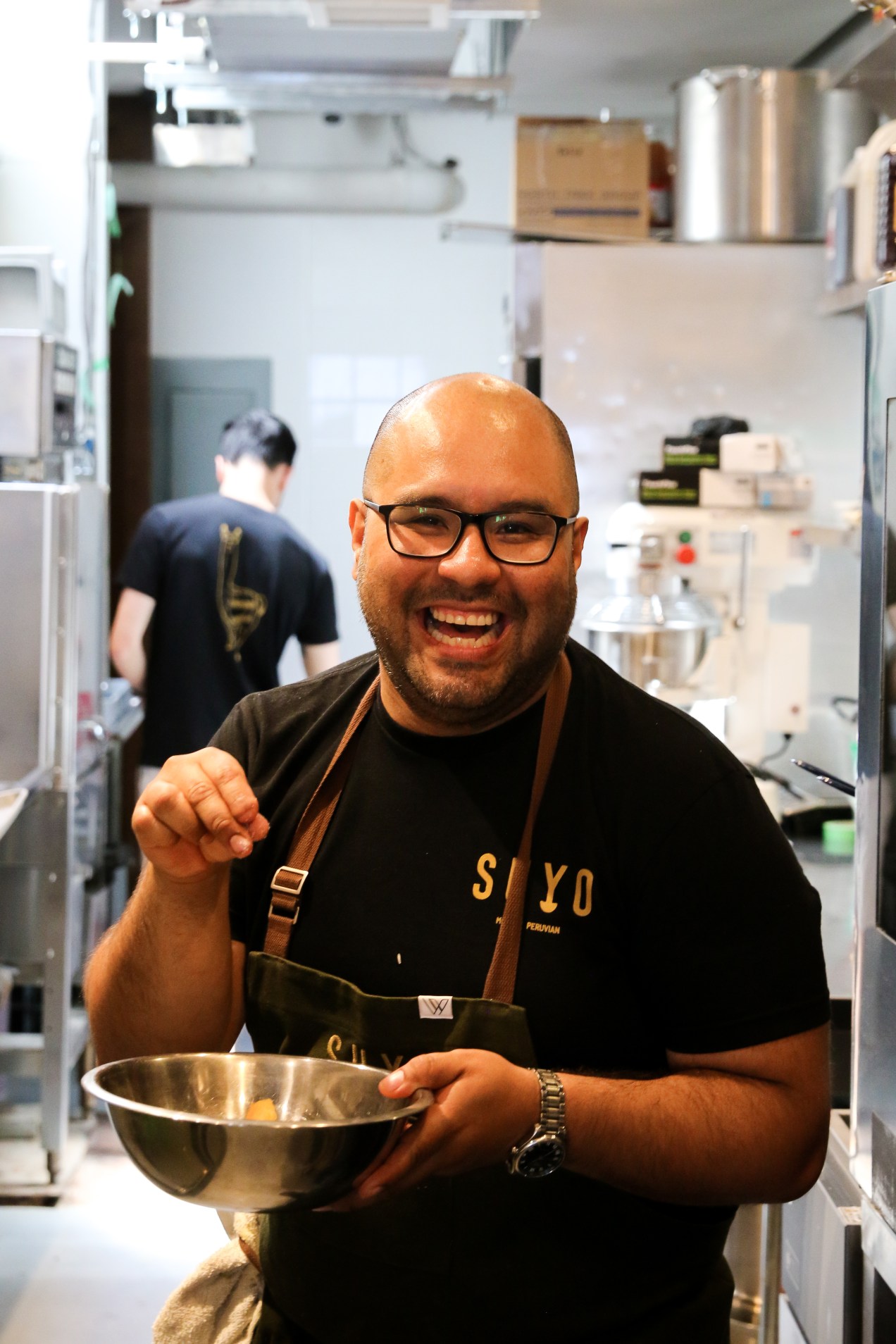
InterJew #8: Ricardo Valverde (chef, owner; Suyo)

Visit our Instagram page

By Michael White

It sounds implausible, but before Suyo opened in August 2022, there wasn’t a single Peruvian-themed fine-dining restaurant in all of Canada. And it remains the only one of its kind to this day.

Suyo wouldn’t have existed without the vision of Peru-born chef Ricardo Valverde, who moved to Vancouver with his family in 1998. After culinary school, he worked at Blue Water Cafe and Ancora, two of the most revered seafood restaurants in the city. But Suyo, Valverde’s first venture as both chef and owner, is a highly personal tribute to (and elevation of) the distinctive cuisine of his homeland (hence the name: Suyo is the South American Indigenous word for “homeland”). Despite its newness, Suyo has already earned a Michelin recommendation, as well as Michelin’s Exceptional Cocktail Award.

Here, Ricardo shares how he evolved from the humiliation of his first Vancouver restaurant job (he was fired after four hours in the kitchen) to become one of the city’s most distinctive and celebrated chefs.

This interview has been edited for brevity and clarity.

What’s your earliest memory of being taken to a restaurant?
It was at my elementary school. There was a kiosk inside the school, run by the wife of the janitor. Sounds kind of weird, because you wouldn’t see that here, but it was a different time and a different kind of situation. This school was half private, half public; my dad used to work for a bank, and the children of bankers would get 50 percent off in this school. It brought all kinds of people together — very poor people whose parents [otherwise couldn’t] afford a semi-private education, and the children of parents who were like, “Okay, I have money, but if I can spend less….” (laughs)

So, there was this kiosk and there was this lady; her name was Elena and she sold food. Actually, there were two kiosks: There was one where you could sit for a full meal, and then one of them I just remember her selling chorizo sandwiches with fried egg; nice baguette-style, kind of like ciabatta but crispier, fluffier, lighter. She would wrap it nicely and cut it in half perfectly, and that’s my first memory of the exchange of food for money. I was seven, eight years old. I’d give her money and, in return, I’d get a sandwich. I was like, “That’s so cool!” And I would never buy just one; I would buy two or three. For me, food has no limits, so I’d eat until I couldn’t eat any more, basically. And I would go home and try to recreate what this woman was making.

What was your age when your family moved here?
I was 17.

Did you already have an inkling, before you moved to Canada, that you wanted to work in restaurants, or did that not come until much later?
Much later. The idea of working in kitchens was not even an option for me, because growing up in a middle-class Peruvian family, your parents will never encourage you to work in a kitchen. Both of my parents are engineers. When I came to Canada and I found out I was able to work — like, back home, I probably wouldn’t have worked until I was in university. If you’re middle class or higher, sometimes you don’t work. If your dad makes enough money, you don’t have to worry about work. Usually, the people who work minor jobs there — they’re like student jobs here, and these people need to work because their parents just don’t have the means. So, we came here and we understood that the culture was “Everyone works.” And I was like, “All right, I’m ready!”

You were excited about that.
Yes. My first job was at a place called Pasadena. In school in Peru, I took this home-ec cooking class, so I put it on my resumé, and then I guess [the owner] took it as my having gone to cooking school. But I got there and I didn’t know what a Caesar salad was — nothing, right? (laughs) My saving grace was that she gave me a menu, I studied it, and then I picked something on the menu like shrimp, and I had to clean it. I had never seen a shrimp in my life… She fired me the next day. I remember she asked me for a ladle, and I didn’t know what it was. I think I gave her a pot instead, or a wooden spoon. She said, “I thought you went to cooking school!” She’s just screaming at me. I was like, “Yeah, in my high school.” She had me wash dishes that night, and that was it. “Come pick up your cheque.” The minimum wage at the time was $7.15. I did four hours. I picked up my $28, minus tax.

Why did your family decide to move here?
My first memory of us thinking of moving to Canada was, we had this big framed picture in our living room, and it was a map of all the countries with all the information — population, language, all of that. I was looking at it one day, I was a probably eight or nine, and my mom said, “One day, we’re gonna go live in Canada.” So, my parents always had that in the back of their minds. My parents always wanted to give us a better future…. At that time — 1996 — I remember they were giving out a lot of visas, especially if you had a good career and a lot of kids. Our family had four boys. We ended up getting a lot of points to qualify for residence. Within six months of applying, we got approval for residence. But then there was a long wait and we moved here in March of 1998.

Vancouver was your first choice?
That’s what they gave us.

It was assigned to you?
You never choose. They tell you where to go. But after that, you can choose wherever you want.

I never knew that! But you haven’t left Vancouver, so obviously there was something about it you liked.
I remember we went to New York for a couple of weeks first, before we moved here. I was asking my dad what Vancouver looks like. We drove to Philadelphia to see some family, [who lived in] a really nice neighbourhood. My dad said, “This is what it looks like.” Everything was super clean; a nice suburban neighbourhood. My dad had come here a year prior and he stayed in Richmond, in the front of a church called St. Joseph [the Worker Parish] on Williams Road. He came here to check out jobs and things, and we ended up living three blocks from there, just coincidentally. And I ended up getting married in that church, and my parents live a block away now.

Was there one particular event, or one particular thing you ate, that made you decide you wanted a culinary career?
More than eating was the experience, the whole. When I came to Canada, I started working in fish-and-chips places in Steveston. My friends in high school worked there — one of them was a senior cook — so they got me a job. I started as a dishwasher and then I moved to the line. My first job was in a place called Shady Island… So, when I worked there, I was like, “This is cool, making salads!” And I thought, “Do I need to go to school for this?  Are they gonna just let me do this?” I was maybe a little traumatized from my first experience [at Pasadena], that made me think I need to have an education. Then that job came abruptly to an end because I had an accident and was out for, like, six months.

And then one day, I was sitting down with one of the main guys that ran the kitchen, and he told me that there’s a bigger world out there. Like, you know, “What you’re doing is nothing.” I think he was quitting. And I said, “You do so well here. Don’t you want it as a career?” He said, “Noooo.” I think he’s a broker now.

How old were you at the time?
Eighteen. I was like, “I love this. I want to learn more.” He was like, “Ricardo, there’s a bigger world out there.” I don’t know why, but he said to me, “You have to be Chef de Cuisine.” Those words stuck in my head.

Did you even know what Chef de Cuisine meant?
No, no. He said it was French.

And then, I was in love with a girl. I was hanging out with my friend, Alvaro — one of my best friends from cooking school. It was a Saturday night and we went to this place called Cloud 9. In those years, it was one of the fanciest places in the city. And I just remember seeing this cheesecake that comes with, like, the [decorative] dots and then they do the line [on the plate], like the old-school fine dining. And I looked at the view and the tablecloth, and there was the music, and I was thinking, “Holy shit, what is this?”

You’d never been in a restaurant like that before?
No, never. So, then I see this restaurant and I think, “I gotta bring this girl here.” I asked her out on a date and I brought her there. And then we’re eating and everything’s so delicious, and this girl tells me about how her family is so close to food and wine, and how her dad loves this and that. At that point, I’m thinking, “Okay, I gotta be a chef now, ’cause I’ve got a girl.”

So then, I remember we’re sitting there, just having dinner, and she taps me and then I look up. And then there’s the chef, with his big hat, super clean, white jacket, walking by all proud. And in that moment, I was just like, “Fuck, I love this.” I just got drawn into it — the experience of dining at a fancy place, and the service and the wine. That was when I was like, “I’m gonna be a chef.”

But obviously, being a customer in a fine-dining restaurant — or any restaurant — is very different from the reality of working in the kitchen.
t’s true. But I tell you, I love being in the kitchen. I never think of the kitchen as bad. I love it. There is not a point where I’m like, “Fuck this.” After we finish this interview, I’m gonna go in [to Suyo’s kitchen] and prep. I prep with the guys; I’m one of them. I could find someone else to do it, but I love being in there. I can’t pull myself out of that. When I took a sabbatical for three years [after Ancora], I went into a fucking huge depression. I worked as a private chef for a very wealthy guy for a while, but it wasn’t for me. I was depressed doing that, too, because I’m cooking for only one or two people, and then there were all these restrictions of how these people ate. I needed to be on the line, creating features, mentoring younger people. I’m addicted to it. I’m addicted to that good stress.

Why do you think no one wanted to do a Peruvian fine-dining restaurant before you?
You need to have someone with a background, who lives here and who understands the market. If I wanted to open a restaurant in Toronto tomorrow, I don’t have any contacts, I don’t know any suppliers, I don’t know who gives you the best tuna in town. I grew up in Vancouver — I know everyone here!

Which do you think is the most underrated restaurant in Metro Vancouver?
What comes to mind is Yuwa, the Japanese restaurant. I always recommend it to people. A lot of people haven’t even heard of it. Make the drive there — it’s a beautiful drive, a beautiful neighbourhood. I love the experience you have there. And they have something for everyone: If you want a California roll, they have it for you. (laughs) If you want a nice omakase, they do that too, and it’s beautiful.

(Photo: Chelsea Brown)


Standard
American, Canadian, Casual, Southern

InterJew #7: Doug Stephen (co-owner; DownLow Chicken Shack, Vennie’s Sub Shop, and The Drive Canteen)

Visit our Instagram page

By Michael White

Much like another recent InterJew interviewee, Claire from Livia, Doug Stephen is a former Torontonian who found his true home in Vancouver, and the Commercial Drive neighbourhood in particular.

Doug met his wife, Lindsey Mann, when they both were working at the Drive’s now-defunct Merchant’s Oyster Bar (Doug was a co-owner). The couple now co-owns three beloved Drive businesses: the astoundingly successful DownLow Chicken Shack, Vennie’s Sub Shop, and The Drive Canteen, the latter a meticulously curated convenience store best known for stocking one of Vancouver’s largest selections of faux-alcoholic zero-proof beverages. Each business is, to varying degrees, autobiographical, inspired by Doug’s favourite childhood foods.

This interview has been edited for brevity and clarity.

What’s your earliest memory of being taken to a restaurant?
There was a place in Toronto called the Organ Grinder. It was kind of like the very first iteration of an arcade in conjunction with a solid pizza program. Imagine Chuck E. Cheese but without the scary animals. and instead with a higher level of food. I can’t remember whether it was my birthday party or somebody else’s, but the idea of a dining experience that included this whole multimedia sensory situation was pretty popular.

Are you originally from Toronto?
Born in Winnipeg, raised in Toronto my entire life, and then the first go-round in Vancouver was 2005 and 2006, and then the second go-round in 2010.

What compelled you to move to Vancouver and why did it take a couple of tries to stick?
Both times I was following my heart with regards to a partner at the time, as well as a desire for a change of scenery. It stuck the second time around because I ended up being both a dog owner — a pit bull, which was banned from my other home provinces — and I was a business owner, so suddenly I didn’t have a choice but to remain in B.C., and very happily so. I very much love the west coast — the lifestyle and being close to nature.

I was working at a place in Gastown called Cork & Fin, and my boss at the time asked me if I’d like to become partners in his next venture, which was on Commercial Drive, called Merchant’s Oyster Bar. I jumped at the opportunity, because being a restaurant owner has always been something I wanted to do. It was our second day of [soft opening], and somebody who’s now a dear friend turned to me and said, “The most important part about being on the Drive is taking care of the locals.”

I was living in Toronto in 2003 and ’04, around the time of the SARS[-CoV-1 virus]. I was working two jobs at the time, one of which was driven by tourism and the businesspeople who were coming downtown, and the other was entirely neighbourhood focused. The first business lost everything, because suddenly people weren’t coming to the office and there was no tourism, and the other one flourishedbecause the neighbours wanted to take care of their neighbourhood space. So, hearing my pal, Sarah, say, “Take care of your neighbours and they will take care of you” resonated on a number of levels. I love all of Vancouver, but I’ve felt most at home on the Drive, where the idea of saying hello to your neighbour — whether you know them or not — as you walk down the street is not treated in such a weird way as it might in some other neighbourhoods.

How important was your tenure at Merchant’s in terms of teaching you how to be a restaurant owner?
I think that every experience I’ve ever had has been a learning opportunity — some of them in terms of what to do and some in terms of what not to do. With Merchant’s, it was my first opportunity at ownership. It was an overreaching space and I understand now that there was more that I didn’t know than I did know. And that led to Lindsey and I really rethinking how we wanted to do things when it came time for Downlow. We started with the idea that our lifestyle with Merchant’s was not sustainable for anybody, and the resulting challenges — looking back at it and who I was, I wasn’t happy. And so we wanted to change this life for ourselves. We started with the idea of trying to remove a lot of the challenges that we felt with Merchant’s. It’s been really positive. There are still stumbling blocks and there’s still so much learning for us to do, but I’m really happy with what we’ve been able to build.

How was the lifestyle at Merchant’s unsustainable?
I was an alcoholic, and part of it was self-medicating to deal with the stress, the anxiety, the rush of service and getting through a 16-hour day. It wasn’t until a few years after we opened Downlow that I really started to see the impacts it was having on me. I wasn’t participating in some of the more difficult challenges our industry presents, but it was still enough that I wasn’t happy with who I was. Sobriety, for me, has been a really, really positive change.

It’s interesting that you were able to initiate that lifestyle change when you were at Downlow, because from the very first day, it was busier than Merchant’s had ever been, wasn’t it?
Yup. There were still incredibly long days, but they were very different and they were very… I don’t wanna say fulfilling, but it was a very different space and it was very different in the way that it operated. The daytime versus the late nights, the liquor license versus no liquor license — all of these things amounted to this dramatic shift in lifestyle for me.

How surprising was it that Downlow was so popular from the beginning? I’m sure you were optimistic and you had reasonably positive expectations, but it was a juggernaut from day one.
We were incredibly surprised, and then we also were petrified about being able to maintain expectations, especially because the hype just continued to grow. We try, every single day, to be better today than we were yesterday, and to make sure that tomorrow we’re gonna be better than today. I feel so, so lucky that we were received the way we were, and I also feel very blessed that this is what I do for a living. I get to revisit the foods of my childhood and do them through a slightly better lens and use [higher-quality] proteins. And more importantly for Lindsey and I, we get to try to shift the conversation within our industry in terms of how we take care of the people around us — because, to be honest, we’re nothing without them.  

You said in an interview with the Vancouver Sun that a lot of the foods you like cooking most are based in nostalgia. So, how does fried chicken figure within that context? What makes it so nostalgic for you?
Chicken fingers. (laughs)

From anywhere in particular?
Yes and no. I’ve always been somebody who just genuinely enjoys the product. I probably don’t eat KFC nearly as much as I used to. To be honest, it’s only if they release a new product that I go to check it out. But I still get the cravings for that neon-green coleslaw. I was talking about the Organ Grinder: They had a freaking bangin’ garlic-cheesy bread and, surprisingly, what really evokes that memory for me is Pepino’s. Dramatically different, significantly higher-quality bread at Pepino’s. But holy moly, does food ever bring back a lot of positive memories for me. So many positive moments in my life have been shared at a table, and I think that’s why nostalgic food is so key to me.

As a former Ontarian myself, I have to ask: Was Vennie’s inspired by Mr. Sub [an Ontario institution that opened its first location in Toronto in 1968]?
I call it “east coast sandwich culture.” There are elements of Mr. Sub, and also of St. Lawrence Market [in Toronto], and having experienced Jewish delis in New York. When we launched Vennie’s, the few places in Vancouver that I thought were really paying homage to this east coast thing — none of them were really open. Say Hey had closed and it didn’t look like it was coming back, and La Grotta had closed for renovations, if I’m not mistaken. We had originally taken on the Vennie’s space so that we could store enough chicken to operate Downlow, so we were carrying this second lease and we thought, “If we can at least contribute some of the lease value, it’ll be better than nothing.” That’s what Vennie’s was born out of, and it’s kind of taken on a life of its own. We’ve recently been doing some renos there to increase seating and make it a more hospitable space, instead of this kind of pseudo construction zone.

I just love [sandwiches]; I love what you can do between two pieces of bread. I love anything I can hold in my hand. Don’t get me wrong — cutlery is great. But if I can just pick it up and crush it, I’m stoked. 

Which do you think is the most underrated restaurant in Metro Vancouver?
I think what Justin [Song-Ell, chef] is doing at Elephant… I’m just a huge fan of his, of his cooking and his food. And I know he’s getting recognition, but I just wanna scream it from the rafters.

Standard
Afghan Cuisine

InterJew #6: Winnie Sun (partner, Zarak and Afghan Kitchen)

Visit our Instagram page

By Michael White

Winnie Sun isn’t normal. And we mean that as a compliment!

The trajectory of her adult life, and the seemingly supernatural ease with which she’s navigated it, is unlike anything we’ve encountered in the history of Jewkarta. Despite aspiring to a law career not long ago — and growing up (first in China, then in Burnaby) with an extremely conservative palate — she’s now a partner in two wildly successful Afghan-themed restaurants: Afghan Kitchen, in South Surrey, and the more recent Zarak, in Vancouver.

But Winnie is far from a behind-the-scenes participant. Most nights, you can find her behind the bar at Zarak, where she personally assembles countless cocktails (both traditional and non-alcoholic) that are among the most creative, flavourful and visually stunning to be found anywhere in Metro Vancouver. She has no formal bartender training, and drank very infrequently before she decided to self-impose the challenge of building Zarak’s beverage program.

And did we mention? She’s only 27!

This interview has been edited for brevity and clarity.

What’s your earliest memory of being taken to a restaurant?
It would have been in China: the staff cafeteria in the department store where my uncle worked. My family used to go there quite a bit when I was a child. Of course, it was Chinese food — just local cuisine. I’m from Shandong, which is a province kind of wedged between Shanghai and Beijing on the east coast. A lot of soy sauce is used in the cooking there. I always liked these fried pumpkin-croquette things. It was one of the only things I liked as a child. I hated vegetables and I hated meat.

All vegetables and all meat?
Yeah. I only enjoyed carbs. (laughs)

When did you leave China?
When I was eight. We moved to Burnaby.

Of all the places in the world, why there?
I think my father chose Canada just for its safety and comfort. He never considered the States — he hates it there — so Canada was the obvious choice. We were supposed to settle in Toronto, but I think he found the weather here more likeable.

Did moving here expand your palate?                                                                                     
When we moved here, my mom was still quite young. We only have a 21- or 22-year difference between us. Now, looking back, I understand it a bit more: She was actually a medical professional, but she quit her job to move here. She didn’t know how to cook to save her life. (laughs) No interest or desire, so we didn’t really eat at home much; we would get takeout. The closest restaurant was Sushi Town, so we used to eat sushi every week, and we ate a lot of pizza. Still a lot of carbs! I think the most nutritious meal I would have was chicken teriyaki.

And your medical-professional mom was okay with that?
Yeah, she was. She started cooking towards my early teens, and then I saw a change in her towards wanting to be more of a homebody. I think a lot of things that happened in my life make sense because of that, just because I used to eat so differently than I do now. I have an appreciation of the way that I grew up, because otherwise I don’t think all of this would have happened.

When I was in high school — and especially in my last year — I took a lot of adventures on my own and came to Vancouver a lot by myself, because I was working there anyway. And that’s when I started going to independently-owned restaurants and cafés. I would say the meal that really opened my eyes was brunch at The Acorn. This was 10-or-so years ago. It was a balsamic-vinegar-dressed fruit salad. I don’t know if I even remember that correctly. But I was sitting there, having this vegan breakfast, and I was just so confused as to what was going on in my mouth. I didn’t like a lot of fresh things. But I think, from that moment on, I started really experimenting with what I ate. And then I started travelling a bit more — to Europe, mostly. That was where I found a lot of different food, like cheeses, and vegetables prepared very differently from what I could’ve imagined, like asparagus and radishes.

This is probably the question you get asked more than any other. You studied law, with the intention of turning that into a career. How did that lead to what you’re doing now?
Yeah, it’s an interesting question. I actually have a background working in sports management; I worked for the Whitecaps for a couple of years. And then I went to Beijing to work for a global internship company, and that was the same year I interned in a legal position at [textbook publisher] Pearson, and that was the job that made me want to pursue law school. So, I was in law school when I got a call from Hassib [Sarwari, co-owner of Afghan Kitchen and Zarak, as well as Winnie’s best friend], who I knew because we’d worked together at SportChek, before he opened Afghan Kitchen.

Coincidentally, that winter was when COVID happened, and my school sent all of the students back to their home countries, with the option to renew our degree or just continue it online. I hesitated to get involved with [Zarak, which hadn’t opened yet], because I still had about two years of law school left.

Hassib originally asked you to come aboard to oversee marketing — especially social media. How did you end up working behind the bar?
We looked at [the then-new, unoccupied space that would become Zarak] and I was like, “We can do this, but I don’t know how much help I’ll be because I want to finish my law degree.” But just coincidentally, everything fell into place that allowed me to jump into hospitality. Because of COVID, Afghan Kitchen was just doing takeout and delivery, and it was overwhelmingly busy, especially because we did a lot of discounts for healthcare professionals and first responders. Our sales skyrocketed that year. We reopened after the COVID situation settled down, and that was when I hopped behind the bar, just to see a different perspective on the restaurant, because I’d never done it before.

Had you ever made a cocktail before?
Never in my life.

Were you even a fan of alcoholic beverages?
I liked drinking the occasional cocktail here and there. I’m still not a big drinker, and I’m not a social drinker. I don’t really go out to have a drink. I didn’t know the difference between vodka, rum, tequila…

So how did you go about educating yourself?
I just mixed together different things, hoping it would taste good. And then, obviously, I’d be the first person to try it. If it was palatable to me and to Hassib, we were like, “Okay, why not serve this?” I remember the first cocktail I made was with bourbon, cognac, pistachio syrup, Earl Grey tea, aquafaba, and lemon.

You just thought, “Why don’t I mix together these six seemingly incompatible ingredients and see what happens”?
Exactly. Hassib loves pistachios and that’s why I did it. It’s called the Chasm-e-Pista, and it’s still, to this day, one of his favourite cocktails, and we still have it on the menu at Afghan Kitchen. I was like, “Okay, maybe I can do this.”

So then, we were planning for Zarak for about a year and a half before we opened, and that’s when I started to really try to learn more and try more. I was going around and trying more cocktails, to open up my palate and to perceive cocktails from a very different perspective and seeing why certain things worked together.

It’s one thing to decide, “I’m going to oversee the bar program and I’m going to make all of the drinks myself,” but the cocktails at Zarak are very different from those at any other restaurant I know of in Vancouver. And they’re also, for the most part, very much a reflection of, and a compliment to, Afghan cuisine. So, given your palate and where you grew up and the kind of foods you grew up eating, to what do you attribute having this natural instinct for flavours that complement each other?
Maybe it was a childhood deprived of flavour combinations (laughs), and just eating pepperoni and cheese or having, like, the most basic nigiri rolls.

But I put a lot of effort and energy into really thinking about flavours, and being very attuned to what I was eating, in my later years. When I was travelling, I paid the most attention to what I was eating, and I would go out of my way to go to a city that had a good café or restaurant. I was never into Michelin-starred restaurants; I was more into what was popular and reflective of local cuisine. Really trying to learn about different histories and cultures through that sense, I think, was very important. And also tying back to my childhood memories of those first restaurants I went to in China and realizing that, like, black sesame is a very important ingredient. I care a lot about [promoting] Afghan heritage through a lot of the drinks. We’re using stuff like cardamom, which I’m actually allergic to. That might be a funny thing to mention. I just get the worst rashes. I have all these marks on my skin due to cardamom.

And yet…
I have to use it.

And in creating a cocktail that has cardamom in it, you have to taste it.
Yeah. Without cardamom, it’s not an Afghan restaurant. It’s the most quintessential ingredient.

I mean, on the one hand, that’s not funny, but…
It’s hilarious! Just very paradoxical.

How often are you trying to come up with new cocktail ideas?
Constantly. I would say I’ve developed about 500 recipes, just because I get very bored. If you make me do the same thing over and over again, I will not be okay. My mind just can’t settle, in that sense. So, even when I’m just at home — even this morning, I was thinking about a carrot-cake cocktail, just because I was craving carrot cake! [Writer’s note: Winnie did indeed concoct a carrot-cake cocktail. It’ll be appearing on Zarak’s menu soon.]

Standard
Brunch, Italian

InterJew #5: Claire Livia Lassam (co-owner, Livia)

Visit our Instagram page

By Michael White

Born in the U.S. and raised in Toronto, Claire Livia Lassam moved to Vancouver in 2007 and, upon discovering the neighbourhood on and around Commercial Drive, found the community she never knew she needed.

After more than a decade working in local restaurants, she and husband/business partner Jordan Pires opened the Italian-themed Livia (also known, variously, as Livia Sweets and Livia Forno e Vino) in January 2019. Beginning as a bakery and café, it was an instant hit. After surviving the pandemic by repurposing a side window for walk-up takeout service, Claire and Jordan gradually introduced brunch/lunch menus, weekend dinners, and wine and cocktail programs (including an expansive variety of Negronis).

At the time of this writing, Livia has just celebrated its fifth anniversary and is more popular than ever.

This interview has been edited for brevity and clarity.

What’s your earliest memory of being taken to a restaurant?
The first good restaurant was Millie’s, which was owned by my godmother’s friend’s husband. We’re not close, but he did get me my first restaurant job. It was just a nice, simple Italian restaurant on Avenue Road in Toronto — it wasn’t fancy, but it felt special when we went there. Also, when I was really little, my dad worked at the University of Toronto, and nearby there was a mussels restaurant. It was very industrial — very low chairs, a very high ceiling — and my dad and I would sometimes go for lunch and eat mussels. I didn’t get a lot of one-on-one time with my dad, so it felt really special to do that.

How old would you have been then?
Probably six or seven.

And you liked mussels! That’s very advanced!
My two-year-old hammers clams; I think they’re his very favourite food. But also, I just wanted my dad to be impressed by me. I think even if I hadn’t liked [mussels], I would’ve eaten them so he’d think that I liked them, to make the time we had together feel more special.

Also, my family would do these huge road trips every summer from Toronto, to visit one set of grandparents in Nova Scotia and the others in Connecticut, and we would go into little lobster-shack kind of places on the coast, which were wonderful. Those were probably my happiest, earliest restaurant memories.

Do you think you had an uncommonly sophisticated palate as a child?
No. I think I just really wanted my dad to love me. (laughs) Which he did! But I just wanted to impress him. My sister was very picky about food, so I think I tried to be the opposite and try everything. Our whole lives revolved around the kitchen; that was really the crux of our lives growing up. I’m very lucky for that.

Who was the better cook?
My mom, by a landslide. My dad was a scientist, so he was very good at following recipes but not very good at time management on recipes, so he tried on occasion. But they were usually spectacular failures where people ended up eating at midnight and I ate Kraft Dinner and went to bed earlier.

When did you move to Vancouver?
2007. I came here for culinary school. I finished high school, I was working in a restaurant and I injured my back, so I wasn’t able to work full-time, and I was just sort of a depressed teenager. I needed a change. And I really hated school — I was very much the black sheep of my family in that way. I didn’t like sitting still for very long. So, the program at Northwest Culinary [Academy of Vancouver] was four months, and I thought, “I can commit to that.” I applied, and then they called me a week before the semester started and said, “Somebody just dropped out. Do you think you could show up next week?” I had literally nothing going on, so I did.

While I was still in school, I worked at Chill Winston [a long-running Gastown restaurant now occupied by Local Public Eatery]. Not a great restaurant, but it’s crucial to my life because that’s where I met Jordan, and now we’re married. I have very fond memories of working there. And then I worked at Nu, and Cioppino’s after that.

You’ve both lived and worked on and around Commercial Drive virtually the entire time you’ve lived in Vancouver, starting with Little Nest. (Editor’s note: Little Nest was a beloved daytime café, at Commercial and Charles, that was designed to accommodate parents with their young children. It closed after six years due to serial rent increases.)
I lived upstairs from there, and so I was there all the time. I was totally broke, and my best friend also lived in the building, and we would go down as often as we could for breakfast. And then, when we were really broke, we would make Little Nest-style breakfasts at home. So, I felt like I had three years of training — of trying to make their breakfast — and then when I finally worked there, I felt like I was very well prepped for that job. That was definitely my favourite job I’ve ever had. I’d worked at a lot of restaurants that didn’t offer great examples of leadership, which I think is fairly typical, and Mary [MacIntyre, owner] was the first person who showed me that you could lead with compassion and you could put your staff first. I think about it a lot here [at Livia], in how I try to lead and to build community. Little Nest was the first place where I worked that really took the neighbourhood into account.

What was it that drew you to this neighbourhood?
There’s a warmth here that doesn’t exist in most other places in Vancouver. Vancouver is a very cold city, and Commercial Drive feels warm. People talk to each other, they hang out. To be a neighbourhood, you need to be able to buy your groceries there. If you have to drive to do that, you don’t live in a community. And there are so many greengrocers here, so you talk to neighbours while you’re grabbing apples and some bok choy.

Vancouver has never been lacking for cafés, especially in recent years. Was Livia your way of redressing what you perceived to be a lack in other cafés.
Absolutely. I really love, when you’re travelling, you find those little places where you can get your coffee and pastry in the morning, but then you can stay and the experience changes throughout the day, or you can go back [later in the day] and it feels different. Those sorts of places don’t exist here a lot. Also, this is changing now, but there was a long stretch [when it came to the interior design of Vancouver cafés] of white walls, pale furniture, sort of Scandinavian. I wanted a place that felt a bit worn-in, a little comfier. It had to be painted by hand. I love those little worn textures; they’re so important. I do think most people, when they walk in here, their shoulders drop a little and they feel relaxed. That’s the goal. Whether or not they understand why they feel that way, I don’t really care. I just want them to be happy.

What came first with Livia: the concept or the availability of the right space?
We waited a long time [a year and a half] to find it. I was willing to adapt things for the right space. My dream was to do everything that we’re doing here now, but if we’d found a perfect space that was smaller, maybe we would have just done the bakery. Bakery equipment is very large, so even for a small bakery, the kitchen has to be huge.

Other than the introduction of dinner service, what do you think has been the most significant evolution of Livia since it opened?
Probably the takeout window. That window was already there [when Livia first opened], but we had a shelf in front of it. And then during the pandemic, we thought, “We have this sliding window. People don’t have to come inside.” That saved us! We wouldn’t have survived COVID without it. And Vancouverites love brunch and they love baked goods.

How do you think you and Jordan complement each other in terms of what you bring to this place?
We get asked that a lot. He and I have very different skill sets. I wouldn’t want to work with someone who was my equal in baking or had the same creative vision I have for the food side of things. Jordan understands business in a way that I don’t. I would never have got through the pandemic without him. I wasn’t adaptable to that extent, and he was very good at seeing the bigger picture and navigating through.

Which Vancouver restaurant do you think more people need to know about?
Can I give a two-part answer?

Elephant gets accolades, as it should, but I still think a lot of people don’t know about it. Justin [Song-Ell, chef]’s food is so weird and extraordinary; every single thing he cooks, I think, “Man, I would never have done that!” I love the lens through which he looks at food, because it’s just so different from mine. I hate going out for a meal that I could just cook at home, and I’ve never made anything like anything Justin has made.

I also really love Delara; I think Bardia [Ilbeiggi, chef] makes such beautiful Persian food, and he’s also just such a sweet soul. And I don’t cook Persian food at home, so every time I go there, I’m like, “Whoo! That’s exciting!” I just really appreciate places that buy the same quality of ingredients that we buy and do things to them that I would never do.

I hate it when people call chefs artists. We’re tradespeople, but there is a wonderful creativity to what we do, and there’s a true joy in having your horizons opened up by food.

Standard
Asian Fusion, Fusion, Indonesian Cuisine, Italian, Latin American, Mexican, Middle Eastern Cuisine, West Coast

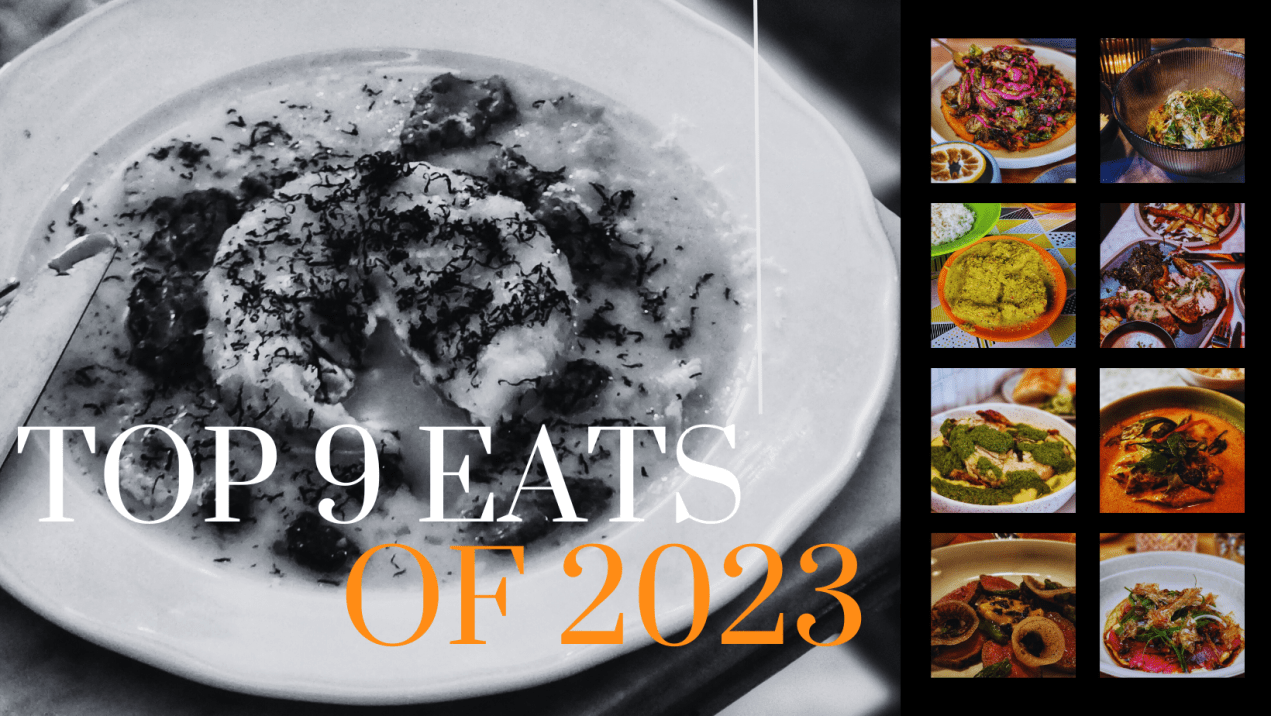
Our Top 9 Eats of 2023

Visit our Instagram page

By Michael White and Kley Klemens
Photos by Kley Klemens

Jewkarta may be only three years old, but we’ve visited a staggering number of restaurants, eaten and guzzled an overwhelmingly vast selection of food and beverages, and made the acquaintance of countless culinary professionals in this short period of time. And we’ve loved every minute of it!

2023 was, by far, our most interesting year yet, for reasons good (Kley’s long-overdue return to his native Indonesia; some of the greatest dining experiences we’ve had as a couple) and not (Michael’s sudden health downturn, which prevented him from participating in most of Jewkarta’s activities for the first half of the year).

But our annual Top 9 is all about emphasizing the positive — specifically, the most delicious and memorable dishes we ate throughout the past 12 months. Scroll down to discover them all. And whether you began following us three years or three minutes ago, we thank you for being a part of our gastronomic adventures in Metro Vancouver and beyond.

@barhaifa
HAIFA HALF CHICKEN

Chicken is often little more than a chef’s compromise for unadventurous customers. But the iteration at this new (and spectacular) Middle Eastern restaurant is one of the best we’ve had, thanks to its secret seasoning blend and a gravy good enough to redeem the foulest of fowls.

@liviasweets
SUNDAY ROAST PORCHETTA FOR TWO

Italy’s beloved pork dish (boneless, with shatteringly crisp skin and infused with the flavour of its own fat) is transcendent at this popular Commercial Drive eatery, its inherent richness amplified by a bed of velvet-soft polenta, and contrasted with the bracing heat and acidity of an emerald salsa verde.

@bar.gobo
ROASTED STRIP LOIN

The ever-changing menu at this edge-of-Chinatown wine bar means this simple yet perfectly executed dish from chef @so_j_one may not return for a long time, if ever. So excuse our conflicting emotions: thrilled that we were able to experience it, sad that we may never again.

@chupitococteleria
TOSTADA DE ATUN

This trailblazing seasonal dining space (located in an alleyway, and open only during warmer months) specializes in elevating familiar Mexican dishes to a state of luxury. We utterly devoured this photogenic tostada, which arrived topped with tuna, ginger mayonnaise, spicy soy sauce and fried katsoubuchi.

@elephantinvancouver
PORK NECK

Are we able to confirm that chef @justin.song.ell is human? His endless creations, which he invariably cooks and plates alone at a small prep station behind Elephant’s diner-like counter, are bizarre in theory yet astounding in reality. Berkshire pork neck flavoured with FIFTY-FOUR different types of Thai herb? Whatever you say, chef!

@zarakvancouver
BRUSSELS SPROUTS

Whoever discovered that the vegetable responsible for ruining countless childhood Thanksgivings could be fully redeemed by a swim in a deep fryer deserves the Nobel Peace Prize. For piling them onto a pool of red-pepper hummus and anointing them with a neon-pink masala sauce that looks like it belongs on a birthday cake, Zarak deserves the MacArthur Genius Grant.

@caffelatana
RAVIOLO

A single plate-sized pasta pillow, stuffed with black truffle, ricotta and herbs. Almost indecently rich and savoury, Kley continues to daydream about it as if it were a millionaire daddy offering to whisk him away to a private resort on the Amalfi Coast.  

Somewhere in North Sumatra, Indonesia (no website)
NANIURA

A highlight of Kley’s visit to his homeland: tilapia ceviche marinated in kafir lime juice mixed with torch ginger (a perennial plant native to Indonesia), turmeric, candlenut, Andaliman pepper, coriander and more. Another reason why Kley is baffled by Indonesian cuisine’s low international profile.

@hujanlocale
ACEHNESE GRILLED OCTOPUS

Another Indonesian dish — created by chef @meyrickwill, who helms the kitchen at this must-visit restaurant in Bali — the complexity of which Kley can’t describe or compare to anything he’d had before. Acidic and spicy, creamy yet light — Kley asks, “How is it that I’m Indonesian and Chef Meyrick isn’t??”

Standard
Brunch, mediterranean, West Coast

InterJew #4: Robbie Kane (owner, Café Medina)

Visit our Instagram page

By Michael White

It’s not an exaggeration to say that Vancouver’s notion of brunch has never been the same since the arrival of Café Medina. Beginning in January 2008 as a small annex of its next-door neighbour, the wildly popular Chambar, it was a collaboration between Chambar co-founders Karri Green-Schuermans and Nico Schuermans along with Robbie Kane, an Ontario native who had been a server at Chambar since its second month of business in 2004.

Despite never owning a restaurant before, Robbie proved to be a natural. Nine months after opening, its menu expanded from just coffee and Liège-style waffles to a variety of Mediterranean-inspired dishes (developed by Nico), and Medina almost immediately became one of the most popular dining destinations in the city — so much so that Chambar’s dining room was repurposed during Medina’s daytime hours to accommodate the overflow.

In 2013, Robbie became sole proprietor of Medina, relocating it in August 2014 to a larger space adjoining the lobby of downtown’s L’Hermitage Hotel, where it remains to this day. Its standards have never wavered, nor has its popularity — in fact, it likely could move to a space twice the size and still have weekend line-ups.

Robbie is also a partner in the Vancouver location of Superbaba, which is a two-time winner in the Best Casual category of the Vancouver Magazine Restaurant Awards.

This interview has been edited for brevity and clarity.

What’s your earliest memory of being taken to a restaurant?
Swiss Chalet.

That’s a very Ontario answer.
Yeah. It was frequent — probably once or twice a month — because there was one near my dad’s office. The first restaurant experience, when I was very young, probably 6 or 7 — my mom had a cousin in Saugerties, New York, near Woodstock, and I remember visiting her. I think it was an Italian restaurant we went to. I remember it being fancy, but it probably wasn’t, because it was in hippie-town.

My first restaurant job was at the Pickle Barrel, at the Promenade Mall [in Thornhill, Ontario]. (A note from Michael, who, like Robbie, is Jewish and a native Ontarian: The Pickle Barrel began in 1971 as a single-location Jewish deli. It’s now a shitty Denny’s-like chain.) We used to go there often as a family. I don’t remember the affiliation between my dad and someone who worked there — a manager or something — but that’s how I got my first restaurant job, when I was 14. I was a dishwasher and busboy.

What brought you from Ontario to here? And of all the things you could’ve done after leaving your previous job in the film industry [as a photographer and location manager], why this?
Serendipity, mostly. There’s three iterations of me coming to B.C. The first is that my brother, Brian, who designed this restaurant and is in the film industry, was living here. I’d just graduated from high school and I just wanted to take a year to essentially cause trouble and leave Ontario, and then I got accepted to both York University and UBC. I was listless; I had no direction. I just thought, “I’ll go to university because it’s what I should do.” So, I moved back to Toronto and went to York.

What did you study?
Sociology, anthropology, general arts.

The choices of people who don’t know what they want to do.
Correct. I started my second year and thought, “Sorry, this isn’t me.” I quit in October or November, got a waitering job in Yorkville, made money, and then I left the following September to travel through Southeast Asia. And after I finished travelling, I landed back here [in Vancouver] in 1996. I was introduced to a guy named Benny Graydon, who hired me for a restaurant that was just about to open in Yaletown called Century Grill, which is now Blue Water. I was an opening server there. It was lighting in a bottle; it opened and became very busy, very fast, and everyone wanted to be there — all the athletes, all the fancy people — and it was awesome.

I met my first wife, who was also working there, and then we left in ’98 and lived in Europe for a while, and then we went back to Toronto for five years. This is where I fell into photography and [movies]. I also supplemented my income with restaurant work. I had my daughter in 2001, and then we had this weird opportunity. [My wife] still had family here and my brother was here, and in 2003 we moved back. I was a stay-at-home dad for a year or so, and then my first marriage broke up, and in 2004 I started working at Chambar.

How did you come to know [Chambar founders Karri Green-Schuermans and Nico Schuermans]?
I had a mutual friend in Michael Ziff, who’s been in hospitality forever. [He’s now GM of The Restaurant at Poplar Grove in Penticton.] He and I worked at Century Grill. He was like, “Robbie, you need a job. Go talk to Karri.” I went to talk to her in what was then the construction site of the original Chambar, which is now the Devil’s Elbow. I started working for them as a server a month after they opened.

For how long were you a server there?
Three years. I was also producing commercial photoshoots through my connections in Toronto. I was going to start a creative agency, but I’d also expressed interest in opening my own restaurant. Nico had come to look at a defunct restaurant with me, so he and Karri knew I had interest in doing my own thing. Although I’d never been a manager at Chambar, I’d always treated my job like I was, so they saw that I was serious and I had the wherewithal. So, when that space — which is now Jam Café, at 556 Beatty — became available, Karri approached me and said, “Do you want to do this with us as a daytime operation?” That was fortunate, because the bottom dropped out of the world in 2008 [because of the economic crash], especially in advertising. I started working on the construction of Medina in September of 2007, and we started slowly. We opened on January 12, 2008, and for about a year we only did waffles and coffee.

Even though you’d worked in various capacities in restaurants, obviously it’s still a major leap from what you were doing to owning your own place. What made you think that leap was within your abilities?
In hindsight, it probably wasn’t. I grew into it. I’ve always known I’m a hard-working person; I’ve never been afraid to put in the time. I found through working in film, photography and construction that I was confident in the work I did. And I had a buddy to lend me the money.

At what point did you realize Medina was becoming a much greater success than you might have anticipated?
I think the tipping point was probably the [2010 Winter] Olympics. There was a gradual word of mouth, and then the Olympics hit and it was put onto a global stage. And honestly, brunch became a more elevated thing, aside from the greasy spoons and hotel buffets.

When Medina started serving more than waffles and coffee, Nico developed a menu that was Mediterranean themed, with dishes like cassoulet and short-rib fricassée. Did you feel it was risky to offer a menu that was so unprecedented for Vancouver?
I was confident in Nico — he’s a talented guy — so I was never too concerned in that regard. And I think people wanted something different.

Do you think Medina initially benefitted not only from its physical proximity to Chambar but sort of being under the same umbrella?
Karri and Nico had obviously spawned something very special, and Medina for sure benefitted from the momentum that Chambar had created. But at some point — especially when Medina moved [to Richards Street] — we had our own legs.

Two previous restaurants had occupied the Richards Street space. Did it require a major makeover before you opened it to the public?
We were very fortunate in that it had all the mechanical bones: the vent system, the electrical panels, the grease traps and all of the very expensive things you need to open a restaurant. My brother took three months off from film to design it, and he and all of his film contacts helped build it. We were here morning, noon and night.

So, you weren’t concerned about pinning Medina’s success or failure to a space where two previous concepts had bombed?
Sure I was. Scared shitless. I remortgaged my house. It was a very stressful couple of years.

Was this location slammed from day one?
Yes. The first day we opened was terrible; it was very rough service. But after the first week, it was very evident that there was still demand and people knew what Medina was.

Has there ever been a point at which the success of Medina felt overwhelming?
I’ve always been very grateful, even from the time when we were just coffee and waffles. There have been some times when I’ve gone outside and there’s a 100-person lineup on a Saturday and I literally pinch myself. That’s overwhelming, but it’s also pretty awesome.

Have you ever wanted to duplicate the Medina concept somewhere else, or is this enough for you?
If you were to ask people who know me well, they would say I’m a little bit risk averse. I’ve been offered many times — people from California or New York or Saudi Arabia — but I’ve always been cautious of the magic. Coming from Toronto, I’ve always wanted to do something there — I think the concept would work really well there — but I’m busy enough. And I’m not 35; I’m almost 50. I wouldn’t say never, but it would have to be lightning in a bottle again. And the cost of opening and operating a restaurant is now probably three times what it was in 2014.

What’s the difference between your stake in Medina and your stake in Superbaba?
I own 100 percent of Medina and I’m one of four partners in Superbaba. There’s also two partners in Victoria.

What would you say your main contribution is to Superbaba?
I’ve got to give Dallah [El Chami, chef and principal owner] all the credit for Superbaba in terms of its operations and menu. He and Leah [Christ, manager] really have made it work. In the beginning, we [referring to himself and the Tacofino group] were present because Dallah wasn’t in the restaurant business, so we contributed in terms of tendering trades and our suppliers and just our general experience and capital. I’m sure the cache of Medina and Tacofino was important in the beginning, as Chambar’s was for Medina, but Superbaba is its own entity.

What do you think is the most underrated restaurant in Vancouver?
Kishimoto. We have a lot of sushi in Vancouver, but I went to Japan this past April and Kishimoto rivalled anything I had there. And Sawadee: I’ve been dining there since the ’90s and it’s consistently excellent.

(Photo: Hakan Burcuoglu)

Standard
Mexican

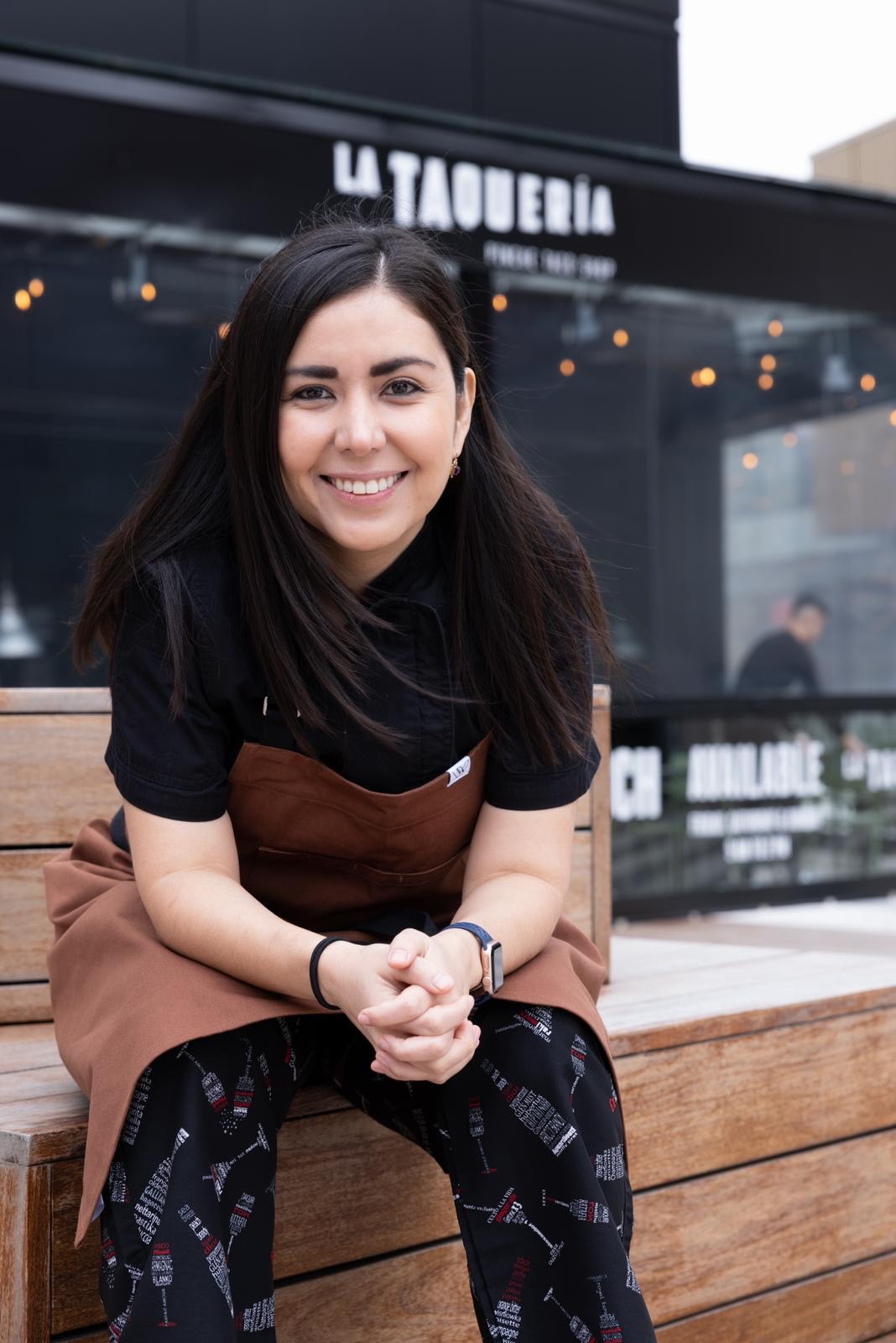
InterJew #3: Maria Ponce (executive chef; La Taqueria, Chupito)

Visit our Instagram page

By Michael White

In September 2022, we were invited to try some dishes from the new brunch menu at the Yukon Street location of La Taqueria, a chainlet of Mexican street-food restaurants that began in 2009 as a single, narrow counter-service room in Vancouver’s Downtown Eastside and has since expanded to five bustling outlets in Vancouver, North Vancouver, Burnaby and Victoria, plus a food truck that can usually be found on West Georgia Street in Downtown Vancouver.

This was La Taqueria’s first attempt to become a part of the city’s tirelessly competitive, hugely lucrative brunch wars, and we arrived with no expectations other than to not leave hungry. What we experienced was, quite simply, one of the best meals we’d have that year, as well as one of the most unique and revelatory successions of brunch dishes we’d had in our lives.

These dishes shared one thing in common: They were each the creation of La Taqueria’s then-new executive chef, Maria Ponce, who had recently relocated to Vancouver from her native Mexico despite having never set foot in the city (or anywhere else in Canada) before. Since then, Maria has elevated the food at La Taqueria — as well as at the Michelin-recommended Chupito — to new heights of creativity and deliciousness.

This interview has been edited for brevity and clarity.

What’s your earliest memory of being taken to a restaurant?
It’s funny, because Chupito has something to do with it. Where I’m from is Navojoa, a little town in the north of Mexico, and it’s a desert but it’s also beach. My dad took me there and I used to eat the paté de camarón all the time, so it’s the one we now have at Chupito. I think I was three years old, and I learned how to tie my shoes, so it’s also a memory that I have of that restaurant.

You learned to tie your shoes at the restaurant?
Yeah. There was a kid there — the child of the owner — who taught me how to do it. She was older, but she used to play with me.

Was there one particular meal or restaurant that made you want to be a chef?
No. I think it was just my whole life, because I used to eat so well … My mom doesn’t eat pork or shrimp [for religious reasons] — she’s practically Jewish! So, my dad used to make something for her, something for me, and something for my brother and him. It was like a buffet all the time. My dad also loved to make a really big meal on Sundays.

But [in terms of] restaurants, it was my first internship, at the Greenbrier. It’s a huge restaurant and an amazing hotel in West Virginia, in a little town called White Sulphur Springs. They [the head chefs] were really rough there, but that was when I knew, “I want this.”

Had you spent any time in the U.S. before that?
No. This was a one-year internship from my college.

It must have been a huge culture shock. It’s one thing to go to New York or L.A. But West Virginia…
There’s nothing there! It’s a little town, but the hotel is enormous. That was where I was like, “OK. I want to do this the rest of my life.”

What kind of food were you cooking there?
It was fine dining, but the hotel has five restaurants: it has a steakhouse, it has breakfast… But it was the people there: they used to hit me, burn me, yell at me.

They hit you?
Yeah, like this. (mimes a little jostle) But not in a bad way; in a good way, to say, “Hey, you can do this.” And I loved it! The chef would say [in an encouraging tone], “Hey, you’re tough! You can do this!” And I’d be like, “Yes, yes, yes!”

How old were you then?
Nineteen.

Had you worked in restaurant kitchens in Mexico before that?
No. Never.

Oh, wow! And I assume the dishes you were cooking there were very different from anything you would’ve been eating at home.
Yes, of course — it was fine dining. And it was so disciplined, but so good! And all the kids in the internship were the same as me; they were like, “It’s not about the money. I want to do this.”

How many other cities did you live in before you came to Vancouver?
Well, there was another internship in Hilton Head Island, South Carolina; and then I went to Amsterdam and Manchester, and then I went to other parts of Mexico: Ensenada and Guadalajara.

So how did you end up here in Vancouver?
My last restaurant job was with the father of Marcelo [Ramirez Romero, owner of La Taqueria and La Mezcaleria]; I worked there five years with him. He’s the best; really a good man. He was like my dad there, and that’s how I met Marcelo. And I started making recipes for La Mezcaleria, and for Chupito during their first year, even when I wasn’t [living in Vancouver]. And the chef who was at La Mezcaleria, Marianna [Gabilondo], went to Mexico and we worked together for a week or two, and she came back with new ideas. I continued sending recipes, then Marcelo told me about the job and I was like, “Yes!”

You didn’t visit here first to make sure you liked the city?
No. (laughs)

How did you know it would be a good fit for you?
I didn’t. I asked Marcelo questions, like, “Where should I live there?” But I didn’t know anything about Vancouver.

What was your first impression?
I loved it from the first day.

Did you arrive on a sunny day?
No. I arrived on the worst day in the year and a half I’ve lived here. But I loved it anyway. I spent seven hours in the airport without eating, without water. Nothing.

Because of immigration?
Because of immigration. It was nothing bad. They [the officers] were changing shifts, and this and that. And then COVID [tests]. And I was like, “I’m so hungry! I’m so thirsty! I just want to get out of here.” And then I took a cab to my Airbnb, where Marcelo was waiting for me. It was raining — the worst rain I’d ever seen. Really, really hard. The next day, my best childhood friend, who was living here, took me to breakfast.

Do you remember where you had breakfast?
The restaurant with the sun [in the logo].

Cora??
Yes, that’s the one.

Oh, no! Their food is terrible!
I know. I never went back after that. (laughs)

What was the first great meal you had here?
It’s a shame, because now it’s closed, but Ubuntu Canteen. And then Kissa Tanto. Como Taperia was love at first sight: If you want a drink, you just go; if it’s after work, you just go; if you want a really good meal, you just go. Savio Volpe also.

When you first looked at the menu at La Taqueria, before you had the opportunity to put your stamp on it, what did you think was missing, or that you thought you could bring to it that wasn’t already there?
It was good — I’m not sure if I’m saying this right — but a little more flavour, because there was no one here to train people all the time, because you need [consistency], teaching the cooks techniques, different kinds of skills. For example, the first time I did something here was for breakfast, and it was so different for all of them. And now, I believe, after one year and eight months, the cooks think differently, their vision is different. They want to be more like cooks, rather than just plating.

Was anybody within the company nervous about how these sorts of dishes would appeal to Vancouver diners?
Yes, all of us, because when you do something the same way for so many years, it’s hard. We didn’t remove [any of the dishes]; just, every day, trying to make it better.

So now, more than a year later, La Taqueria has a new location [at the Amazing Brentwood in Burnaby]. How would you say the overall response has been to what you’ve brought to the restaurants?
It wasn’t easy, because people tend to not like change: “Hey, what’s going on? Why is it different?” And we now have table service instead of counter service. But I believe people understand us now. We knew it would be hard, but now we’re on the right path.

What’s your favourite restaurant in Vancouver right now?
I’m gonna stick with Como.

(Photo: Ruben Nava)

Standard
Italian

InterJew #2: Vish Mayekar (chef, Caffè La Tana, Pepino’s Spaghetti House)

Visit our Instagram page

By Michael White

Vish Mayekar may be the most driven chef we’ve met in the history of Jewkarta.

We were introduced to him during our unforgettable first dinner at Caffè La Tana, shortly after pandemic dining restrictions had been lifted and the soon-to-be multi-award-winning restaurant was hosting a full house of jubilant patrons who were thrilled to finally be experiencing in-person dining again. Vish continues to be chef at Caffè La Tana and its adjoining neighbour, the historic and revitalized Pepino’s Spaghetti House — both of which are almost always bustling. Prior to this, he had cooked in his native Mumbai as well as in San Antonio, the Niagara region, and Toronto.

Additionally, in recent years Vish has been executive chef at the American Pavilion at the Cannes Film Festival, was a competitor on Top Chef Canada, and is seemingly always participating in a culinary event at home or abroad.

This interview has been edited for brevity and clarity.

What’s your earliest memory of being taken to a restaurant?
It was back home in Mumbai, and it was and still is my parents’ favourite restaurant. It’s an Indo-Chinese restaurant called Gypsy. And to this day — every time they go, and every time I’m back home and I go with them — they get this one crab dish, which is prepared in an Indo-Chinese way where the crab is filled back into its shell. I remember being super young — I think I would’ve been eight — and seeing it for the first time and just being blown away by how it was done. That memory of me eating a stuffed-crab dish with my parents is the first restaurant I recall. The last time I was in India — unfortunately, a very long time ago — we went and had the same dish. My parents were there a couple of weeks ago and they had it.

When did you know you wanted to work in the restaurant industry?
Grade nine. I looked up to my dad and I said, “Dad, I want to be a chef.” And he said, “All right.” I’m blessed to have the parents I do, who are super supportive and they never questioned me. They were like, “Great — you’re gonna be a chef!” I’ve never had a different job in my life.

I went to culinary school back home and wanted to go to Europe or wherever. And while doing school, I had the opportunity to do a co-op in Texas. So, I lived in San Antonio for half a year, finished that and went back home. And that’s when I knew I had a travel bug in me. I’m not a tree; I’m not going to spend the rest of my life in one spot. I wanted to go to Switzerland or Italy, but the timing wasn’t right. And Niagara College in Ontario — its name came up and I thought, “I’m gonna give it a shot. I’m not going to live in Canada forever. I’ll do a couple years of school, maybe a couple years of working, and then move on.” Ten years later, here I am: a citizen of Canada and I absolutely love it. I always knew that if I went to Canada, I’d move to the west coast. I moved to Vancouver seven and a half years ago and I haven’t left.

What drew you to the profession in the first place?
I think coming from an Indian background and being surrounded by food and desserts and anything to do with cooking. In Indian culture, we have so many ceremonies and festivals and cultural things that we do throughout the year, and I always joke that those are just reasons for us to cook and eat. I remember deciding, before grade nine, that I was going to be doing this forever. I remember being in the kitchen with my mom and my grandmother, always hanging out in there, and it just felt natural. I was always intrigued by the cooking that was happening in the kitchen. As long as I can remember, the kitchen felt like where I belonged.

Is being a chef or a cook viewed as an honourable profession in India?
Yes. It’s not degraded. Indian food has come such a long way. It’s not like a lot of other cultures, where you see cooking being a low-grade job. That’s absolutely not what it is in India. Indian cuisine is one of the best and most renowned in the world, and there are 1.5 billion people in India, so we love our food.

When did you start learning about cuisines from other parts of the world — in particular, Italian?
Throughout my travels and going to school in Niagara. And then just a lot of R and D [research and development]: a lot of cookbooks, a lot of TV shows, and a lot of studies and being able to replicate dishes. It’s continuous growth. I wouldn’t call myself a master chef in Italian cuisine by any means, but there’s constant growth that goes with it, and that’s what keeps me excited about being a chef.

Did you start travelling more after arriving in Canada?
Definitely. More than ever. I absolutely love it. The things that matter the most to me in my life, other than my parents, are food, wine and travel.

In those travels, what have been some of the most revelatory experiences, in terms of discovering a type of cuisine or a specific dish?
Going to the south of France and being a part of the Cannes Film Festival for the first three years, and then being offered to run the program and be the chef at the festival. For the last three years, I’ve been the head chef at the American pavilion. It was an incredible opportunity. It’s one of the toughest jobs that I do and it’s only a two-week gig. It takes a certain type of person to go there and work 18 to 20 hours a day for two weeks straight, and then come back to the reality of your regular cooking. I’m so proud of being able to do that but, yeah, it’s tough!

Every cook and every chef that comes from my generation, we all look up to French cuisine like it’s the be-all and end-all — and, in a certain way, it still is in terms of the basis of cooking. But being in France and actually being able to experience the southern French cuisine and being able to not only cook French cuisine in France but then, from France, going to Barcelona and really, really taking in the Spanish street food — it was absolutely incredible. I’ll never forget that food journey that I took there, having five meals a day.

Earlier this year, I spent five days in Mexico and that was probably the best food trip I’ve ever taken in my life. I had seven meals a day, from 10 a.m. tacos on the street to 4 a.m. tacos on the street. It’s absolutely incredible, the food and culture in Mexico City.

What was your first restaurant job when you arrived in Vancouver?
I started at Cactus Club.

That’s not the answer I was expecting!
Nobody does. Everyone is expecting fine dining, and I did that a lot in Ontario. But when I moved here, the opportunity at Cactus Club came up, I took it and I was there for quite a time, until I was offered to run a winery up in the Okanagan. I was the chef for the Fitzpatrick [Family Vineyards]. I was supposed to go back and do that again for the next season and then, “Thank you, COVID.” But then I got the opportunity to be a chef for a nutritional meal-prep company, which I never thought I’d do, but it was a cool opportunity to be working with nutritionists and dietitians.

After that, I got a scholarship to do my WSET [Wine & Spirit Education Trust], then I got a phone call from Paul [Grunberg, owner/operator of Caffè La Tana, Pepino’s Spaghetti House and Savio Volpe], and two and a half years ago I took over Pepino’s and Caffè La Tana.

What are some of the most significant things you’ve learned during your time here?
I think, overall, just being a better person, a good chef and being able to run a tight team. I’ve come from restaurants and hotels where I had cooks over cooks over cooks, but over here it’s more like a family — a very small and tight team. I’ve learned to manage two operations at the same time and run them both successfully. I’m super proud of that. It’s not been easy, but I’d do it again.

How do you think the Vancouver restaurant scene has changed or evolved since you moved here?
I’ve seen growth in Vancouver where a lot of amazing restaurants have popped up, and a lot that have already existed have found their stride and are doing incredibly, and a lot of small restaurants have found their spotlight. There was good food in Vancouver before, but in the time I’ve been here, chefs that deserved recognition have started to get it throughout different accolades, including Michelin. We’re one of only seven cities in all of North America to be included in the Michelin Guide. That’s huge.

What’s one restaurant in Metro Vancouver that you think is unfairly underexposed?
L’Abattoir. For who they are and what they’re doing, that’s one restaurant that needs to have a higher level of recognition. It’s an institution that’s been around for a long time; the consistency of the food and the creativity involved in it… That was the first fine-dining restaurant that I went to when I moved here. They do an incredible job. I think everyone should go there.

Do you sleep?
What is that? (laughs)

This is nothing to brag about, and every chef and everybody in the hospitality industry should take care of themselves. It takes a toll on you before you realize. I’m the worst person to be telling people to rest more, because I’m very bad at it. I sleep very little, but I’m still grinding it because I’m happy and I want to. No one’s forcing me.

Standard
Thai

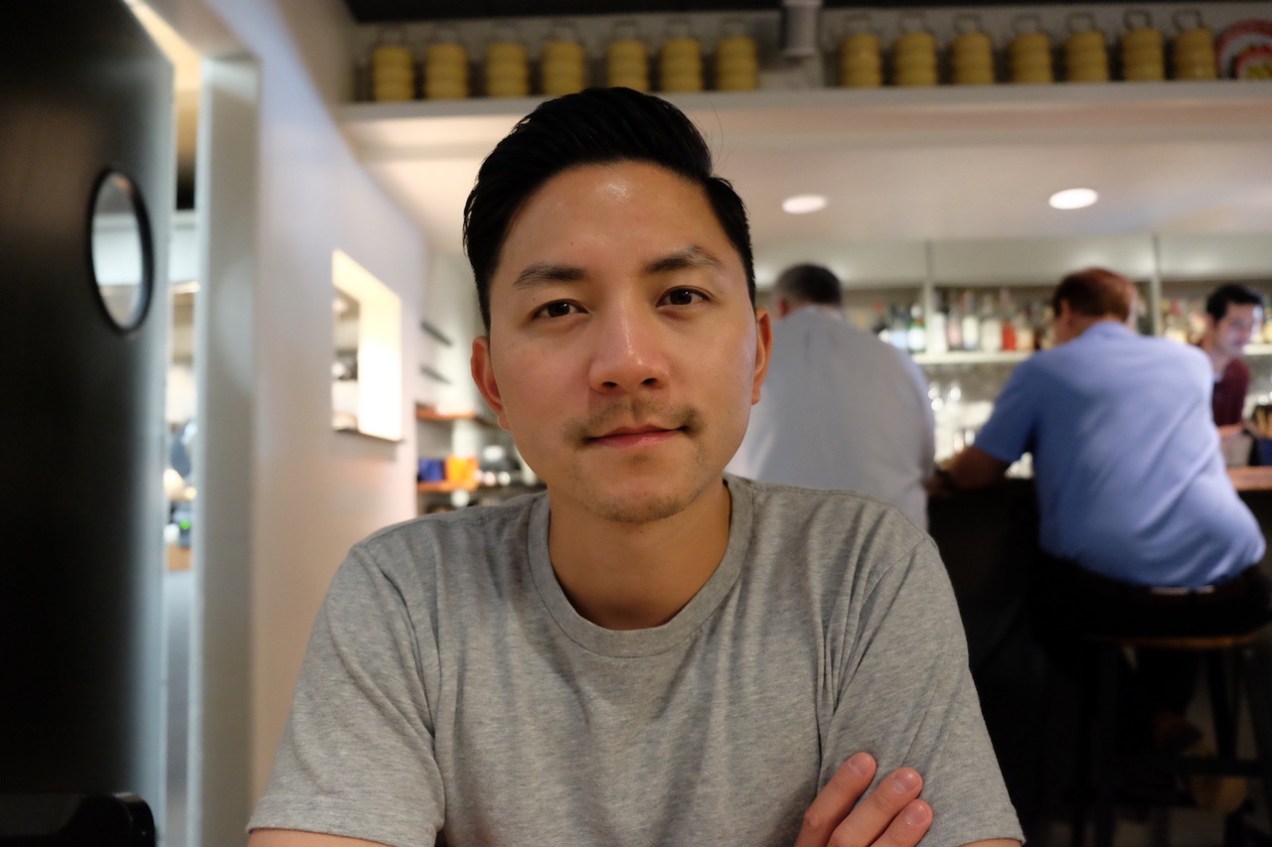
InterJew #1: Terence Feng (founder, Song)

Visit our Instagram page

By Michael White

When Kley and I launched Jewkarta, in November 2020 (more than a year after we’d initially talked about it, during the first weeks of getting to know each other), we had a number of motivations.

Firstly, it provided a reason/opportunity/excuse for us to explore more of Greater Vancouver’s restaurants, both of us having been food obsessed for as long as we can remember. Secondly, the COVID-19 pandemic was at its height, indoor dining had been indefinitely banned and restaurants were in peril; we hoped that, in some small way, our efforts might help drive takeout/delivery traffic. Thirdly, we were both unemployed and in need of something to do, individually and as a couple.

And lastly, I knew, having served as food editor at a couple of local city magazines, that chefs, cooks and restaurateurs are some of the most entertaining, ambitious, opinionated and quotable (and, occasionally, deranged) people one could hope to meet. What with my journalism career having died several years prior (in tandem with the magazine industry itself), here was an opportunity for me to reconnect with the fascinating behind-the-scenes world of hospitality and for Kley to experience it for the first time.

In the two and a half years since then, Jewkarta has become far more rewarding than either of us could have predicted — especially the extent to which we’ve been shown appreciation by (and even forged a few important friendships with) people in the industry.

For some time now, we’ve been discussing adding interviews with people from the restaurant world to our content mix. And now that my recent health issues have restricted me from dining out (and eating in general) with the total freedom I’d previously enjoyed, this would allow me to start making a significant contribution to Jewkarta again after months of absence.

So, here’s the first of those interviews — and it was easy for us to pick the person with whom we wanted to begin. Not only are we in love with the two Thai-themed restaurants Terence Feng cofounded (Kin Kao and Song); he’s shown us an overwhelming degree of kindness, generosity and support. And in direct contrast to Vancouver’s notorious social frigidity, he actually sought us out because he liked what we were doing and figured we should meet. We’re kind of in love with him too.

Terence seems like a natural-born restaurateur: both of his dining ventures have been a great success. While he’s no longer a day-to-day presence at the still-popular Kin Kao, Song has been a blazing triumph from the moment it opened its doors in November 2021, even earning a prestigious Bib Gourmand designation from the Michelin Guide toward the end of its first year of operation.

All of which makes it fascinating to learn that Terence basically became a restaurant owner by chance, and he doesn’t intend to remain in the industry forever.

This interview has been edited for brevity and clarity.

What’s your earliest memory of being taken to a restaurant?
That’s a good question — I’ve never been asked that! I think, growing up, going out to eat was never really a thing. Food was very much “You eat to live.” We were definitely not well off. I’m the youngest of two siblings in a family that my father… it was his second marriage. He had spent all his wealth bringing his first family from Hong Kong to Vancouver — God knows how much that would’ve cost, because there were nine members, including him — so by the time he had remarried some 15 years later and had me and my brother… We left Hong Kong when I was seven, so my memories of there are minimal. We were new immigrants here and my mom was the only one that was working — she was a seamstress, working 16-hour days — so we didn’t have any money. Trying to learn the language and fitting in was my early childhood. What I do have a memory of is getting McDonald’s when they had the cheeseburger special, which I think was 25 cents a cheeseburger — one for my brother and I to share. When we did otherwise go out to eat, it was always a Chinese restaurant, but I don’t have a memory of where. I didn’t have exposure to anything else until I made my own money.

And when did that happen?
I was making over $100k at the age of 22, in web development. I was very lucky, but also very hard-working. I wasn’t taking a vacation, I wasn’t buying a car; I was paying off my student loans and saving my money to put a down payment on a condo — that was really important to me. And then, once I was able to accomplish a few more things, I was like, “OK, I’m splurging now.” But it’s not like I was going out every single night; I was experimenting and trying new cuisines. I never had a palate for food until I was in my early 30s.

In my early to mid 20s, I was dating a lot and I was trying to impress these girls, so I would cook for them. And I just remember how hard it was to try to follow recipes, and the biggest part of that was because I was trying to be too fancy, too quickly. I would always screw it up. So I gave up and would take them to restaurants — I would rather just pay for it. And I discovered, “Wow, I really just enjoy dining out. The whole experience of it.” I’m not a lazy person — I don’t mind doing dishes or prep, or shopping for ingredients — but I could have whatever I felt like, because I was making my own money and I could just walk down the block and have Thai food. Or, if I was feeling junky, I could have McDonald’s. I was blessed enough to be able to afford it and live in a place where that was within reach. Going out to eat, I made the most of it every time, because I realized I was privileged.

And so once you started dining out regularly, which places did you like best?
It was after I started Kin Kao, and it was Kinome Japanese Kitchen. It was, by far, my favourite restaurant. I felt like every time I walked in there, it was like, “I think this is what it would feel like if I was a part of the TV show Cheers.” It wasn’t just the recognition from everybody; it was a familiarity of the smell of the place and the food. I knew what I was getting and I knew that I’d love it. I would drive across the city to go there. When it closed [in 2018, after being evicted for a new condo development], it was hard for me to sleep. To this day, it’s my favourite restaurant in the city.

And I still eat McDonald’s consistently, because I was always told “No” [as a child]. I don’t go crazy; I’ll have a medium fries and maybe a cheeseburger. Five minutes after I eat it, I feel like shit. … Asian food done well is just so fucking good that Western food just pales.

Given that you were already 30 when you started to really appreciate restaurants, what made you want to open one of your own?
I’d never been a risk-taker. When I left marketing [his career field after web development] and decided I wasn’t going to do it anymore, it wasn’t because I wanted to open a restaurant. I just needed to do something else, but I didn’t know what that was. I’ve always been an opportunist, but in a way that I was never the main idea person. Somebody came up with an idea and they needed someone to help push it forward. I was that guy. I was now 30 and I had all this money in the bank, but I couldn’t do anything with it that made me happy.

I was spending my entire life’s savings to open Kin Kao when I had zero restaurant experience. I even took a 10-month course on finance for restaurant owners. And Tang [Phoonchai, Kin Kao’s co-founder and executive chef], I’d known him at that point for 10 to 15 years. Six years prior, he did mention — maybe not directly to me, but as part of a group — that he wanted to open a restaurant. When he heard that I was leaving [my marketing job] and doing something new, he was like, “Let’s have a conversation. Let me cook for you, the type of food I want to do. Let me know what you think.” I could see it working, but I needed to think about it. It was probably a month before I made a decision. It was going to cost my entire life’s savings, but maybe this was what I needed. What was the worst that could happen? I’d go back to [work in marketing]. I sold my condo and moved back home; I was living in my mom’s basement. It was like the entire weight of the universe was on me, to prove to myself that I wasn’t gonna fail.

Opening up Song was very much the same: It was almost like, “You never believed in yourself, you never thought you were good enough, so maybe this is what you need to do.” I definitely don’t want to do this for the rest of my life, but if I was going to continue to do it for the next 10 years or so, it had to be different. I needed a bigger challenge. If I was doing the same thing [as Kin Kao], I’d be doubling my anxiety but also not feeling accomplished.

What was your initial vision of what Song would become?
It was supposed to be refined street food, and it became nothing like that. Now I would call it authentic Thai at its core, but very experimental, seasonal and local.

If you could change one thing about the restaurant scene in Vancouver, what would it be?
Not just for Vancouver — maybe for all of North America and Europe: consumer etiquette. Not even being on the receiving end. Sometimes when I dine out and I see the way some people behave… But that’s not just dining — that’s just a general statement. As a whole, society needs to be a little more considerate of others. Just don’t be rude. Treat people with respect, in the way that you’d like to be treated — and that should apply to every part of your life. We can always treat each other better. It’s a good feeling.

Standard